Recent Changes

time-for-changeWith the end of another school year upon us and graduation just passed, it is fitting that I post about change. Normally I’m resistant to change. Those of you that have had the privilege to know me understand this. However, I’ve come to realize that some change is a good thing; usually, stagnation brings death. So, what’s changing?

1. I’ve changed the layout of this blog.

If you haven’t noticed, things look different. I’ve taken advantage of the last few Community Pool posts to sound out some unbiased advice. The most profitable piece of advice was to make the blog more readable in terms of its color scheme. Most  visitors found it dark and  and “Halloween-ey”, so the theme is now a bit lighter.

Other visitors commented on the lack of sharing options and social network links. In response, I’ve created a new Facebook page and added more sharing options to the bottom of each post – now you can print, email or share my words of wisdom with the rest of the world! I’m also working on formatting a twitter feed, so you won’t have to miss a single post!

Another crucial bit of critique was to clean up the homepage. I’ve chosen a template that displays excerpts on the blog page and limited the number of posts displayed. What does this mean to you? You only see newer posts! If you want to read an old post, simply use the Category Menu on the left, the Recent Posts links on the right, or the “older posts” navigation on the bottom of the page.

2. The schedule will change.

In the past, I posted whatever I felt like whenever I felt like it. I now realize that my writing improves when I have a chance to think before I post. What sounds good at 1 AM might not be so good later on. Therefore, I’m going to try to stick to a schedule: new posts on Wednesday and Saturdays (or thereabouts). My goal is to provide two good-quality posts a week. I might break this rule if something important comes up, or if a Daily Post catches my attention, but I’m going to slow it down a bit to focus on quality rather than quantity.

Hopefully I’ve managed to correct some of the issues other bloggers saw, but I know there’s still work to be done. If you have a suggestion about anything, drop me a line! Letting me know if you like the new layout or not would be great, too.

See you later this week!

Go back

Your message has been sent

Warning
Warning
Warning
Warning

Warning.

You Can’t Name a Pig Napoleon

As I was grading research papers for my Geography class, I noticed a recurring theme: other countries have some strange laws (strange to Americans, that is). And so, for your reading pleasure, I present to you unique laws from around the world, courtesy of my ninth grade Geography class and researched for authenticity by me.

France

You can’t name a pig Napoleon. Technically this isn’t true. The law in question seems to state that it is illegal to insult the Head of State. As my French is non-existent, I’ve had to rely on that most inaccurate of sources, Wikipedia, as well as the forum section of Snopes. According to some sources, the law is not regularly enforced, with recent French presidents not using it at all. So, feel free to name your pig Napoleon, so long as he hasn’t risen from the dead and reclaimed the defunct throne of France.

My name is Napoleon. I've just declared myself Emperor and declared war on all of Europe. See what happens when you let standards slip?
My name is Napoleon.
I’ve just declared myself Emperor.
I’ve also declared war on all of Europe.
See what happens when you let standards slip?

You can’t take pictures of police (or police vehicles). This law may or may not be accurate. Privacy laws in France are in flux; what is considered public and what is considered private is unclear. From what I have been able to gather, anyone included in a photograph has the right to give or deny permission for the photograph to be taken – this includes anyone in the frame, not just those at the focus. Generally, the French police force has frowned upon photographs including police personnel; therefore, if anyone seeks to press charges, the outcome will ultimately depend on the particular judge holding court.

Just posting this picture probably put me on some sort of watch list…

Germany

A pillow can be considered an passive weapon. I could not find any verification for this law, only other lists of “stupid laws” without any sources. That said, I don’t see how the law would make sense: a passive weapon is one used to defend oneself from another – usually more violent – weapon. Pillows can’t really protect you from anything except other pillows and bogeymen.

Soon to be reclassified as an assault weapon and banned in 16 countries.
Soon to be reclassified as an assault weapon banned in 16 countries.

It’s illegal to tune a piano at midnight. Again, I could not find verification for this law. However, this law makes sense for two reasons. First, tuning a piano at midnight would most likely break several noise ordinances. Second, it keeps piano tuners out of your house at midnight. Need I say more?

Piano tuners are like gremlins: let them tune after midnight and they become homicidal...
Piano tuners are like gremlins: let them tune after midnight and they become homicidal…

Egypt and Australia

It’s illegal not to vote.

In Australia, it would be more accurate to say that it is illegal to not cast a ballot. Australians who are eligible to vote must go to a voting station, receive a ballot, and then cast it. Failure to do so may result in fines up to $50 (Australian) plus court costs. However, given the secrecy of the Australian Ballot, there is no sure way to guarantee that the voter actually voted for someone.

In Egypt, the law is generally unenforced, and members of the military and police force cannot vote.

Vote…or else!

Greece

It’s illegal to wear stilettos. This law is upheld only in certain parts of Greece, namely a key archaeological and historic sites. In addition, the law applies to all forms of high heels, not just stilettos. The reason for the ban? The pressure exerted downwards by the wearer can cause damage to the “skin” of the ancient Greek masonry. When all the tourists to Greece are taken into account, this law makes pretty good sense.

guns...knives...explosives...STILETTOS!! CODE RED! CODE RED!
guns…knives…explosives…STILETTOS!!
CODE RED! CODE RED!

Thailand

You must wear underwear. Not just a good idea, it’s the law! This law appears to be related to Thailand’s main religion, Buddhism. Buddhists hold that the lower body is an area of loathsomeness or revulsion. Therefore, it is necessary to cover one’s nether regions to avoid contaminating holy sites and other people (in more ways than one!).

Don't step on the money, either - it hold the sacred image of their emperor.
Don’t step on the money, either – it holds the sacred image of the Thai emperor.

The First Thirty Days

I began this blog one month ago in the wake of the Boston Marathon bombing. In the last thirty days I have published fourteen articles and have received over 65 visitors from 11 different countries. Based on the stats provided by WordPress, my most popular articles are those dealing with literature, with the most viewed article being my essay on Inspector Javert from the recent Les Misérables film. However, WordPress can only tell me so much; human beings are unique and cannot be quantified purely by machines. I would be greatly appreciative if you would take a few moments to fill out the survey below, thus enabling me to better understand my audience. Thanks for reading; I look forward to many more articles in the coming weeks!

Go back

Your message has been sent

Warning
Warning
Warning
Warning
Warning
Warning

Warning.

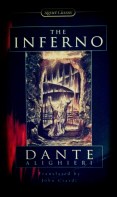
Before the Inferno: Initial Thoughts on Dan Brown

inferno1

I am somewhat unique among my historian acquaintances in that I don’t totally despise Dan Brown. Now don’t get me wrong, there’s plenty to dislike: shoddy research, weak plot lines, vast historical inaccuracies, and – in my opinion the most egregious fault – the claim that his books are based on historical “fact”. His locations and historical figures may have existed, but the stories he has woven around them are pure fiction. Nevertheless, I am willing to suspend belief and accuracy in order to enjoy a well-written thriller, and let’s face it, Dan Brown knows how to tell a story.

Therefore, I regarded Mr Brown’s recent work with some trepidation. For those that don’t yet know, his most recent book is entitled Inferno and – if I am to believe the dust jacket – is set in Italy with the central conflict involving a mastermind criminal who happens to be an aficionado of Dante Alighieri’s Divine Comedy. Though the book was released several days ago, I didn’t have the time to check it out personally until today. Upon examining the first few pages, two things immediately turned me off.

First, Mr Brown has inverted Dante’s Hell. The frontispiece reads thus:

“The darkest places in hell are reserved for those who maintain their neutrality in times of moral crisis.”

Now, I own three translations of Dante: Longfellow, Sinclair, and Ciardi. Nowhere in these academically accepted translations does this quote appear, nor does any similar quote appear; the quote is not from Dante. I did some research on the matter, and it appears the “misquote” (as it may be called) can be attributed to President John F. Kennedy. I don’t blame President Kennedy for misquoting Dante; after all, countless Americans have been misquoting Alexis de Tocqueville for years thanks to our Presidents. I do, however, blame Dan Brown for sloppy research.

A quick perusal of either Sanclair or Ciardi would have yielded Mr Brown either a handy diagram or a map of Hell, both of which indicate that the neutral are not even in Hell proper. For their sin of moral ambivalence, these sinners have been cast out by Heaven and coughed up by Hell. Far from being consigned to the darkest part of Hell, these lost souls are doomed to forever follow a fleeting flag, born on by a tempestuous wind. It is worth noting that other mistranslations cite Dante as saying “hottest part of hell.” This view is also incorrect, as the hottest part of Dante’s Hell is reserved for the Violent against Others, who are continually boiled in a river of blood.

Had this error appeared elsewhere in his work of fiction, Brown might be forgiven. Perhaps he could have worked it into a piece of dialogue or used it as a sort of symbolism (as he has previously done with Renaissance and Late Renaissance artwork, Catholic custom and liturgy, and the writings of the Founding Fathers). Thus innocuously “hidden” in the midst of the story, the line would do little harm. However, since Brown chose this so-called quote to represent the conflict of his entire work, I must question whether he even consulted Dante at all.

Second, Mr Brown has apparently missed the point with Dante’s Inferno. From Brown’s “Facts” page:

Inferno is the underworld as described in Dante Alighieri’s epic poem The Divine Comedy, which portrays hell as an elaborately structured realm populated by entities known as “shades” – bodiless souls trapped between life and death.

Has Mr Brown ever heard of Hell before in any way, shape or form? Hell is not for the nearly dead, it is for the dead. They have no hope of resurrection to the world of the living nor have they hope of attaining the perfection of Heaven. The shades are not souls “trapped between life and death”, they are souls trapped in the eternal damnation of Hell in all its gory detail.

It is furthermore apparent that Mr Brown apparently never bothered to consult a map of Dante’s Hell. Far from being “elaborately structured”, the Hell of Dante’s imagination is made up of 9 concentric circles with each circle growing progressively smaller until Hell reaches the center of the Earth where Satan feasts on Brutus, Cassius, and Judas Iscariot. Neither are Dante’s conceived punishments particularly imaginative in that the punishment is made to fit the sin. The idea of making the punishment fit the crime is as old as law itself; it is only in the modern era that “rehabilitation” has become a more popular mode of “punishment”. Dante’s Hell is as elaborate in structure as that of a spiral staircase.

My last issue with Mr Brown has nothing to do with Dante. Again, I quote from his “Facts” page:

“The Consortium” is a private organization with offices in seven countries. It’s name has been changed for considerations of security and privacy.

I imagine that “The Consortium” is about as real as the Illuminati from Angels and Demons, SPECTRE in the James Bond novels and films (namely Thunderball and Dr. No), or KAOS in the Get Smart TV series.

The real question is this: would I read Dan Brown’s Inferno? If I’m to answer honestly, I would have to say that yes, I would read the novel. As I said earlier, I appreciate a good story. However, I would not read it within earshot of my wife. She really hates in when I start screaming at inanimate objects for being wrong and inaccurate.


Function Following Form

IMG_0432I’ll admit it: I’m stuck. Ideas are bouncing in my head like loose gravel in an avalanche, but I’m having trouble picking just one to focus on. As a result, I have four unfinished posts but haven’t actually published something in over a week. Today’s Daily Post suggests engaging my readers with a form. So, I’d like your help in steering my blog: what would you like me to post about next week?


Go back

Your message has been sent

Warning
Warning
Warning

Warning.

The Nine Cs of Historical Thinking

Excellent ideas; some of which I will be incorporating into my lesson plans next year.

Tim Lacy's avatarThinking Through History

[Note: As of June 10, 2016, this post has been updated—once and for all—to 12 Cs. You can find the update at this link. – TL]


With apologies to Thomas Andrews and Flannery Burke, who first Many-Csintroduced me to their “Five Cs of Historical Thinking” through a January 2007 column in AHA’s Perspectives magazine, I have developed a modification of their mnemonic that may be useful to my colleagues in history. I think this may be particularly helpful for introducing the field to new students—to those first-year undergraduates who think about “social studies” rather than history. In addition to Andrews and Burke, I also want to acknowledge Sam Wineburg for his classic work on this subject, Historical Thinking and Other Unnatural Acts (2001).

Rather than just “Five Cs,” I think we should add four more and emphasize the ‘s’ such that the mnemonic becomes “The Nine Cs.” It’s…

View original post 737 more words

Website Powered by WordPress.com.

Up ↑