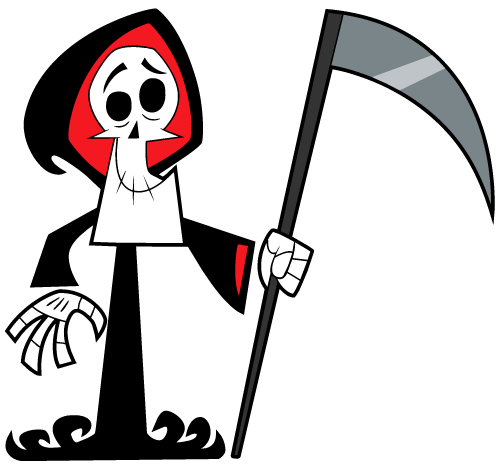
Death and All His Friends – Part One: Death

Grimm The Grimm Adventures  of Billy and Mandy
Grimm
The Grimm Adventures
of Billy and Mandy

“And I looked, and behold a pale horse: and his name that sat on him was Death.”

– St. John the Evangelist, Book of the Revelation Chapter 6, Verse 8

For whatever reason, I’ve been contemplating Death recently. Not the action, but the character. So, I decided to examine Death in the following pieces of literature: John Donne’s “Death Be Not Proud”, Samuel Coleridge’s “Rime of the Ancient Mariner”, Edgar Allen Poe’s Masque of the Red Death, and Terry Pratchett’s Discworld series. I chose these works for the simple reason that I could remember enough about them while running to work through some semblance of order.  The thoughts here are my own, and as such, mistakes in translation, interpretation, or application are also my own and should not reflect poorly on the authors of these magnificent works of English literature.

John Donne: “Death Be Not Proud”

Donne sees Death as a foe to be defeated; this is indicated by the very title of his poem. To me, Donne’s initial view of Death is similar to that of a hired thug. In the opening lines, Donne says that Death is considered by some to be “mighty and dreadful”. I imagine this Death to be a hulking bulk of a man lurking in dark shadows waiting for his naïve victim to stroll by. Nevertheless, Death himself has no power. Like an assassin or mercenary, Donne’s Death is a slave. “Fate, Chance, kings, and desperate men” determine Death’s contracts and there are always others willing to do the job: poison, war, sickness, poppies (narcotics), and charms (witchcraft) are always available. In addition, Donne’s belief in both a spiritual and bodily Resurrection means that Death has no real power; Death is simply a sleep from which one will soon wake. In the end, Donne’s Death is the schoolyard bully who will soon receive his comeuppance.

Samuel Taylor Coleridge: “Rime of the Ancient Mariner”

Death does not make an appearance here until Part 3 of “Rime,” and his appearance his quite brief. Having killed an albatross, a symbol of good luck, the mariner has doomed his crewmates to misfortune. Eventually, their ship is caught on a windless ocean and the men become delirious with thirst. It is in these throes of despair and despondency that Death makes his appearance. He comes for his prey on a ship befitting Death: it is able to sail and steer without wind, its masts appear to bar the sun, and the rigging has the appearance of cobwebs. Death himself is naked, perhaps intended as a reminder of the verse from the Book of Job; “Naked I came from my mother’s womb, and naked I will depart” (Job 1:21). Death is seen gambling for the souls of the sailors with a woman Coleridge names “Life-in-Death”. Life-in-Death, portrayed as a naked woman, is – to the mariner – both macabre and beautiful, possessing golden hair, red lips, and skin “white as leprosy.” Of all the crew, only the mariner is won by Life-in Death; however, the mariner considers those who died to be the fortunate ones. Coleridge then gives us the idea that there are some things worse than death. For the mariner, his fate is immortality; driven on by a supernatural desire to tell others his tale, he becomes a prisoner in his own body – a body that yearns for the release of death, a release that may never come.

Edgar Allen Poe: Masque of the Red Death 

Poe’s Death seems to take the worst aspects of Donne and Coleridge and combine them. Poe’s Death is accompanied by the Red Death, a form of pestilence (which will be examined in Death and All His Friends – Part 4: Pestilence) that kills within half an hour of initial infection. Against the threat of Death and contagion, Prince Prospero stocks his abbey with food and then locks himself and a thousand friends inside. As Poe says, “Security [was] within. Without was the “Red Death.” Six months later, Prospero hosts a wildly grotesque masquerade ball. Now in addition to his attempt at locking Death out, Prospero also chooses to mock fate in his décor: every room of the ball is decorated in bright colors except for the last, heavily adorned with black accoutrements, blood-red windows and containing a clock whose timing is designed to purposefully unnerve all who enter. To me, Prospero is mocking death by designing a room whose décor mirrors the color of death in the outside world. Almost theatrically, Death manifests himself at midnight. He comes dressed as the Red Death, wearing funeral robes stained with blood and the mask of a corpse. Ignoring the other revelers, Death moves inexorably towards Prospero, who calls for this uninvited guest to be seized and hanged. Lacking courage, none of Prospero’s friends move to help him; seizing a dagger, Prospero forces Death into the ghastly final room. However, upon reaching the disconcerting chamber, Death disappears and Prospero falls dead. It is then that the partygoers realize that figure of the Red Death was not a guest, but Death himself, and one by one they drop dead. When the last nobleman dies, “Darkness and Decay and the Red Death [hold] illimitable dominion over all.” Unlike Donne, there is no defeat of Death; he is the unavoidable equalizer, bringing both small and great to the same end with no hope or assurance of salvation.

A brief overview of Death from the Discworld novels and the world he inhabits.

Pratchett’s Death is difficult to explain to those who haven’t read his novels, but I’ll do my best to explain: imagine Death as you would want him to be. The Death of the Discworld is personable; it is only in the first book of the series, The Colour of Magic, that he is downright malicious. However, as the series has progressed, so has Death. His job is not to kill, as Death does in Donne, Coleridge, and Poe, but to collect souls after physical death has occurred. It is Death’s job to show the departed the way to their respective afterlives, whether it be some version of Valhalla, Paradise, or Reincarnation. He is sympathetic to the plight of humanity, at times endeavoring to understand emotions such as love, forgetfulness, and boredom. Death is seen as the protector of humanity and the provider of a necessary service. He is not someone to be feared, but rather a guide in unknown territory. I find now that I cannot do justice to Pratchett’s Death, you’ll just have to read the books for yourself. Suffice it to say that I find the character of Death in the Discworld series to be one of the most comforting characters in modern English literature.

Author’s Note: Death plays a minor role in many of Terry Pratchett’s Discworld novels. For those desiring to read more about Death, he plays a major role in the following books: Mort , Reaper Man , Soul Music , Hogfather , and Thief of Time.

Death and All His Friends – Part Two: War

Fahrenheit 1984

“How long is it since you were really bothered? About something important, about something real?”

Ray Bradbury, Fahrenheit 451

“The choice for mankind lies between freedom and happiness and for the great bulk of mankind, happiness is better.”

George Orwell, 1984

Like many Americans, I was greatly affected by the events in Massachusetts over the last several days. As an avid runner, I was appalled that America’s greatest marathon was subjected to such atrocities. My heart continues to ache for those who lost loved ones, those who were injured, and those who may never run again. I was angry that American soil had once again been attacked, this time by terrorists too cowardly to die with their own bombs. However, I was equally troubled with what happened after the bombs went off. First, the media was all over this from the start. Now, there are those who argue that the intense media coverage isolated the attackers and shortened the manhunt. However, I contend that the media played a negative roll in the events of the last few days. Consider the false reports issued by major news outliet in the first few hours after the initial attacks: the New York Post reported that 12 people were initially killed in the blast and that a Saudi national had been arrested; the AP reported that cellular coverage in the Boston area had been disrupted to prevent further remote detonations; several sources – including the Times – reported multiple undetonated devices at “undisclosed” locations and the JFK Library; and, in what is in my opinion the most egregious error of the whole mess, BuzzFeed incorrectly identified one of the bombers as Sunil Tripathi (I can only imagine the grief experienced by his family). In short, most media outlets are guilty of fearmongering and adding to the public distress; they have done nothing short of shouting “FIRE!” in a crowded theatre.

In addition, several media outlets known for their left-leaning ideology incorrectly surmised that the bomber would belong to a right-wing extremist group. MNBC’s Chris Matthews said point-blank that “domestic terrorists…tend to be on the far right,” and the same station’s Lawrence O’Donnell claimed that the National Rifle Association was aiding the as-yet unknown terrorist in his escape. On salon.com, David Sirota hoped that “the Boston Marathon bomber is a white American.” Left-wing extremist Michael Moore claimed that the Tea Party was behind the attacks, while countless other celebrities said that events in Boston meant that the Second Amendment “must go” (as if guns had something to do with placing shrapnel in a pressure cooker and turning into a homemade bomb; I don’t see anyone clamoring to outlaw backpacks, pressure cookers, or cell phones). At least CNN tired to couch their allegations in the form of a question: “Right Wing Extremists To Blame For Explosions?” So far, I am unaware of any of these networks or individuals apologizing for their vile and hate-fueled remarks.

Second, I was disturbed by the actions and reactions of both the government officials in charge of the investigation and the Bostonians affected by those actions. In particular, my distress comes from the decision to declare martial law. Not even in New York City in the wake of 9/11 was martial law declared. Imagine: an unknown killer is on the loose and the response of the authorities is to confine people in their homes, thereby making them sitting targets, and to limit their abilities to defend themselves. I wonder, did anyone in the area affected by the lockdown feel safer knowing the average civilian was limited to a ten-round magazine? If it were me, I’d want to be sure I could blow this terrorist to kingdom come.

However, I was even more shocked by the response of the Bostonians living under lockdown: they accepted it. These Americans willingly sacrificed freedom and personal liberty for peace and security. I would remind my readers of the words of Benjamin Franklin: “Those who would give up essential liberty to purchase a little temporary safety deserve neither liberty nor safety.” Not only did the Bostonians accept it, but the media put a positive spin on it: they successfully convinced the American population that this was a necessary action to achieve a desired end and the willful surrender of constitutional rights was the patriotic and noble thing to do.

Some readers will think me a right-wing lunatic or a conspiracy theorist while in reality I am neither. (My political opinions and voting record will show that I am simply a right-leaning independent who has voted for candidates of varying parties and platforms.) However, I find something in the whole affair that smacks of George Orwell and Ray Bradbury. We saw the news outlets acting as Big Brother monitoring the isolated areas of Boston and broadcasting their general ignorance to the “parlor walls” of the American populace. Americans waited with anticipation next to their televisions, radios, and computers as the search zone was narrowed, reports were issued, and then – finally – Dzhokhar Tsarnaev was captured.

How soon before we experience the final pages of Fahrenheit 451? How soon before someone commits an act of terrorism, the government issues a lockdown, and – with a desire to keep the peace and quickly calm the fears of America – finds a scapegoat to blame the attacks on (it goes without saying that said scapegoat would be killed “evading authorities”). Remember, this exactly what the government does in Bradbury’s dystopia when it is unable to apprehend Guy Montag.

I applaud the law enforcement personnel for their service. My heartfelt condolences go out to those whose loved ones were killed or injured. Nevertheless, I must remind Americans that Orwell and Bradbury were right: Big Brother is always watching, and the Hound never sleeps.

What Spectators Add To The Marathon Experience

I was listening to my unheard podcast playlist and I came across this snippet from Talk of the Nation. Take some time to check it out; the audio is only 17 minutes long.

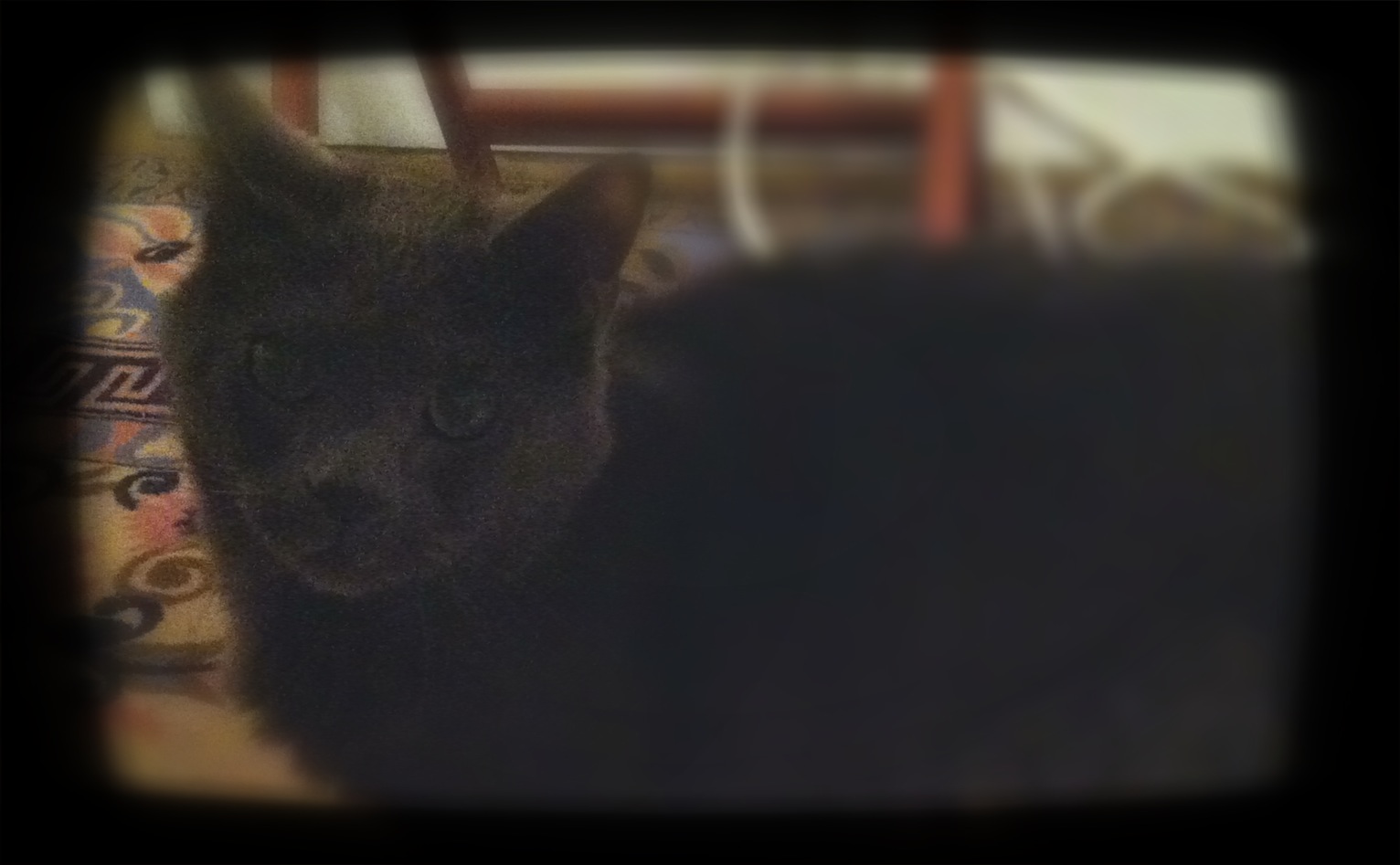
Smokey

IMG_0438

Sometimes an animal comes into your life when you least expect it. Take, for example, my cat Smokey. Almost four years ago my wife and I were approached by an elderly lady who lived next door to the school where we worked. She was going into a nursing home and wanted to be sure that her 5-year old Russian Blue would be well looked after. We had been discussing adopting a pet for some time, but always disagreed on what our pet should be. I’d always grown up around dogs; cats were for living outside (most of the time) as a type of natural pest control. My wife, however, dislikes dogs with every fiber of her being. We were now presented with the option of taking in a cat that we had never met, but who was already fixed and (supposedly) house-trained. We said yes.

Smokey arrived in one of those cheap plastic carriers that retain the smell of the first thing ever put in it. In this case, it smelled like sick cat. We carried him to the vet to get a checkup and picked him up after school. He meowed and threw up for the entire 20 minute drive. Smokey’s first introduction to our home was the bathroom. We set up some food and water and a litter box for him and let him out of the foul carrier, which I immediately disposed of. Smokey immediately ran behind the toilet and refused to come out if he knew we were watching.

Then there was the issue of house training. Apparently, Smokey was not well-looked after in the litter department and had taken to peeing on any plastic bag he could find. We found this out the hard way after he peed on a bag of gym clothes we had left in the bathroom to be washed. Once we removed all plastics and clothing from our spare room, he soon learned to use a litter box.

It was after Smokey settled down and became used to our routine that I realized something: Smokey thinks he’s a dog. Now I know the difference between a Russian Blue and many varieties of canines, but apparently no-one ever informed Smokey. He’s the first cat I’ve ever known (and I worked in an animal shelter for several years) to actually enjoy water. He only drinks running water from our bathtub. He tried to get into the shower with me in the morning. He one jumped in the bathtub while I was drawing water and stood in it as the water came up to his knees. Once, he even managed to turn on the water all by himself.

He gets into mischief, especially when it comes to trash. Now, dogs will mainly go after trash that has some kind of food or food scent on it. Smokey takes it further. He will drag trash out of the trash can simply because it’s in the can. We had to try three different animal repellent sprays to find one that actually bothered him. Now we spray the trash can every time we throw something away.

Now don’t get me wrong: Smokey loves food. He loves it a lot. He’ll eat for the sake of eating. He loves food so much he’s managed to open a cabinet door, knock over his food container, and paw at the lid until it opens. He tries to eat our supper before we’ve even finished cooking it. He climbs into the kitchen sink to lick plates that have already been rinsed (and sometimes even washed).

Smokey is also a guard cat. Any time someone pulls into our driveway, he’ll meow once and then sit patiently by the door. If there are strange noises outside (and, given our neighbors, there are strange noises at all times of the day and night) he’ll wander around the house trying to find out where they come from. And, he keeps our house relatively free from pests. Spiders, bees, beetles, bugs, lizards, and tree frogs have all been killed (or chased out the door) due to his keen hunting capabilities. In fact, this afternoon I saw him stalk a bee that came in with us after work, jump at least three feet in the air, and kill it with one blow.

He’s also a people cat. Any time anyone is sitting down, he tries to be near them. If they’re resting on the couch, he has a burning desire to be on top of them. If I try to chase him off, he’ll simply sit on the back of the couch.

So, after four years, I’ve come to a conclusion. When Smokey came into my life he wasn’t the cat I would have chosen, but looking back he’s exactly the cat I needed.

Thoughts on Boston

My first thought went out to the runners. As a marathoner myself, I understand the pure joy of simply being in a race, but this wasn’t just any other weekend marathon; this was Boston. In my opinion, the Boston Marathon is the premier long-distance race in the United States. I know everyone has that one race where they set their PR or that one vacation getaway that they go to every year. Nevertheless, there’s a reason why all races are compared to Boston: they’re either Boston Qualifiers or they’re not. I can only imagine the thrill of actually qualifying for Boston, let alone running it. These runners had trained long and hard to participate, and now many of them lay injured on the ground, some perhaps unable to ever run again.

My second thought was about the time. When I heard that the bombs exploded about 3 hours after the winners crossed the finish line, I realized “that would have been me!“. My average pace for a marathon is a little over 5 hours, so assuming that the winners would have crossed the finish line between 02:30 and 03:00, then one of those runners injured could very well have been me. And then as I thought more about the time, I realized that whoever planted this bomb had thought things through. After roughly five hours the finish line would be somewhat crowded with finishers, families, and cheer squads encouraging the somewhat slower racers. This terrorist understood how races work and used it to his advantage. The thought sickened me.

My next thought went out to the emergency personnel. It was here that America demonstrated that heroes still exist. Too often we think that heroes have some supernatural ability or multimillion-dollar tactical armor. They wear capes and disguises and live lives apart from the rest of us. And yet, as the bombs exploded and the innocent were injured and the cameras of the major news networks spread the news to every corner of the globe, we saw the true definition of heroism. A hero is simply someone who runs toward danger instead of away from it.

I’m sure that in the weeks to come more information will come to light. Perhaps other targets will be uncovered, suspects may be taken into custody, and motives become clear. But until then, the thoughts and prayers of a nation are with the people of Boston and the victims of this tragic day.

Website Powered by WordPress.com.

Up ↑