Teaser Tuesday: The Disappearing Spoon

The gnomes are hard at work crafting brilliant articles and staging stunning photographs.

However, once again the wheel of time has turned to

Teaser TuesdayJust in case you don’t know, Teaser Tuesday is a weekly bookish meme, hosted by A Daily Rhythm. Anyone can play along! All you have to do is grab the book you’re currently reading, open to a random page and share two sentences from that page. But make sure you don’t share any spoilers!*

*I wish I could take credit for this introduction, but I shamelessly stole it from Heather over at bitsnbooks. To help me make amends, you should go check out her blog.


This week I’m reading The Disappearing Spoon: And Other True Tales of Madness, Love, and the History of the World from the Periodic Table of the Elements by Sam Kean. The book is an anecdotal walk through the table of elements, and I knew Mr. Kean was an author who really gets me – as they say – when I read these wonderful lines on page twelve:

Probably the biggest frustration for many 
students was that the people who got the
periodic table, who could really unpack 
how it worked, could pull so many facts
from it with such dweeby nonchalance. 

It was the same irritation color-blind 
people must feel when the fully sighted
find sevens and nines lurking inside
those parti-colored dot diagrams - - 
crucial but hidden information that 
never quite resolves itself into 
coherence. 

Huzzah! Recognition of a plight afflicting eight per cent of men – myself included. Hopefully, the book will live up to my now-high expectations.


The Disappearing Spoon

In Retrospect

I gave  Fragile Things by Neil Gaiman five stars. I liken this selection of short stories to a packet of chips – or crisps, if you prefer – in that I sat down to read only one or two only to look up two hours later having devoured the whole thing. Honestly, it is that good. It’s difficult to pick out a favorite line or story, but this one from “How to Talk to Girls at Parties” best sums up my feelings:

You cannot hear a poem without it changing you.


Teaser Tuesday: Fragile Things

Allergies and back pain may have laid me low the last few days, but that hasn’t stopped me reading! Which means that . . .

Once again the wheel of time has turned to

Teaser TuesdayJust in case you don’t know, Teaser Tuesday is a weekly bookish meme, hosted by A Daily Rhythm. Anyone can play along! All you have to do is grab the book you’re currently reading, open to a random page and share two sentences from that page. But make sure you don’t share any spoilers!*

*I wish I could take credit for this introduction, but I shamelessly stole it from Heather over at bitsnbooks. To help me make amends, you should go check out her blog.

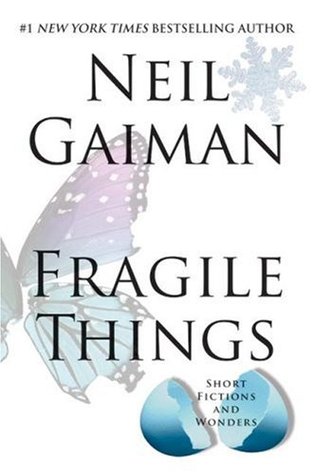
This week I’m reading Fragile Things by Neil Gaiman. Having previously read The Ocean at the End of the Lane, I’m looking forward to this collection of short stories.

This selection comes from “Instructions”

Trust the wolves, but do not tell them
    where you are going.
The river can be crossed by the ferry.
    The ferryman will take you.
(The answer to his question in this:
If he hands his oar to his passenger, he
    will be free to leave the boat.
Only tell him this from a safe distance.)

fragile things

In Retrospect

I haven’t yet finished 1916: The Easter Rising, but it’s proving quite enlightening and a valuable asset in my MOOC.

I did finish The Long Mars (yesterday!). As a whole I thought it a satisfactory ending to the trilogy, yet some things bothered me as unnecessary or overtly contrived. Not quite a Deus Ex Machina, but close . . .

April: First Guest Post!

It is with great pleasure I present to you a wonderful stream-of-consciousness guest post.

Enjoy!


I have never begun a novel with more misgiving. Granted: I am an inmate of a mental hospital; my keeper is watching me, he never lets me out of his sight; there’s a peephole in the door, and my keeper’s eye is the shade of brown that can never see through a blue-eyed type like me. If I am out of my mind, it’s all right with me. I write this sitting in the kitchen sink.

Lolita, light of my life, fire of my loins, call me Ishmael. I am a sick man . . . I am a spiteful man . . . I am an invisible man. You don’t know about me without you have read a book by the name of The Adventures of Tom Sawyer; but that ain’t no matter.

If you really want to hear about it, the first thing you’ll probably want to know is where I was born, and what my lousy childhood was like, and how my parents were occupied and all before they had me, and all that David Copperfield kind of crap, but I don’t feel like going into it, if you want to know the truth. Whether I shall turn out to be the hero of my own life, or whether that station will be held by anybody else, these pages must show.

In a sense, I am Jacob Horner. I was born twice: first, as a baby girl, on a remarkably smogless Detroit day in January of 1960; and then again, as a teenage boy, in an emergency room near Petoskey, Michigan, in August of 1974. I am an American, Chicago born—Chicago, that somber city—and go at things as I have taught myself, free-style, and will make the record in my own way: first to knock, first admitted; sometimes an innocent knock, sometimes a not so innocent

You are about to begin reading Italo Calvino’s new novel, If on a winter’s night a traveler. A story has no beginning or end; arbitrarily one chooses that moment of experience from which to look back or from which to look ahead. This is the saddest story I have ever heard. It was like so, but wasn’t. I had the story, bit by bit, from various people, and, as generally happens in such cases, each time it was a different story. All this happened, more or less.

Once upon a time and a very good time it was there was a moocow coming down along the road and this moocow that was coming down along the road met a nicens little boy named baby tuckoo.

It was the best of times, it was the worst of times, it was the age of wisdom, it was the age of foolishness, it was the epoch of belief, it was the epoch of incredulity, it was the season of Light, it was the season of Darkness, it was the spring of hope, it was the winter of despair. It was a bright cold day in April, and the clocks were striking thirteen. The sun shone, having no alternative, on the nothing new.

It was a dark and stormy night; the rain fell in torrents, except at occasional intervals, when it was checked by a violent gust of wind which swept up the streets (for it is in London that our scene lies), rattling along the house-tops, and fiercely agitating the scanty flame of the lamps that struggled against the darkness. The sky above the port was the color of television, tuned to a dead channel.

Happy families are all alike; every unhappy family is unhappy in its own way. In my younger and more vulnerable years my father gave me some advice that I’ve been turning over in my mind ever since: “You better not never tell nobody but God.

Many years later, as he faced the firing squad, Colonel Aureliano Buendía was to remember that distant afternoon when his father took him to discover ice. Once an angry man dragged his father along the ground through his own orchard. He was an old man who fished alone in a skiff in the Gulf Stream and he had gone eighty-four days now without taking a fish.

They say when trouble comes close ranks, and so the white people did. They shoot the white girl first.

124 was spiteful. It was a wrong number that started it, the telephone ringing three times in the dead of night, and the voice on the other end asking for someone he was not.

Mother died today.

Time is not a line but a dimension, like the dimensions of space.

It was a queer, sultry summer, the summer they electrocuted the Rosenbergs, and I didn’t know what I was doing in New York. It was the day my grandmother exploded. Having placed in my mouth sufficient bread for three minutes’ chewing, I withdrew my powers of sensual perception and retired into the privacy of my mind, my eyes and face assuming a vacant and preoccupied expression.

In the late summer of that year we lived in a house in a village that looked across the river and the plain to the mountains. For a long time, I went to bed early. We started dying before the snow, and like the snow, we continued to fall. It was a pleasure to burn.

There was a boy called Eustace Clarence Scrubb, and he almost deserved it. He was born with a gift of laughter and a sense that the world was mad. He was an inch, perhaps two, under six feet, powerfully built, and he advanced straight at you with a slight stoop of the shoulders, head forward, and a fixed from-under stare which made you think of a charging bull. He—for there could be no doubt of his sex, though the fashion of the time did something to disguise it—was in the act of slicing at the head of a Moor which swung from the rafters.

“Take my camel, dear,” said my Aunt Dot, as she climbed down from this animal on her return from High Mass.

Where now? Who now? When now?

It is a truth universally acknowledged, that a single man in possession of a good fortune, must be in want of a wife. Of all the things that drive men to sea, the most common disaster, I’ve come to learn, is women. It was love at first sight. What if this young woman, who writes such bad poems, in competition with her husband, whose poems are equally bad, should stretch her remarkably long and well-made legs out before you, so that her skirt slips up to the tops of her stockings?

The human race, to which so many of my readers belong, has been playing at children’s games from the beginning, and will probably do it till the end, which is a nuisance for the few people who grow up.  Justice?—You get justice in the next world, in this world you have the law.


A special thanks to the American Book Review for making this post possible.

Teaser Tuesday: 1916: The Easter Rising

Once again the wheel of time has turned to

Teaser Tuesday

Just in case you don’t know, Teaser Tuesday is a weekly bookish meme, hosted by A Daily Rhythm. Anyone can play along! All you have to do is grab the book you’re currently reading, open to a random page and share two sentences from that page. But make sure you don’t share any spoilers!*
*I wish I could take credit for this introduction, but I shamelessly stole it from Heather over at bitsnbooks. To help me make amends, you should go check out her blog.

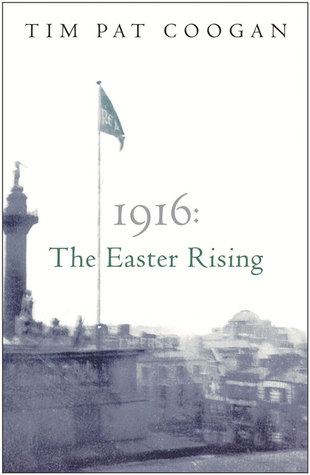
This week I’m reading 1916: The Easter Rising by Tim Pat Coogan. I’ve had the book for several years but never tried reading it until I started a MOOC on Ireland between 1912 and 1923.

Redmond Howard, a politically aware witness to the 
Rising and a critic of the rebels, wrote in its 
aftermath: 'There never was, I believe, an Irish 
crime -- if crime it can be called -- which had 
not its roots in an English folly.

Irish history is not my forte; hence my reason for taking the class.

Perhaps I’ve whetted your appetite!

1916 The Easter Rising

In Retrospect

I haven’t yet finished The Long Mars, but it’s proving quite enjoyable.

In case you missed it, here’s my 5-Star review of Amanda Palmer’s Art of Asking.
 

Review: The Art of Asking

I don’t know why I started following Amanda Palmer on Twitter.

I’d never heard her music.

I’d never seen her show.

I’d never read her name in the news.

I only knew she was the wife of Neil Gaiman.

Amanda Palmer HuffPo
When I saw she had written a book, I thought “yeah, I’ll add that to the list and read it someday.” Then, it started to take over my Twitter feed. One Saturday I decided to see if my small-town library even had a copy; they did, and it was available. I tweeted about it, and much to my surprise, Amanda Palmer herself retweeted me. Twice:

Amanda Palmer Retweeted Me

I used her book for my second-ever Teaser Tuesday and almost couldn’t put it down:

Here's the thing: all of us come from some place 
of wanting to be seen, understood, accepted, 
connected.
 
Every single one of us wants to be believed.

Artists are often just . . . louder about it.

Art of Asking is also the first book in a long time I received flak over. Apparently, the cover “isn’t appropriate.” Really, people? Ulysses and Lolita were fine, but AoA needs to be hidden away? Perhaps you forgot the phrase

"Don't judge a book by its cover."

And what a book it is. Amanda recounts her early artistic career as a Living Statue, the growing pains of the Dresden Dolls, her falling-into-love with Neil Gaiman, the backlash of a successful Kickstarter campaign, her current tour, and many personal relationships. Through it all she delves into the basic human need to be seen and understood without being judged, to ask without fearing the possible – inevitable? – rejection, to trust unconditionally.

Amanda lets us into her world and barew her own fears and faults and foilables. She does not claim perfection, far from it. What she offers is light.

A flashlight on a dark path, keeping others from stumbling.

A spotlight on an exit ramp, showing the way.

Track lighting on fine art, highlighting beauty and grace we might have missed.

The best books reach inside and change the very essence of our being. They change how we see ourselves, those around us, and the world we live in. They are unavoidable catalysts for change in a static world. In my last twenty-nine years, only three authors spoke to me in such a way:

J.R.R. Tolkein

C.S. Lewis

Dante Alighieri

Now the Triumverate becomes a Tetrarchy:

Amanda Palmer has arrived.

For Richard

It’s not often that we history teachers can stand in front of our class, point to a current event, and declare with authority “This is Historically Significant.”

This week, though, was different. This week Richard III was finally laid to rest. A king many know only from Shakespeare, perhaps Richard wasn’t all that bad. After all, the Bard did manage to besmirch John as the Worst King in England, right? Or maybe that’s just my opinion of Will’s opinion.

Therefore, I read with great delight the poem written specifically for the occasion by England’s Poet Laureate:

Richard
  by Carol Ann Duffy

My bones, scripted in light, upon cold soil,
a human braille. My skull, scarred by a crown,
emptied of history. Describe my soul
as incense, votive, vanishing; your own
the same. Grant me the carving of my name.

These relics, bless. Imagine you re-tie
a broken string and on it thread a cross,
the symbol severed from me when I died.
The end of time – the unknown, unfelt loss –
unless the Resurrection of the Dead . . . 

or I once dreamed of this, your future breath
in prayer for me, lost long, forever found;
or sensed you from the backstage of my death,
as kings glimpse shadows on a battleground.

Now see and hear it read by Benedict Cumberbatch, famous actor and third cousin sixteen times removed from Richard III:

Powerful. The sense of loss and pain and regret juxtaposed with future hope and joy. So much history contained in fourteen lines.

Website Powered by WordPress.com.

Up ↑