The Word of the Week is . . .

Discovery seems to be the Word of the Week.


First, photoblogger consistentrelent gave RIMH its 1,000th like!

1k Likes


Then I decided to take the plunge and join my first MOOC: Irish Lives in War and Revolution. After listening to NPR review MOOCs and doing a little independent research, I hit upon this course thanks to OpenCulture. Seriously, if you’re not following them on Twitter, you should be. I find something worth reading, saving, and sharing several times a week.

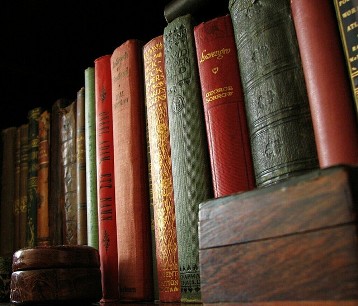
Speaking of Twitter, another good Twitter account is Bibliophilia. I find myself saving their shared images daily. Images like this one:

Muses


Oh, and speaking of images, I’ve been taking WordPress’ Photography 101 course and found it extremely inspirational. I’ve discovered that I can, indeed, take and edit good pictures with my iPhone 4s (I highly recommend the Afterlight app). I’ve also discovered some apps to manually adjust the ISO and shutter speed and some tips on taking iPhone photos with a telescope; given the time change – is that today? It is! – I’m going to attempt some “morning moon” pictures this coming Thursday or Friday. Stay tuned! In the meantime, here’s a gallery to get you caught up:


Was I talking about apps earlier? I think I was. Another good app I discovered this week is InstaQuote (thanks, Gus Sanchez!). I had some iTunes money left from Christmas, so I went ahead to bought the full package. The app lets me do things like this:

FM Quote 1
Bonus Points if you know where it comes from 🙂

Look for a weekly feature to being next week highlighting a quote or random text from a book I’m currently reading or a song lyric that’s been stuck in my head. Want to know what I’m reading? Check out the bottom widgets! Want to know what I’m listening to? Sometimes I share it on Twitter!


And then there’s that moment when an author you follow on Twitter retweets you.

Twice!

Amanda Palmer Retweeted Me


With so much going on this week, I’m certain I forgot something.

Look for an update if I remember anything!

Review: A Burnable Book

Knowledge is currency.

It can be traded and it can be banked, and more secretly than money.

A Burnable BookLondon, 1385:

A book and a cloth prophesy regicide.

Two aspiring poets hide their own a dark secrets.

Two ambitious men plot revenge.

Two fallen women desire a better life.

This is the scene and these are the principal characters of Bruce Holsinger’s A Burnable Book. A book of heretical verse prophesying the death of Richard II circulates through London. When the only known copy goes missing, it’s up to John Gower – enlisted by his friend Geoffrey Chaucer – to track it down and stop the assassination.

[SPOILERS AHEAD]

Distraction, deception, subterfuge, mendacity, all those unspoken tools of the subtler crafts: government and trade, diplomacy and finance.

As far is intrigues go, I found A Burnable Book relatively easy. It is quite obvious that Chaucer is the author of De Mortibus, that Gower’s son Simon is in it up to his ears, and the identity of the so-called “mystery girl” is evident early on as well. History tells us that Richard II wasn’t assassinated in 1385, so we know the plot will fail. (I really shouldn’t have to give a spoiler alert for something over 600 years old, you know . . .) However, this did not stop me from enjoying the book and seeing how the characters would figure it out. For me, the only real plot twists were (a) just who was responsible for Simon’s involvement in the plot and (b) just how much Chaucer “knew” beforehand.

As a work of fiction, I found A Burnable Book to be about as satisfying as a bag of chips: It filled time but had little actual value. Adam Scarlett really turned me off. A relatively minor character, his rather violent end was not really necessary to the plot. Furthermore, coming as it did in the final ten pages of the book, it somewhat ruined the denouement of the overall storyline. I understand the motives behind his death; I simply think it should have come at a different point (preferably not at all).

I borrowed this book from my local library; otherwise, I would have felt robbed. I definitely wouldn’t pay $26 for the hardback edition, and even $8 for a paperback may be a bit much.

My overall rating:

2.5 stars

Apologies for the Inconvenience

If you had problems viewing the Virtual Read Out, those issues have been addressed.

But what of the inconvenience of banned and challenged books? Do the school boards, parents, or “concerned individuals” ever apologize for limiting the First Amendment, for restricting education, or for judging the opinions of others?

As Banned Books Week draws to a close, remember that the war is far from over. The censors may lose a battle, but they haven’t surrendered the war.

Be Wary.

Be Vigilant.

Be Reading.

BBW Artwork

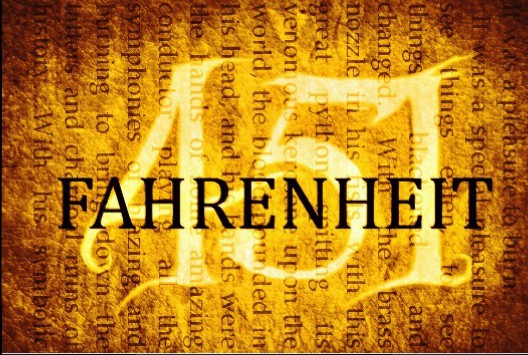
Some time ago I wanted a custom iPhone case. Although I never ordered it, I just couldn’t throw the artwork away; perhaps because it was the first time I semi-successfully created a fire effect in Photoshop. Enjoy!

Burning Fahrenheit 451

Challenged Sentences

LeatherBooksWant to read something for Banned Books Week but just don’t have the time? You’re in luck! Below, you’ll find ten of the most challenged books in the United States condensed (by me) into one sentence.

Irony isn’t lost on me; it wasn’t too long ago in writing about Fahrenheit 451 that I included the line:

Classics cut to fit fifteen-minute radio shows, then cut again to fill a two-minute book column, winding up at last as a ten- or twelve-line dictionary resume.

However, my goal is not to tell the story; rather, to whet your appetite for more.

Enjoy, fearless reader!

Ulysses (James Joyce; “explicit nature” and “promoting lust”): As an omniscient observer, spend 16 June 1904 with Leopold Bloom in Dublin.

To Kill a Mockingbird (Harper Lee; “racial slurs, profanity, and blunt dialogue about rape”): Scout, a young girl in Maycomb, Alamaba, learns from her father why racism is wrong.

The Sun Also Rises (Ernest Hemingway; profanity and sex): A group of young people attempt to forget the horrors of WWI with sex, parties, and alcohol.

Slaughterhouse-Five (Kurt Vonnegut; “depraved, immoral, psychotic, vulgar, and anti-Christian”): A soldier in WWII, Billy Pilgrim suffers from shell-shock.

1984 (George Orwell; sexual content and violence): A totalitarian government breaks Winston Smith.

The Jungle (Upton Sinclair; socialist philosophies): Discover the horror of meatpacking in the early 1900s (and socialism, too).

James and the Giant Peach (Roald Dahl; “inappropriate language, encourages disobedience to parents, references to drugs and alcohol, and ‘magical elements’): A young boy flees his abusive aunts in a magical fruit with talking insects.

The Great Gatsby (F. Scott Fitzgerald; “language and sexual references”): Jay Gatsby throws extravagant parties in an attempt to win the love of Daisy Buchanan.

Catch-22 (Joseph Heller; “offensive language”): John Yossarian deals imaginatively with Air Force bureaucracy in WWII.

The Adventures of Huckleberry Finn (Mark Twain; race and social issues): Huck Finn runs away from home and rafts down the Mississippi River with escaped slave Jim.

Child of Fear – Father of Ignorance

Censorship is the child of fear and the father of ignorance.

– Laurie Halse Anderson

LeatherBooksFor years I’ve told my students, “If you don’t like to read, it’s only because you haven’t found something you like to read.” No one really hates reading; they hate being told what to read and when to read it. Then, because this mandate usually comes from a “mean teacher,” they project that hatred onto the act itself. I recall one student who – on the first day of school – declared she hated reading and would rather solve long division (she hated math, too) than read a single page of another book. By the end of the year she loved reading; all it took was a little coaching to find what she actually wanted to read.

BBWPoster2013But what happens when a book you want to read has been censored or banned? I remember looking through my school’s library in Middle School and finding all the “bad words” marked out in black sharpie (which then bled through onto the next page, effectively ruining three pages of text). What good does that do? Did they really think we couldn’t figure out what was being said? If anything, it encouraged us to find non-vandalized copies and figure out what they were hiding from us.

Those that would censor books for religious, moral, or political reasons have entirely missed the point. Now, I agree that parents should have ultimate control over what their children read, but that’s where their power ends. No one should be able to dictate what someone else reads. Doing so kills creativity, stifles healthy debate, and creates citizens incapable of rational thought. It’s not enough to say “I don’t like it because my parents don’t;” that excuse stops working around the ninth grade.

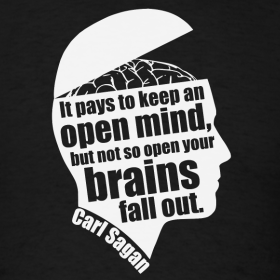
Carl Sagan Open MindI never tell my students to read with an open mind; I tell them to read with a discerning mind. An open mind blindly accepts information; a discerning mind filters information. The problem is that censors view books the way others view television: as a babysitter. Books entertain and teach, and require a guide. Just because you want to shirk that responsibility doesn’t give you the right to violate the First Amendment.

By happy coincidence, Banned Books Week coincides with my Bill of Rights section of American Government. I have no idea how my students will react – I suspect less than half of them read voluntarily. We’ll just have to see how it goes.

Website Powered by WordPress.com.

Up ↑