The Swordfish Oracle

8 June 2001

A Conversation between Stanley & Gabriel

S: War? Who are we at war with?

G: Anyone who impinges on America’s freedom. Terrorist states, Stanley. Someone must bring their war to them. They bomb a church, we bomb ten. They hijack a plane, we take out an airport. They execute American tourists, we tactically nuke an entire city. Our job is to make terrorism so horrific that it becomes unthinkable to attack Americans.

S: How can you justify all this?

G: You’re not looking at the big picture, Stan. Here’s a scenario: You have the power to cure all the world’s diseases, but the price for this is that you must kill a single innocent child; could you kill that child, Stanley?

S: No.

G: You disappoint me; it’s the greatest good.

S: Well how about ten innocents?

G: Now you’re getting it, how about a hundred – how about a thousand, not to save the world, but to preserve our way of life?

S: No man has the right to make that decision; you’re no different from any other terrorist.

G: No, you’re wrong, Stanley. Thousands die every day for no reason at all, where’s your bleeding heart for them? You give your twenty dollars to Greenpeace every year thinking you’re changing the world? What countries will harbor terrorists when they realize the consequences of what I’ll do?

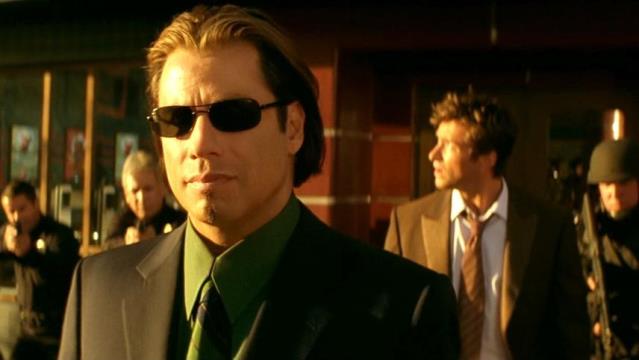
John Travolta Swordfish still

11 September 2001

We know what happened.

We saw the reactions.

We live with the results.

Still, we ask:

How far are we willing to go?

John Travolta Dual Wielding Pistols Swordfish still

6 January 2016

I don’t remember when I first saw Swordfish; I think it was my senior year of high school, which would put it sometime around 2004. I think the movie was taboo in the conservative circles I moved it, not just for the rating but also for its kinds-sorta anti-government message.

Recently, I found it again on Netflix; remembering it as mainly a tecno-drama in which John Travolta shoots massive weaponry and gets away with his scheme to divert $6 billion in government slush money to wage War on Terror [before such a thing existed], I sat down and watched it again.

The conversation stopped me cold. Swordfish came out mereĀ weeks before 9/11. In the aftermath, did we go too far or not far enough? It depends. I wonder what the world would be like if Gore had won Indecision 2000 and not Bush; I honestly think Bush was the right President in 2001, but have second-guessed his re-election in 2004. That may have been a mistake. Dangerous things happen when historians start playing “What-If?”.

Perhaps it’s because Ender’s Game is still fresh in mind, but when I have a free moment, I find myself asking:

How far would I go?

How far should I go?

Thing is, I’m not convinced there’s a right answer.

What do you think?

Swrodfish bus lifted by helicopter


Have a suggestion for a poem, photograph, or future post?

Drop a note in the prompt box!


Don’t forget to follow me on:

Facebook – where I share news stories, articles from other blogs, and various and sundry miscellany that happens to catch my eye. It’s stuff you won’t see here! Well, mostly.

Instagram – where I show you my Life in Motion and share quotes and such. The widget only shows my last three photographs – don’t you want to see them all?

Twitter – where you can see my thoughts in 140 characters or less. Also, funny retweets.

In This Sign

Thanks to Vanessa of Petal & Mortar for dropping a note in the prompt box!

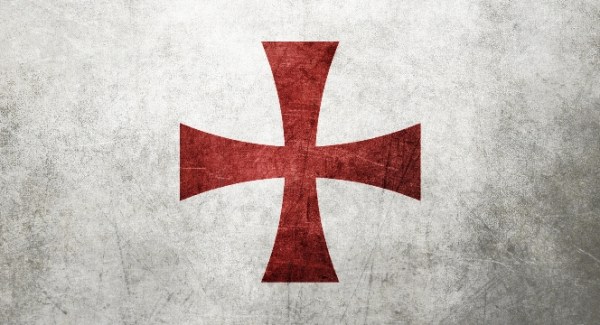
Distressed Templar Cross
Photo Credit: John Patrick Victor Jokinen (Dec. 27, 2012)

IN HOC SIGNO VINCES

So said God to Constantine

So said the Pope to the Masters

So said the Masters to us

In this sign, conquer

Under this sign, defeat the Infidel

Under this sign, conquer the Holy Land for Christendom

Ascalon

Montgisard

Acre

Arsuf

NON NOBIS DOMINE, NON NOBIS, SED NOMINI TUO DA GLORAIM

In this sign, christen

Christened the Templars, for the Temple gave us

the Ark of the Covenant

the Black Books of Wisdom

the Head of John the Baptist

the Holy Grail

the Seed of Christ

the Secrets of geometry

the Treasures of Old Jerusalem

the Power

In this sign, command and control

Command princes and priests and popes and potentates and powers

Control the fighting and fields and finance and future of Europe

A Templar Knight is truly a fearless knight, and secure on every side, for his soul is protected by the armour of faith, just as his body is protected by the armour of steel. He is thus doubly armed, and need fear neither demons nor men.

Bernard de Clairvaux, c. 1135

De Laude Novae Militae [In Praise of the New Knighthood]

In this sign, capitulate

Capitulate to the conspiracy and conniving of kings

Capitulate to the threat and terror of torture

God is not pleased. We have enemies of the faith in the kingdom.

King Philip IV of France

In this sign, continue

God knows who is wrong and has sinned.
Soon a calamity will occur to those who have condemned us to death.

Grand Master Jacques de Molay

Continue in legend and myth and lore and secret societies

Continue until the time is right once more

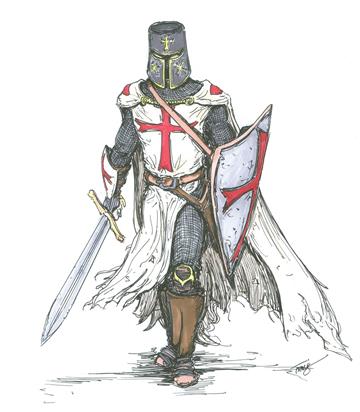
Templar Knight in Battle Dress angelfire7508

IN HOC SIGNO VINCES


Have a suggestion for a poem, photograph, or future post?

Drop a note in the prompt box!


Don’t forget to follow me on:

Facebook – where I share news stories, articles from other blogs, and various and sundry miscellany that happens to catch my eye. It’s stuff you won’t see here! Well, mostly.

Instagram – where I show you my Life in Motion and share quotes and such. The widget only shows my last three photographs – don’t you want to see them all?

Twitter – where you can see my thoughts in 140 characters or less. Also, funny retweets.

Freedom! . . . Right?

You need only reflect that one of the best ways to get yourself a reputation as a dangerous citizen these days is to go about repeating the very phrases which our founding fathers used in the struggle for independence.

Charles A. Beard


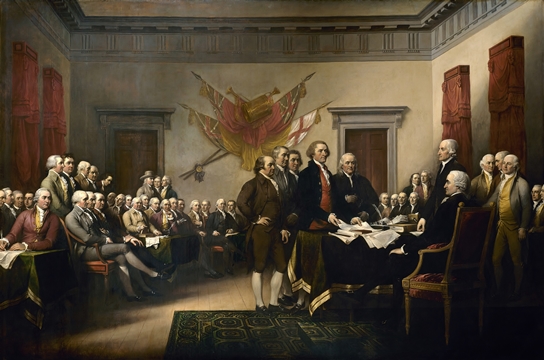
Presentation of the DeclarationPresentation of the Declaration by John Trumbull

The Declaration of Independence lists the “repeated injuries and usurpations,” theĀ  “causes for the separation” of the American colonies from the British motherland:

Ā Note: “He” refers to King George III


He has refused his Assent to Laws, the most whole-
   some and necessary for the public good.

He has forbidden his Governors to pass Laws of 
   immediate and pressing importance, unless 
   suspended in their operation till his Assent 
   should be obtained; and when so suspended, he 
   has utterly neglected to attend to them.

He has refused to pass other Laws for the 
   accommodation of large districts of people, 
   unless those people would relinquish the right 
   of Representation in the Legislature, a right 
   inestimable to them and formidable to tyrants 
   only.

He has called together legislative bodies at places 
   unusual, uncomfortable, and distant from the 
   depository of their public Records, for the sole 
   purpose of fatiguing them into compliance with 
   his measures.

He has dissolved Representative Houses repeatedly, 
   for opposing with manly firmness his invasions 
   on the rights of the people.

He has refused for a long time, after such 
   dissolutions, to cause others to be elected; 
   whereby the Legislative powers, incapable of 
   Annihilation, have returned to the People at 
   large for their exercise; the State remaining 
   in the mean time exposed to all the dangers of 
   invasion from without, and convulsions within.

He has endeavoured to prevent the population of 
   these States; for that purpose obstructing the 
   Laws for Naturalization of Foreigners; refusing 
   to pass others to encourage their migrations 
   hither, and raising the conditions of new 
   Appropriations of Lands.

He has obstructed the Administration of Justice, by 
   refusing his Assent to Laws for establishing 
   Judiciary powers.

He has made Judges dependent on his Will alone, for 
   the tenure of their offices, and the amount and 
   payment of their salaries.

He has erected a multitude of New Offices, and sent 
   hither swarms of Officers to harrass our people, 
   and eat out their substance.

He has kept among us, in times of peace, Standing 
   Armies without the Consent of our legislatures.

He has affected to render the Military 
   independent of and superior to the Civil power.

He has combined with others to subject us to a 
   jurisdiction foreign to our constitution, and 
   unacknowledged by our laws; giving his Assent 
   to their Acts of pretended Legislation:

For Quartering large bodies of armed troops among us:

For protecting them, by a mock Trial, from 
    punishment for any Murders which they should 
    commit on the Inhabitants of these States:

For cutting off our Trade 
    with all parts of the world:

For imposing Taxes on us without our Consent:

For depriving us in many cases, 
    of the benefits of Trial by Jury:

For transporting us beyond Seas 
    to be tried for pretended offences

For abolishing the free System of English Laws in a 
    neighbouring Province, establishing therein an 
    Arbitrary government, and enlarging its 
    Boundaries so as to render it at once an example 
    and fit instrument for introducing the same 
    absolute rule into these Colonies:

For taking away our Charters, abolishing our most 
    valuable Laws, and altering fundamentally the 
    Forms of our Governments:

For suspending our own Legislatures, and declaring 
    themselves invested with power to legislate 
    for us in all cases whatsoever.

He has abdicated Government here, by declaring us 
   out of his Protection and waging War against us.

He has plundered our seas, ravaged our Coasts, burnt 
   our towns, and destroyed the lives of our people.

He is at this time transporting large Armies of 
   foreign Mercenaries to compleat the works of 
   death, desolation and tyranny, already begun 
   with circumstances of Cruelty & perfidy scarcely 
   paralleled in the most barbarous ages, and 
   totally unworthy the Head of a civilized nation.

He has constrained our fellow Citizens taken Captive 
   on the high Seas to bear Arms against their 
   Country, to become the executioners of their 
   friends and Brethren, or to fall themselves by 
   their Hands.

He has excited domestic insurrections amongst us, 
   and has endeavoured to bring on the inhabitants 
   of our frontiers, the merciless Indian Savages, 
   whose known rule of warfare, is an 
   undistinguished destruction of all ages, sexes 
   and conditions.

In summary, an out-of-touch government abused its power and passed laws detrimental to its citizens.

For that, we waged a revolution.

What is it we’re celebrating again?

Oh, right. Freedom.


Have a suggestion for a poem, photograph, or future post?

Drop a note in the prompt box!


Don’t forget to follow me on:

 
Facebook – where I share news stories, articles from other blogs, and various and sundry miscellany that happens to catch my eye. It’s stuff you won’t see here! Well, mostly.
 
Instagram – where I show you my Life in Motion and share quotes and such. The widget only shows my last three photographs – don’t you want to see them all?
 
Twitter – where you can see my thoughts in 140 characters or less. Also, funny retweets.

A Few [Shared] Thoughts on the American Civil War

I previously mentioned that I’m working through The Christian Humanist podcast archives. I just so happened to listen to one particular podcast right after the events in Charleston. What follows is a transcript from episode 56: Civil Wars. The original broadcast date was Sept. 13, 2011. The dialogue is by Michial Farmer. Any errors are my own.


I’m going to start talking about the American Civil War by talking about the Revolutionary War, which is also a civil war, because of course it’s British subjects rebelling against Britain.

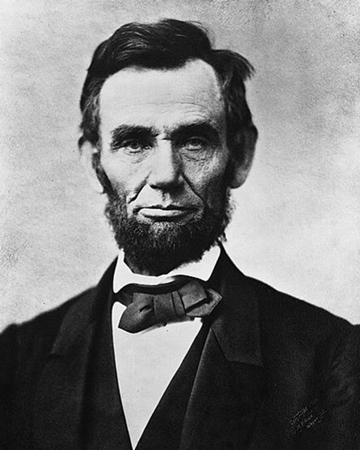
The Revolutionary War is very clearly – the participants view themselves clearly as akin to the Romans. They clearly believe they are a Republic resisting Tyranny. So if you look at the way Thomas Paine talks about it in Common Sense he uses that word tyranny over and over again – and that’s no accident. As we all know, the Founders tended to see themselves in line Abraham Lincolnwith the Roman Republic. So when it comes around to the American Civil War, Southerners are going to tend to think of themselves, too, as members of a republic resisting tyranny; and so you get all sorts of nasty remarks about Abraham Lincoln as a tyrant – and he is as strong a Federalist president as ever had existed up to that point. He believes in the power of the federal government; he does not believe in the power of the states – for better or for worse.

The easy answer about the American Civil War is that it is – of course – about slavery. The easy answer is almost never correct. Slavery certainly was the catalyst that set it off. What it was really about – I think – was different ways of life. You had a very agrarian lifestyle in the South and not that it necessitated, but it made it very easy to use slaves. Then there was very non-agrarian, very urbanized life in the North, and so you have the conflict between these two ways of life. If the North had been as heavily agrarian as the South, I suspect they would have had slaves as well. Of course, the North was no place to live if you were black. There’s a wonderful Our Nigbook by I think her name is Harriet Wilson called Our Nig, which explains what it was like for black ā€œservantsā€ in the North in the era immediately preceding the Civil War. Spoiler Alert: not that great. So to say it’s about slavery is kind of accurate. To say it’s about civil rights in any way is not accurate. Very few people in the North or South were interested in giving black people civil rights. It was a conflict between these two cultures, one of which belonged largely to the past. The agrarian lifestyle was something that exists almost nowhere in America today because of the forward march of urbanization, so you have the past meeting the future and it got ugly.

That being said, I am from Georgia. I grew up hearing about the Confederate generals as heroes. I am sympathetic to that point of view; on the other hand, I am very glad the Civil War happened. I’m very glad that there were not two countries. I’m very glad slavery was ended. I admire Abraham Lincoln even though some of the tactics he used during that war – suspending habeas corpus, things like that – are disturbing to me. I affirm that the Civil War was a necessary war – waving confederate battle flagas good as a war can be, I suppose. But I also recognize that it was not as simple as Good North / Evil South, that there are things we lost in losing the agrarian lifestyle that should be mourned and that it is possible to mourn those things without flying a confederate flag out the window of your pickup truck.
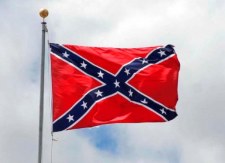

It is possible to mourn those things without flying a confederate flag out the window of your pickup truck.


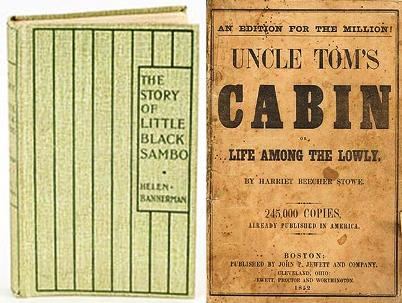
That being said [there are books that] paint the South as a Christian nation and the North as a secular nation. That’s balderdash. Obviously, there were lots of Christians involved in the abolitionist movement, there were lots Christians involved in the North, and there were lots of people who were eitherUncle Tom and Little Black Sambo not Christians in name or Christians in name only in the South. It is ridiculous to claim that the South was somehow righteous and that slavery was not as bad as we’ve heard. No, slavery was as bad as we’ve heard. It was an evil institution that needed to end for the health of not just the slaves but the slaveowners. So please don’t misunderstand what I’m saying or mistake me for some sort of Lost Causer.
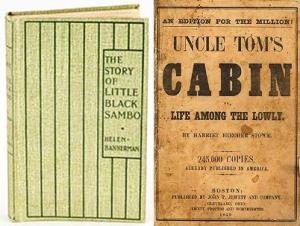
We all know that racism is not a geographically limited phenomenon by any means. And if you think it is, I suggest you go listen to the Randy Newman song ā€œRednecksā€ which we won’t quote here on the show. It seems to be a bit more obvious in the South because you can’t ignore it in the South like you can in the North and in some other regions of the United States. The South is integrated. You can’t avoid the kinds of frictions that arise and so it’s going to come up more.

But yeah, the Civil War was about slavery, but it wasn’t just about slavery or maybe even primarily about slavery. I don’t know that it was primarily about states’ rights the way some of the neo-Confederates will tell you. I think it was primarily about a clash of civilizations.

That isn’t to say that to hold that particular historical view is to condone black slavery. It is simply to make an historical claim. There are good things we lost and there are things I’m very glad are gone as well.

Aristotle_Bust_White_Background_TransparentWe can be good Aristotelians and say there are multiple ways you can answer the question ā€œwhat caused this?ā€ There are different kinds of causes. We can bring up the sociological things. We can bring up historical events. We can raise the kinds of issues that were actually brought up in newspapers and by politicians at the time. We can go into journals by people ranging from Presidents to foot soldiers and read what they said were their particular motives. We take all those things, throw them in a heap, point to the heap, and say, ā€œthat is why the Civil War.ā€

I think it’s fascinating that you have a reversal of roles from what you saw in the English Civil war. You have the people claiming to be the gallant Cavalier class who are also the ones crowing about tyranny and saying ā€œwe need to overthrow the tyrant.ā€ It’s the Roundheads playing the Tyrant and the Cavaliers playing the Rebels . . . This is one [war] that probably informs out imaginations more than the others.


Have a suggestion for a poem, photograph, or future post?

Drop a note in the prompt box!


Don’t forget to follow me on:


Facebook – where I share news stories, articles from other blogs, and various and sundry miscellany that happens to catch my eye. It’s stuff you won’t see here! Well, mostly.


Instagram – where I show you my Life in Motion and share quotes and such. The widget only shows my last three photographs – don’t you want to see them all?


Twitter – where you can see my thoughts in 140 characters or less. Also, funny retweets.

Defending Hamilton

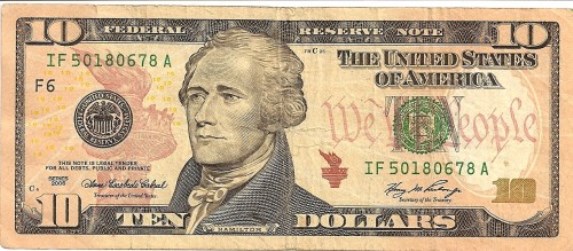
Alexander Hamilton Ten Dollar BillBy now you (probably) know the U.S. Treasury Department plans to replace Alexander Hamilton on the $10 bill.

Their decision vexes me.

Replace Andrew Jackson; as Women on 20s proved, he’s become wildly unpopular.

Replace Abraham Lincoln or George Washington.

They already appear on commonly-used currency:

the quarter and the penny respectively.

Although, in fairness, there’s been talk of discontinuing the penny for decades.

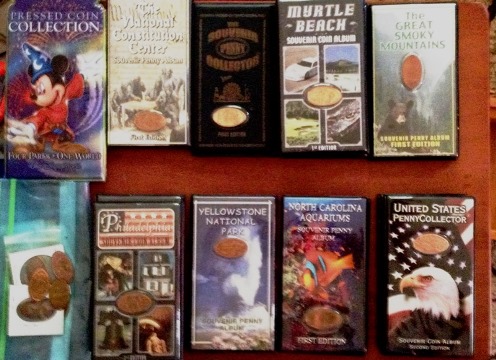
I hope not – this will hinder my squished penny collecting.

Squished Penny CollectionI have close to 500 souvenir pennies.

Pre-1982 pennies make the best squishing pennies for their copper content.

Modern zinc pennies or – heaven forbid – those metal alloys sometimes provided by the press manufacturer just don’t stack up.

Back to the task at hand.

Of all Founding Fathers, Hamilton is the most deserving of a place on our currency.

Hamilton . . .

Grew up in the West Indies.

Acted as Washington’s senior aide in the Revolutionary War.

Served in Congress under the Articles of Confederation.

Spearheaded the Annapolis Convention,

which led to the Philadelphia Convention,

which led to the Constitution as we know it today.

Advocated for constitutional ratification in the Federalist Papers.

Using the pseudonym Publius, Hamilton wrote 51 of the 85 papers.

Today, these papers are considered the single most important source of constitutional interpretation.

Established the foundations United States’ federal government, specifically in arguing in favor of the doctrine of implied powers and the creation of a National Bank.

Influenced early foreign policy, especially in America’s preferential treatment of Britain.

Swayed the electoral college to make Thomas Jefferson third President of the United States.

Opposed Aaron Burr’s attempts to become President and Governor of New York.

You may recall that Burr attempted to establish his own empire in what would become the Louisiana Purchase.

By this time, Burr had killed Hamilton in a duel over comments made regarding the aforementioned elections.


Alexander Hamilton lived the American Dream before it was a thing.

Removing him from our currency would be both a travesty and a dishonor.

 
NPR’s Steve Inskeep (sort-of) disagrees with me.
 
Over at Faith and History, Robert McKenzie agrees with me using a much better argument.
 

What do you think?

Should we replace Hamilton, Jackson, or someone else?

Who should take their place?

Let me know in the comments!


Have a suggestion for a poem, photograph, or future post?

Drop a note in the prompt box!


Don’t forget to follow me on:


Facebook – where I share news stories, articles from other blogs, and various and sundry miscellany that happens to catch my eye. It’s stuff you won’t see here! Well, mostly.


Instagram – where I show you my Life in Motion and share quotes and such. The widget only shows my last three photographs – don’t you want to see them all?


Twitter – where you can see my thoughts in 140 characters or less. Also, funny retweets.
The Worst Day of My Life

Meredith Broadside


via www.hmscavalier.org.uk
via http://www.hmscavalier.org.uk

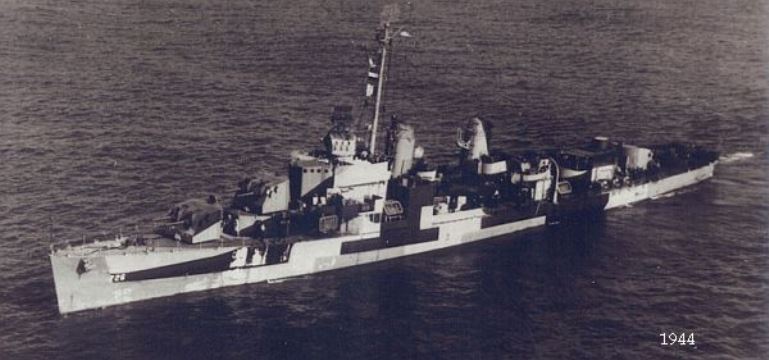
My adopted grandfather, Mr. Tom (USN 1938-1957), remembers D-Day:

Mr Tom Enters the Navy 1938I was assigned to the Meredith*, an American destroyer out of Plymouth England. She was new – so new parts were still wet with paint. As at Pearl, my duty was the engine room. The Meredith wasn’t transport, she was a destroyer; we shelled the shore to soften it up for the landing. We stayed there in the [English] Channel for the entire day and the next, that’d make it June 7 when we were ordered to change position. I don’t recall where we were going; regardless, we struck a mine. That brand-new ship struck a mine and threatened to break in half. We ended up abandoning ship and I spent the night in the English Channel tied to my buddies so we wouldn’t drift. There was fuel all over, some of it ignited. One of my buddies [name redacted] was burned so badly he knew he was dying. He gave me some effects to pass on to his girl and some of the others started accusing me of robbing the dead. What was I supposed to do? What was I supposed to say? Well, we were picked up in the morning and I was shipped on to Scotland for recovery before being sent back to the States for a spell. I really can’t describe it. D-day was the worst day of my life. Worse than Pearl. Worse than the day my wife died. It was the absolute worst day of my life.


*You can read the official Commander’s Narrative here.


Don’t forget to follow me on:


Facebook – where I share news stories, articles from other blogs, and various and sundry miscellany that happens to catch my eye. It’s stuff you won’t see here! Well, mostly.


Instagram – where I show you my Life in Motion and share quotes and such. The widget only shows my last three photographs – don’t you want to see them all?


Twitter – where you can see my thoughts in 140 characters or less. Also, funny retweets.

Website Powered by WordPress.com.

Up ↑