Springtime for Hitler

I have four unfinished drafts. How can I decide which one to finish?
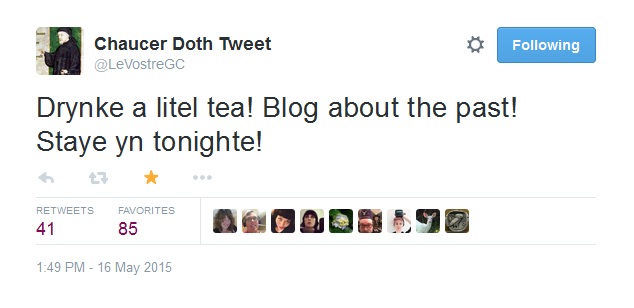
Chaucer Doth Tweet Stay In And WriteWell, OK then. I’ve got one that fits the bill – one I’ve entitled “Springtime for Hitler.”


I suppose it was inevitable, given my profession and Teutophile proclivities, that I would eventually have to tackle Nazis in some manner.

First, the estate of Joesph Goebbels is suing Random House for royalties, an act Random House describes as “immoral”.

Goebbels Getty Images

Now, I’m not a copyright lawyer, but I imagine that at some point contracts were signed.

One cannot simply get out of a contract because they find the recipient distasteful. Were that the case, the real estate, automotive, and student loan companies would immediately collapse.

In this case, Cordula Schacht – the copyright holder – is of no relation to Mr. Goebbels; in fact, her own father was acquitted at Nuremberg. Therefore, one cannot make the claim that royalties would benefit a convicted war criminal.

Peter Longerich, the biographer involved in the matter, has argued that a private person should not be given control of important historical documents. To which I ask: who gets to decide what is important?

Were I the judge in this case, I’d rule against Herr Longerich. Others disagree with me; some selections from Twitter:

All royalties should be paid to the Holocaust Museum / Memorials! He shouldn’t even be allowed an estate!

Any money paid by the publishers to any estate connected to the Nazis would be blood money.

No one should profit from this unless it’s as a donation to those affected by the Holocaust or a memorial/museum. Disgusting!

The Spawn of Satan should have no royalty rights under the law.

They ought to be ashamed that he is a family member. But people are greedy and will take $ from whatever source.


And now, a word from our sponsor:


It might not be the original (because let’s face it, Gene Wilder is beyond compare), but John Barrowman redeems the production. Pun intended.


OskarGroening via BBCSecond, yet another former Nazi is on trial seventy years after the war ended, this time the so-called “Bookkeeper of Auschwitz“. Now, before you get offended or hot and bothered about my tone of type, please hear me out. I am not an apologist for Nazism by any stretch of the imagination, neither do I think war crimes have a statute of limitations. However, I find the overall treatment of former Nazis incongruous.

Case in point: Japanese pilots who bombed Pearl Harbor were welcomed back sixty years after the fact. In fact, it seems they were forgiven some time ago, as evidenced by this article from the New York Times. I wonder why the world holds such special hatred for the Nazis when other dictators and regimes have been responsible for death on a much larger scale (like the Soviets and – by some estimates – the Chinese).

I suppose what I’m trying to say is that I’ve nothing against prosecuting Nazis guilty of crimes for which they’ve never been punished, but I don’t understand why we’ve forgiven some and not others.

Another part of me wonders what will happen in ten years’ time (give or take) when the final Nazi is dead. Who will then become the bogeymen of the world?


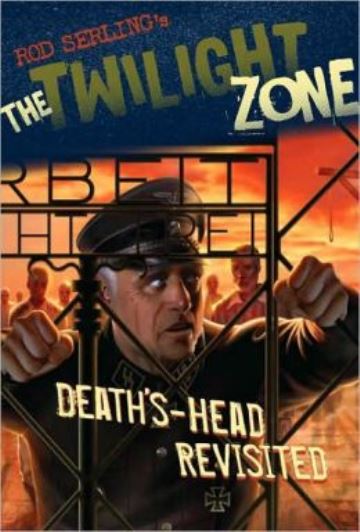
I suppose it’s also fitting that I’m watching/listening to a Twilight Zone marathon while I work on this. Rod Serling dished out devious damnations to nefarious Nazis in “Judgment Night”, “Deaths-Head Revisited”, and “He’s Alive”. There may be more, but those are the three that come immediately to mind.

In fact, Serling’s closing narration to “Deaths-Head Revisited” has become a staple in my classroom when discussing World War II and how we come to terms with what happened:

All the Dachaus must remain standing. The Dachaus, the Belsens, 
the Buchenwalds, the Auschwitzes – all of them. They must remain 
standing because they are a monument to a moment in time when some 
men decided to turn the Earth into a graveyard. Into it they 
shoveled all of their reason, their logic, their knowledge, but 
worst of all their conscience. And the moment we forget this, the 
moment we cease to be haunted by its remembrance, then we become 
the gravediggers. Something to dwell on and to remember, not only 
in the Twilight Zone but wherever men walk God's Earth.
Seventy Years After VE Day

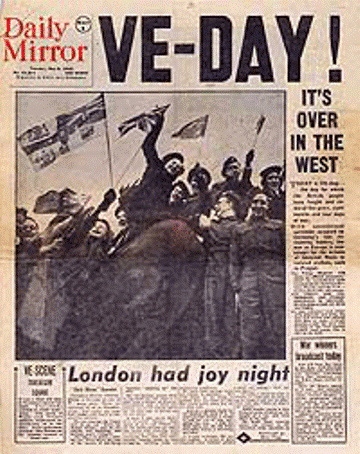
mirrorvedayMay 8. Such an innocuous day.

Seventy years ago, this was not the case. Seventy years ago, the Allied Powers declared victory over Adolf Hitler’s Reich.

I could write about the power and significance of this moment, but the historian in me knows that only those who lived it can truly understand.

In his speech to the British people, Winston Churchill said

My dear friends, this is your hour. This is not victory of a party or of any class. It’s a victory of the great British nation as a whole. We were the first, in this ancient island, to draw the sword against tyranny. After a while we were left all alone against the most tremendous military power that has been seen. We were all alone for a whole year . . . The lights went out and the bombs came down. But every man, woman and child in the country had no thought of quitting the struggle. London can take it. So we came back after long months from the jaws of death, out of the mouth of hell, while all the world wondered. When shall the reputation and faith of this generation of English men and women fail? I say that in the long years to come not only will the people of this island but of the world, wherever the bird of freedom chirps in human hearts, look back to what we’ve done and they will say “do not despair, do not yield to violence and tyranny, march straightforward and die if need be-unconquered.”


Every year I have students ask how things like the Holocaust could have happened and explain what they would have done under similar circumstances. After kindly explaining that no-one knows what they will do in any given situation until they are in it, I share this quote from Rod Sterling’s Twilight Zone episode Deaths-Head Revisited:

All the Dachaus must remain standing. The Dachaus, 
the Belsens, the Buchenwalds, the Auschwitzes – all 
of them. They must remain standing because they are a 
monument to a moment in time when some men decided to 
turn the Earth into a graveyard. Into it they 
shoveled all of their reason, their logic, their 
knowledge, but worst of all their conscience. And the 
moment we forget this, the moment we cease to be 
haunted by its remembrance, then we become the 
gravediggers. 

Something to dwell on and to remember, not only in 
the Twilight Zone but wherever men walk God's Earth.
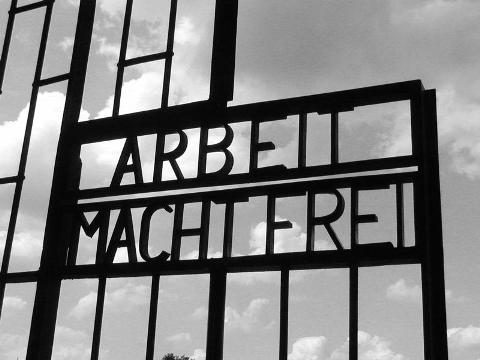
Arbeit Macht Frei

Intersection of Life and History

Every once in a while history and real life collide.

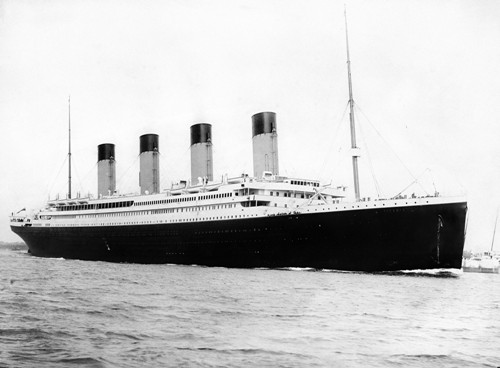
This year marks the 103rd anniversary of the sinking of the Titanic.

RMS_Titanic_3Given the number of film and articles written and dispersed over that time, I don’t think I need to retell the story.

What does this have to do with me? My great-grandfather was supposed to be on Titanic as a ship’s printer; that’s right, my great-grandfather was employed by White Star Line. I never knew my great-grandfather, so I’ll never know exactly why he quit instead of jumping at the chance to serve on what was already the most famous ship of its day. But quit he did; he obtained new employment on the banana boats. I know this because of the matchsafe he left behind:

IMG_2355
I do know great-granddad lost friends and colleagues and acquaintances that cold April night; it is only by Divine Providence he did not perish as well.

And while I couldn’t find his immigration records (I forget his first name), here’s the immigration record for my grandpa:

grandpa's passenger record


Oh, and today marks the two-year anniversary of this blog. Happy Anniversary to Me!

anniversary with wordpress

Teaser Tuesday: 1916: The Easter Rising

Once again the wheel of time has turned to

Teaser Tuesday

Just in case you don’t know, Teaser Tuesday is a weekly bookish meme, hosted by A Daily Rhythm. Anyone can play along! All you have to do is grab the book you’re currently reading, open to a random page and share two sentences from that page. But make sure you don’t share any spoilers!*

*I wish I could take credit for this introduction, but I shamelessly stole it from Heather over at bitsnbooks. To help me make amends, you should go check out her blog.

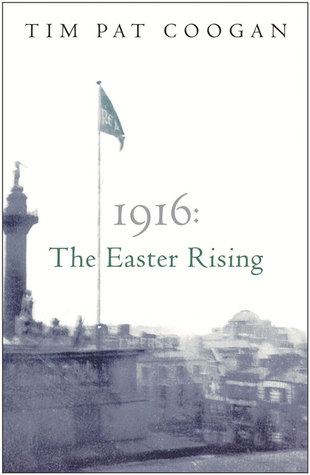
This week I’m reading 1916: The Easter Rising by Tim Pat Coogan. I’ve had the book for several years but never tried reading it until I started a MOOC on Ireland between 1912 and 1923.

Redmond Howard, a politically aware witness to the 
Rising and a critic of the rebels, wrote in its 
aftermath: 'There never was, I believe, an Irish 
crime -- if crime it can be called -- which had 
not its roots in an English folly.

Irish history is not my forte; hence my reason for taking the class.

Perhaps I’ve whetted your appetite!

1916 The Easter Rising

In Retrospect

I haven’t yet finished The Long Mars, but it’s proving quite enjoyable.

In case you missed it, here’s my 5-Star review of Amanda Palmer’s Art of Asking.
 

For Richard

It’s not often that we history teachers can stand in front of our class, point to a current event, and declare with authority “This is Historically Significant.”

This week, though, was different. This week Richard III was finally laid to rest. A king many know only from Shakespeare, perhaps Richard wasn’t all that bad. After all, the Bard did manage to besmirch John as the Worst King in England, right? Or maybe that’s just my opinion of Will’s opinion.

Therefore, I read with great delight the poem written specifically for the occasion by England’s Poet Laureate:

Richard
  by Carol Ann Duffy

My bones, scripted in light, upon cold soil,
a human braille. My skull, scarred by a crown,
emptied of history. Describe my soul
as incense, votive, vanishing; your own
the same. Grant me the carving of my name.

These relics, bless. Imagine you re-tie
a broken string and on it thread a cross,
the symbol severed from me when I died.
The end of time – the unknown, unfelt loss –
unless the Resurrection of the Dead . . . 

or I once dreamed of this, your future breath
in prayer for me, lost long, forever found;
or sensed you from the backstage of my death,
as kings glimpse shadows on a battleground.

Now see and hear it read by Benedict Cumberbatch, famous actor and third cousin sixteen times removed from Richard III:

Powerful. The sense of loss and pain and regret juxtaposed with future hope and joy. So much history contained in fourteen lines.

An Ode to Drawers

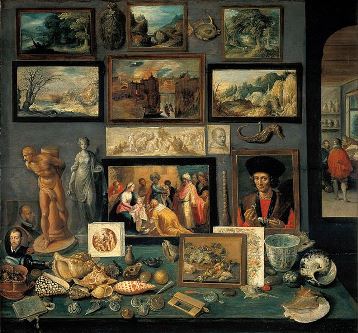
Frans_Francken_(II),_Kunst-_und_Raritätenkammer_(1636)I can’t be the only one who has trouble getting into drawers.

No, not those drawers; get your mind out of the gutter!

I mean the junk drawers, the catch-all drawers, the drawers that are oh-so-handy for storing the miscellany and bric-a-brac that accumulates on our desks and nightstands and coffee tables.

Eventually these drawers have more in common with a goblin hoard than anything else and are almost impossible to open without violence or high-energy explosives. Perhaps both.

This is their story:

                 An Ode to Drawers
                        or
              The Cabinet of Curiosity
They say that in days long gone by
  kings bent on increasing their wealth and fame
    would collect wonders of both land and sea
      in rooms designed to awe the viewer’s eye - 
        to never again see the world the same: 
          the Cabinet of Curiosity. 

These were the magical places - 
  a microcosmic theat’r of the world,
    the original memory palace
      in which to worship the world’s Three Graces. 
It was in this landscape the mind unfurled
  and dared to scale the heights of Daedalus.

These cabinets live on today,
  found in the homes of all those who cannot
    bear to part with one single, solit’ry
      thing. 
They are attuned to life’s great ballet,
  thus will not bear a thing to be forgot - 
    exalting both unique and ordinary.

Declare, O Drawer, the wonders 
  you contain and the detritus of life - 
    the forgotten bits and misplaced baubles – 
Proclaim, O Drawer, the mysteries and plunders
  pigeonholed inside. 
With valiant strife
  I pry at you; your case strains and wobbles.

Finally gaining entry to the hold
  of life’s forgotten treasures, I find there
    long-lost remnants of a life lived fully. 
While ‘tis a shame I find no hoarded gold, 
  I find loose change, pencils and pens to spare, 
    old batteries and papers stacked unruly, 

Old Christmas cards and past-due bills, 
  strange locks and keys that do not fit each other, 
    notebooks and fliers and take-out menus, 
      postcards and letters – e’en one from Brazil – 
        family photos sent by my brother; 
This drawer has no bottom, it always continues.

And though I might try to clean it
  someday, I know it is useless to try. 
No matter how much is removed from the
  drawer - no matter how hard I commit
    to decluttering life -  I’ll be that guy
      who saves everything, even debris.

I’ll be the first to admit that it gets hokey and off-rhythm, but don’t our drawers do the same? See what I did there? I’d claim it was intentional, but it wasn’t. And you know what? I don’t care. I had fun writing this piece; I hope you had as much fun reading it.

Blogging U Poetry

Website Powered by WordPress.com.

Up ↑