Every subject has its challenges, but history may be the most challenging of all.
There’s always more history. I can think of no other subject where this is true.
High school math – at least what I’ve seen of it – hasn’t changed much since I learned it 10+ years ago. Maybe the method has changed, but the ideas haven’t.
Science has made breakthroughs, clarifications, and corrections. This means that theories and hypotheses – and therefore formulas – have changed, but science generally doesn’t ask you to learn how things were done “in the old days.” At least, it doesn’t require you to have a practical, working knowledge of the old ways. Which is a shame, because once the technological apocalypse hits there will be no-one with the knowledge to rebuild society as we know it. Who needs time travel? It’s back the the Middle Ages (or Early Renaissance)! But that’s a different topic for a different time.
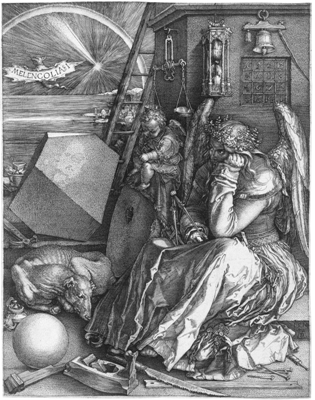
And on your right, you’ll see the broken instruments of human knowledge . . .
Melencolia I (Albrecht Dürer, 1514)
English hasn’t changed much, either. New authors may replace old ones, new words come into the vernacular and others fall out, and the way in which we communicate may vary, but English – as it is taught – remains largely unchanged from year to year.
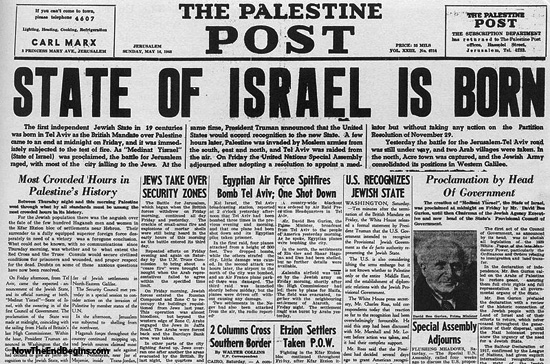
History is not so – more is added to it every day and it all builds on what has happened before. For example, I cannot expect my students to understand the Arab-Israeli conflict without also understanding the origins of those particular people groups, the establishment of ancient Israel, the formation of Judaism and Islam, the Israeli diaspora under Roman rule, the re-creation of a modern Israeli state in 1948, and the various attempts (and failures) at co-existence since that time. How do you condense and revise to give an accurate overview without becoming swamped? Many teachers I know teach on themes or hit what they call “the highlights”. Some school districts have begun to expand the history requirements for graduation, making history a multi-year class (or multi-semester for those on block schedules). However, that doesn’t really solve that problem that . . .
And here is another point at which I disagree with the way in which you book presents . . .
An excellent podcast for supplemental material!
Some history is going to be cut. How do we decide what to leave out? What to expand? What to assign for individual research? Granted, this may vary from state to state, from district to district, and from class to class, but Common Core (like it or not) will change that. Who’s to decide what is important and what’s not. Isn’t it all important? Once we’ve decided what to cut and what to leave in we’re left wondering . . .
How do we teach the “truth” of history? Like science, history cannot necessarily deal with “truth” (for a given value of “truth”). We can use primary sources and make assumptions, but even if we were to possess a time machine with which to view history our perceptions would be colored by our cultural prejudices and biases. Textbooks often present information in such a way to make it appear that history had to happen a certain way, that there is a linear cause-and-effect of events, and that there is a clear black and white morality of people and events. Seldom is that the case. Many times I end up providing my students with supplemental materials – primary sources when possible – so they can compare the claims of their book with other viewpoints and learn to base an opinion on logical application of all available facts. At least, that’s my goal. Success depends on the student. As the old saying goes, you only get out of an education what you are willing to put into it.
Don’t get me wrong. I hope you haven’t thought I’ve been complaining all this time. I’m merely pointing out what history teachers go through all the time. We watch the news and read magazines because what happens today can quite literally change what we teach tomorrow. And you know what?
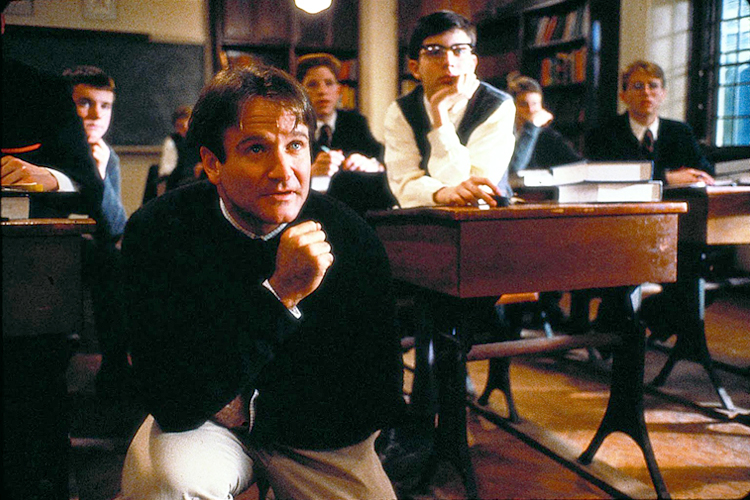
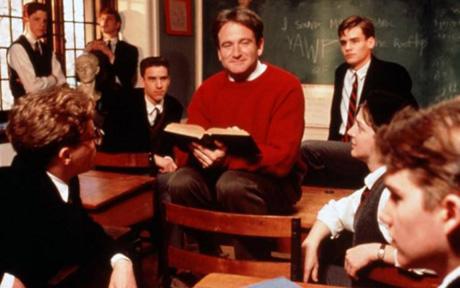
Allow me to add to the deluge of Robin Williams tributes flooding the internet.
On Thinking
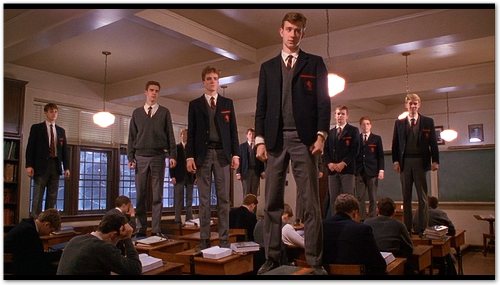
I stand upon my desk to remind myself that we must constantly look at things in a different way.
Now, don’t just walk off the edge like lemmings! Look around you!
On Living
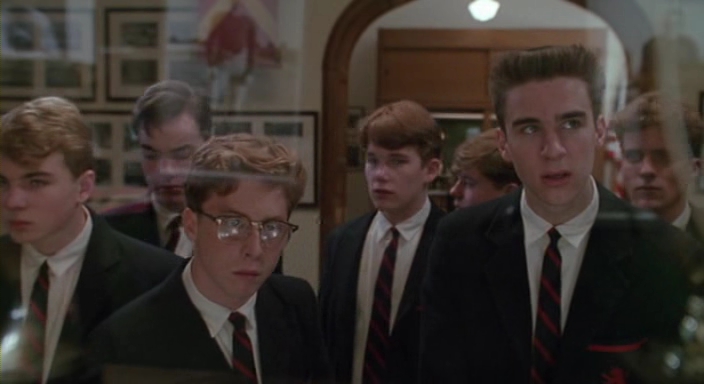
They’re not that different from you, are they? Same haircuts. Full of hormones, just like you. Invincible, just like you feel. The world is their oyster. They believe they’re destined for great things, just like many of you, their eyes are full of hope, just like you. Did they wait until it was too late to make from their lives even one iota of what they were capable? Because, you see gentlemen, these boys are now fertilizing daffodils. But if you listen real close, you can hear them whisper their legacy to you. Go on, lean in. Listen, you hear it? – – Carpe – – hear it? – – Carpe, carpe diem, seize the day boys, make your lives extraordinary.
Sucking the marrow out of life doesn’t mean choking on the bone.
There’s a time for daring and there’s a time for caution, and a wise man understands which is called for.
On Writing
We don’t read and write poetry because it’s cute. We read and write poetry because we are members of the human race. And the human race is filled with passion. And medicine, law, business, engineering, these are noble pursuits and necessary to sustain life. But poetry, beauty, romance, love, these are what we stay alive for. To quote from Whitman, “O me! O life!… of the questions of these recurring; of the endless trains of the faithless… of cities filled with the foolish; what good amid these, O me, O life?” Answer. That you are here – that life exists, and identity; that the powerful play goes on and you may contribute a verse. That the powerful play *goes on* and you may contribute a verse. What will your verse be?
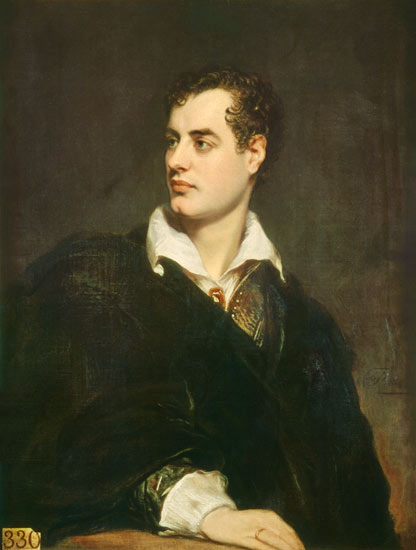
How can you describe poetry like American Bandstand? “I like Byron, I give him a 42 but I can’t dance to it!”
On Dreaming
“Twas always thus, and always thus will be.”
On Teaching
I always thought the idea of education was to learn to think for yourself.
Mr. Anderson! Don’t think that I don’t know that this assignment scares the hell out of you, you mole!
This is a battle, a war, and the casualties could be your hearts and souls.
On Confidence
I was the intellectual equivalent of a 98-pound weakling! I would go to the beach and people would kick copies of Byron in my face!
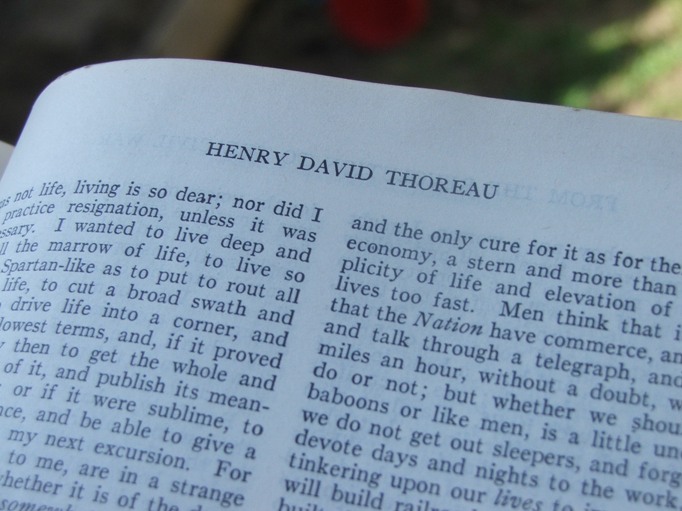
Boys, you must strive to find your own voice. Because the longer you wait to begin, the less likely you are to find it at all. Thoreau said, “Most men lead lives of quiet desperation.” Don’t be resigned to that. Break out!
Now we all have a great need for acceptance, but you must trust that your beliefs are unique, your own, even though others may think them odd or unpopular, even though the herd may go “that’s baaaaad.” Robert Frost said, “Two roads diverged in the wood and I, I took the one less traveled by, and that has made all the difference.”
I SOUND MY BARBARIC YAWP OVER THE ROOFTOPS OF THE WORLD.
[this post is best viewed on a laptop or home computer]
Achievement Unlocked: 100 Blog Posts!
To celebrate, here’s a list of 100 of my favorite things. If you don’t like them, fine; go make your own list.
I’ve also included a brief description of each item, which I carefully researched copied from Wikipedia. Hey, the school year hasn’t started yet. Besides, I cited my source!
The Divine Comedy is an epic poem written by Dante Alighieri between 1308 and his death in 1321. It is widely considered the preeminent work of Italian literature, and is seen as one of the greatest works of world literature. The poem’s imaginative and allegorical vision of the afterlife is representative of the medieval world-view as it had developed in the Western Church by the 14th century. It helped establish the Tuscan dialect, in which it is written, as the standardized Italian language. It is divided into three parts: Inferno, Purgatorio, and Paradiso.
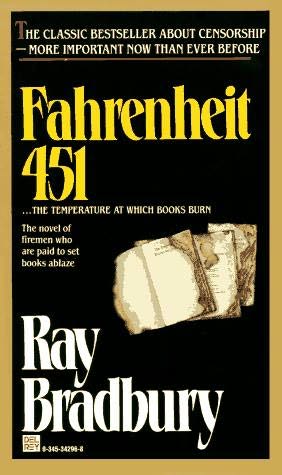
Fahrenheit 451 is a dystopian novel by Ray Bradbury published in 1953. It is regarded as one of his best works. The novel presents a future American society where books are outlawed and “firemen” burn any that are found. The title refers to the temperature that Bradbury understood to be the autoignition point of paper.
The Great Gatsby – written by American author F. Scott Fitzgerald – follows a cast of characters living in the fictional town of West Egg on prosperous Long Island in the summer of 1922. The story primarily concerns the young and mysterious millionaire Jay Gatsby and his quixotic passion and obsession for the beautiful debutante Daisy Buchanan. Considered to be Fitzgerald’s magnum opus, The Great Gatsby explores themes of decadence, idealism, resistance to change, social upheaval, and excess, creating a portrait of the Jazz Age or the Roaring Twenties that has been described as a cautionary tale regarding the American Dream.
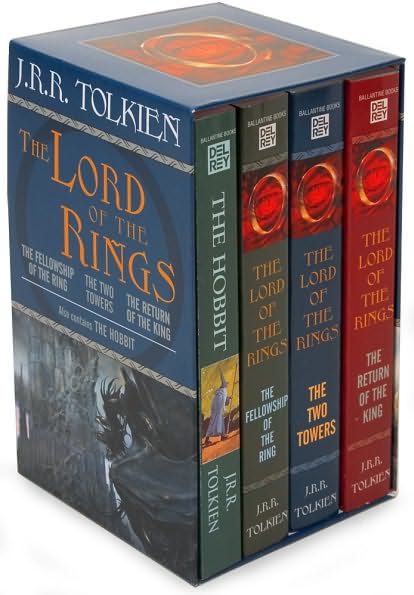
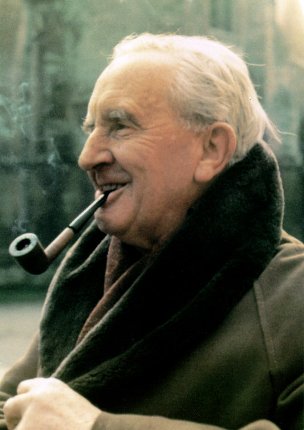
The Lord of the Rings is an epic high fantasy novel written by English author J. R. R. Tolkien. The story began as a sequel to Tolkien’s 1937 fantasy novel The Hobbit, but eventually developed into a much larger work. It was written in stages between 1937 and 1949, much of it during World War II. It is one of the best-selling novels ever written, with over 150 million copies sold.
The Space Trilogy is a series of science fiction novels by C. S. Lewis, famous for his later series The Chronicles of Narnia. A philologist named Elwin Ransom is the hero of the first two novels and an important character in the third.
Love in the Time of Cholera is a novel by Nobel Prize-winning Colombian author Gabriel García Márquez first published in Spanish in 1985. Alfred A. Knopf published an English translation in 1988, and an English-language movie adaptation was released in 2007.
Adventures of Huckleberry Finn is a novel by Mark Twain, first published in the United Kingdom in December 1884 and in the United States in February 1885. Commonly named among the Great American Novels, the work is among the first in major American literature to be written throughout in vernacular English, characterized by local color regionalism. It is told in the first person by Huckleberry “Huck” Finn, a friend of Tom Sawyer and narrator of two other Twain novels (Tom Sawyer Abroad and Tom Sawyer, Detective). It is a direct sequel to The Adventures of Tom Sawyer.
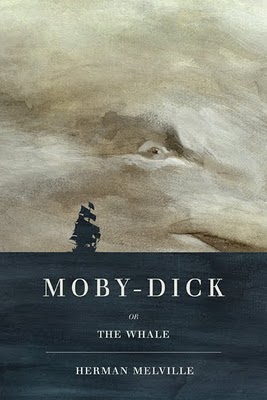
Moby Dick is the sixth book by American writer Herman Melville and an epic sea story of Captain Ahab’s voyage in vengeful pursuit of Moby Dick, a sperm whale who bit off Ahab’s leg at a previous encounter. The book received mixed reviews and became a contemporary commercial failure. Out of print at the time of the author’s death in 1891, its reputation rose during the twentieth century. Today it is considered one of the Great American Novels and a leading work of American Romanticism.
The Canterbury Tales is a collection of over 20 stories written in Middle English by Geoffrey Chaucer at the end of the 14th century, during the time of the Hundred Years’ War. The tales (mostly written in verse, although some are in prose) are presented as part of a story-telling contest by a group of pilgrims as they travel together on a journey from Southwark to the shrine of Saint Thomas Becket at Canterbury Cathedral. The prize for this contest is a free meal at the Tabard Inn at Southwark on their return.
Faust, written by Johann Wolfgang von Göthe, was to be completed in stages, and only published in its entirety after his death. The first part was published in 1808 and created a sensation. The first operatic version, by Spohr, appeared in 1814, and was subsequently the inspiration for operas and oratorios by Schumann, Berlioz, Gounod, Boito, Busoni, and Schnittke as well as symphonic works by Liszt, Wagner, and Mahler. Faust became the ur-myth of many figures in the 19th century. Later, a facet of its plot, i.e., of selling one’s soul to the devil for power over the physical world, took on increasing literary importance and became a view of the victory of technology and of industrialism, along with its dubious human expenses. In 1919, the Goetheanum staged the world premiere of a complete production of Faust. On occasion, the play is still staged in Germany and other parts around the world.
The Prince is a 16th-century political treatise by the Italian diplomat and political theorist Niccolò Machiavelli. The printed version was not published until 1532, five years after Machiavelli’s death. This was done with the permission of the Medici pope Clement VII, but “long before then, in fact since the first appearance of the Prince in manuscript, controversy had swirled about his writings”.
The Innocents Abroad is a travel book by American author Mark Twain which humorously chronicles what Twain called his “Great Pleasure Excursion” on board the chartered vessel Quaker City (formerly USS Quaker City) through Europe and the Holy Land with a group of American travelers in 1867. It was the best-selling of Twain’s works during his lifetime, as well as being one of the best-selling travel books of all time.
Mastering the Art of French Cooking is a two-volume French cookbook written by Simone Beck and Louisette Bertholle, both of France, and Julia Child of the United States. The book was written for the American market and published by Knopf in 1961 (Volume 1) and 1970 (Volume 2).
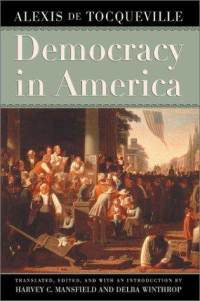
Democracy in America is a classic French text by Alexis de Tocqueville. In the book, Tocqueville examines the democratic revolution that he believed had been occurring over the past seven hundred years.
The Federalist Papers are a series of 85 articles and essays written by Alexander Hamilton, James Madison, and John Jay promoting the ratification of the United States Constitution. Seventy-seven were published serially in The Independent Journal and The New York Packet between October of 1787 and August 1788.
The Anti-Federalist Papers is the collective name given to the scattered writings of those Americans who during the late 1780s to early 1790s opposed to or who raised doubts about the merits of a firmer and more energetic union as embodied in the 1787 United States Constitution. The authors of these writings, unlike those who wrote articles and essays in support of and promoting a firmer and more connected union, wrote mostly under pen names and were not engaged in an organized project. Thus, in contrast to the pro-Constitution advocates, there is no one book or collection of Anti-Federalist Papers. Their work is vast and varied and, for the most part, uncoordinated.
Guns, Germs, and Steel: The Fates of Human Societies is a 1997 transdisciplinary nonfiction book by Jared Diamond, professor of geography and physiology at the University of California, Los Angeles (UCLA). In 1998, it won the Pulitzer Prize for general non-fiction and the Aventis Prize for Best Science Book. A documentary based on the book, and produced by the National Geographic Society, was broadcast on PBS in July 2005.
The book attempts to explain why Eurasian civilizations (including North Africa) have survived and conquered others, while arguing against the idea that Eurasian hegemony is due to any form of Eurasian intellectual, moral or inherent genetic superiority. Diamond argues that the gaps in power and technology between human societies originate in environmental differences, which are amplified by various positive feedback loops. When cultural or genetic differences have favored Eurasians (for example, written language or the development among Eurasians of resistance to endemic diseases), he asserts that these advantages occurred because of the influence of geography on societies and cultures, and were not inherent in the Eurasian genomes.
In Cold Blood is a non-fiction book by American author Truman Capote; it details the 1959 murders of Herbert Clutter, a farmer from Holcomb, Kansas, his wife, and two of their four children. When Capote learned of the quadruple murder, before the killers were captured, he decided to travel to Kansas and write about the crime. He was accompanied by his childhood friend and fellow author Harper Lee, and together they interviewed local residents and investigators assigned to the case and took thousands of pages of notes. The killers, Richard “Dick” Hickock and Perry Smith, were arrested six weeks after the murders, and Capote ultimately spent six years working on the book. The book became the greatest crime seller at the time and is almost universally acknowledged as one of the best books of its type ever written.
The Elements of Style is a prescriptive American English writing style guide in numerous editions. The original was composed by William Strunk, Jr., in 1918 and published by Harcourt in 1920, comprising eight “elementary rules of usage”, ten “elementary principles of composition”, “a few matters of form”, a list of forty-nine “words and expressions commonly misused”, and a list of fifty-seven “words often misspelled”. It was much enlarged and revised by E.B. White for publication by Macmillan in 1959. That was the first edition of so-called Strunk & White, which Time magazine named in 2011 one of the 100 best and most influential books written in English since 1923.
Up From Slavery is the 1901 autobiography of Booker T. Washington detailing his personal experiences in working to rise from the position of a slave child during the Civil War, to the difficulties and obstacles he overcame to get an education at the new Hampton University, to his work establishing vocational schools—most notably the Tuskegee Institute in Alabama—to help black people and other disadvantaged minorities learn useful, marketable skills and work to pull themselves, as a race, up by the bootstraps. He reflects on the generosity of both teachers and philanthropists who helped in educating blacks and native Americans. He describes his efforts to instill manners, breeding, health and a feeling of dignity to students. His educational philosophy stresses combining academic subjects with learning a trade (something which is reminiscent of the educational theories of John Ruskin). Washington explained that the integration of practical subjects is partly designed to reassure the white community as to the usefulness of educating black people.
Titus Andronicus is thought to be Shakespeare’s first tragedy, and is often seen as his attempt to emulate the violent and bloody revenge plays of his contemporaries, which were extremely popular with audiences throughout the sixteenth century.
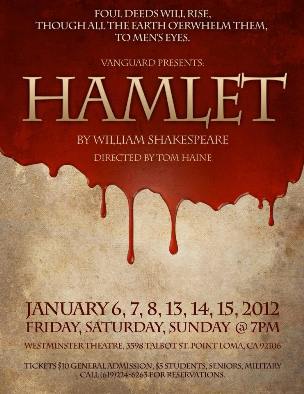
Hamlet is set in the Kingdom of Denmark. The play dramatizes the revenge Prince Hamlet is instructed to enact on his uncle Claudius. Claudius had murdered his own brother, Hamlet’s father King Hamlet, and subsequently seized the throne, marrying his deceased brother’s widow, Hamlet’s mother Gertrude.
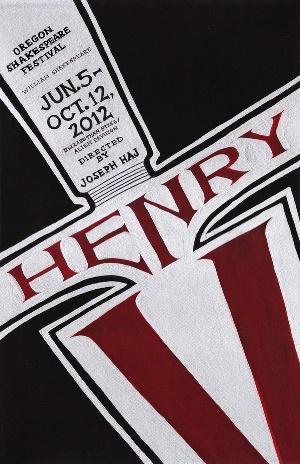
Henry V tells the story of King Henry V of England, focusing on events immediately before and after the Battle of Agincourt (1415) during the Hundred Years’ War.
Macbeth is considered one of his darkest and most powerful works. Set in Scotland, the play dramatizes the corrosive psychological and political effects produced when evil is chosen as a way to fulfill the ambition for power.
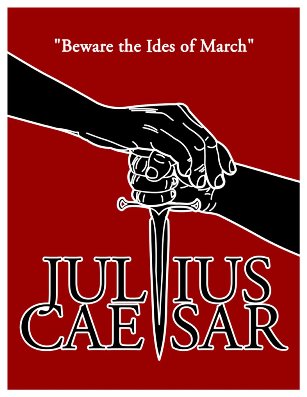
Julius Caesar portrays the 44 BC conspiracy against the Roman dictator Julius Caesar, his assassination and the defeat of the conspirators at the Battle of Philippi. It is one of several plays written by Shakespeare based on true events from Roman history, which also include Coriolanus and Antony and Cleopatra.
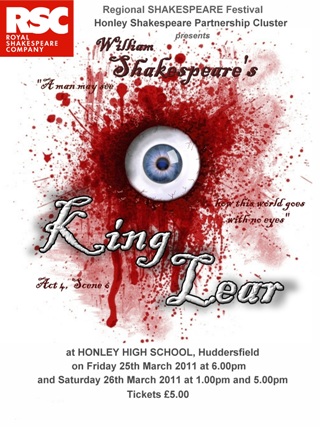
King Lear is a tragedy by William Shakespeare. The titular character descends into madness after disposing of his estate between two of his three daughters based on their flattery, bringing tragic consequences for all. The play is based on the legend of Leir of Britain, a mythological pre-Roman Celtic king. It has been widely adapted for the stage and motion pictures, and the role of Lear has been coveted and played by many of the world’s most accomplished actors.
The Winter’s Tale was grouped among the comedies, but some modern editors have re-labelled the play as one of Shakespeare’s late romances. Some critics consider it to be one of Shakespeare’s “problem plays”, because the first three acts are filled with intense psychological drama, while the last two acts are comedic and supply a happy ending.
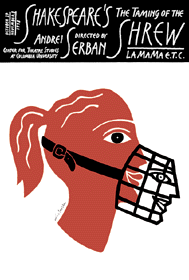
The Taming of the Shrew depicts the courtship of Petruchio, a gentleman of Verona, and Katherina, the headstrong, obdurate shrew. Initially, Katherina is an unwilling participant in the relationship, but Petruchio tempers her with various psychological torments—the “taming”—until she becomes a compliant and obedient bride. The subplot features a competition between the suitors of Katherina’s more desirable sister, Bianca.
Richard III depicts the Machiavellian rise to power and subsequent short reign of Richard III of England. The play is grouped among the histories in the First Folio and is most often classified as such. Occasionally, however, as in the quarto edition, it is termed a tragedy. Richard III concludes Shakespeare’s first tetralogy (also containing Henry VI parts 1–3).
Comedy of Errors is his shortest and one of his most farcical comedies, with a major part of the humour coming from slapstick and mistaken identity, in addition to puns and word play. The Comedy of Errors (along with The Tempest) is one of only two of Shakespeare’s plays to observe the classical unities. It has been adapted for opera, stage, screen and musical theatre.
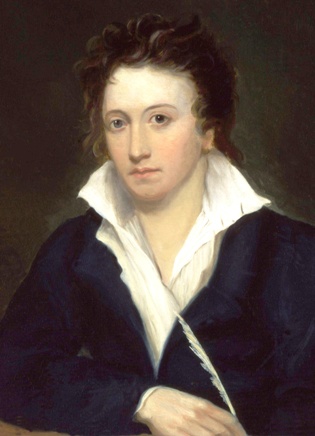
“Ozymandias” is a sonnet written by the English romantic poet Percy Bysshe Shelley. First published in the 11 January 1818 issue of The Examiner in London, it was included the following year in Shelley’s collection Rosalind and Helen, A Modern Eclogue; with Other Poems (1819) and after his death in a posthumous compilation of his poems published in 1826. “Ozymandias” is regarded as one of Shelley’s most famous works and is frequently anthologised.
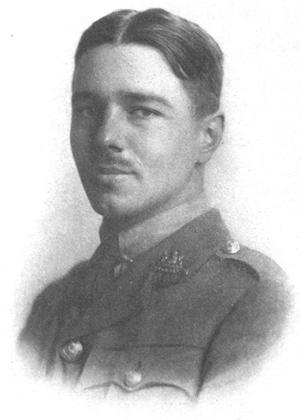
“Dulce Et Decorum Est” is a poem written by poet Wilfred Owen in 1917 during World War I, and published posthumously in 1920. The Latin title roughly translates to “it is sweet and honorable…”, which, in the following line, is followed by a phrase translating to “to die for the fatherland”. Owen’s poem is known for its horrific imagery and condemnation of war. It was drafted at Craiglockhart in the first half of October 1917 and later revised, probably at Scarborough but possibly Ripon, between January and March 1918. The earliest surviving manuscript is dated 8 October 1917 and addressed to his mother, Susan Owen, with the message “Here is a gas poem done yesterday, (which is not private, but not final).”
“Rime of the Ancient Mariner” is the longest major poem by the English poet Samuel Taylor Coleridge, written in 1797–98 and published in 1798 in the first edition of Lyrical Ballads. Modern editions use a revised version printed in 1817 that featured a gloss. Along with other poems in Lyrical Ballads, it was a signal shift to modern poetry and the beginning of British Romantic literature.
It relates the experiences of a sailor who has returned from a long sea voyage. The mariner stops a man who is on the way to a wedding ceremony and begins to narrate a story. The wedding-guest’s reaction turns from bemusement to impatience to fear to fascination as the mariner’s story progresses, as can be seen in the language style: Coleridge uses narrative techniques such as personification and repetition to create a sense of danger, the supernatural, or serenity, depending on the mood in different parts of the poem.
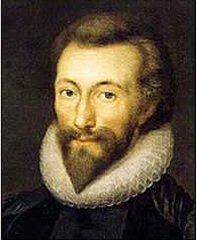
“Death Be Not Proud” is a poem by English metaphysical poet John Donne, written around 1610 and first published posthumously in 1633. It is the tenth sonnet in Donne’s posthumously published Holy Sonnets.
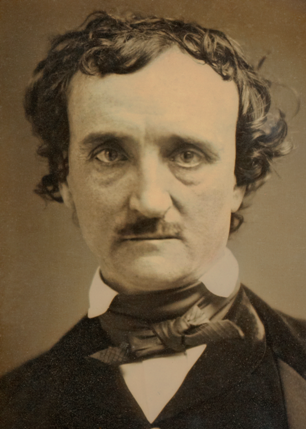
“The Raven” is a narrative poem by American writer Edgar Allan Poe. First published in January 1845, the poem is often noted for its musicality, stylized language, and supernatural atmosphere. It tells of a talking raven’s mysterious visit to a distraught lover, tracing the man’s slow fall into madness. The lover, often identified as being a student, is lamenting the loss of his love, Lenore. Sitting on a bust of Pallas, the raven seems to further instigate his distress with its constant repetition of the word “Nevermore”. The poem makes use of a number of folk and classical references.
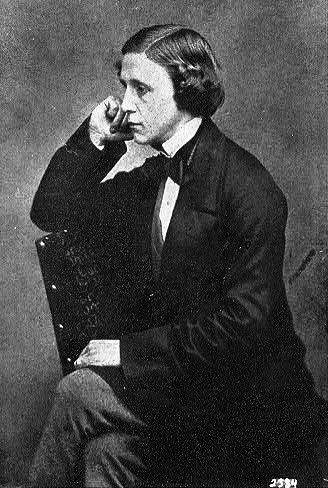
“Jabberwocky” is a nonsense poem written by Lewis Carroll in his 1871 novel Through the Looking-Glass, and What Alice Found There, a sequel to Alice’s Adventures in Wonderland. The book tells of Alice’s adventures within the back-to-front world of a looking glass.
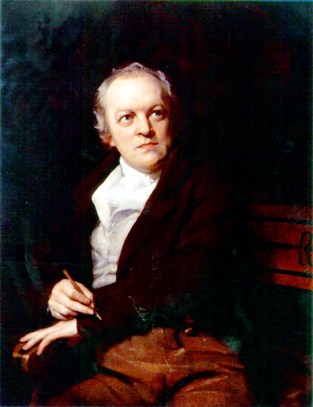
“A Poison Tree” is a poem written by William Blake, published in 1794 as part of his Songs of Experience collection. It describes the narrator’s repressed feelings of anger towards an individual, emotions which eventually lead to murder. The poem explores themes of indignation, revenge, and more generally the fallen state of mankind.
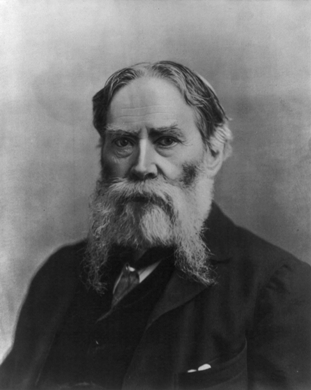
“The Present Crisis” by James Russell Lowell is an early work that addressed the national crisis over slavery leading up to the Civil War and has had an impact in the modern civil rights movement. The National Association for the Advancement of Colored People named its newsletter The Crisis after the poem, and Martin Luther King, Jr. frequently quoted the poem in his speeches and sermons. The poem was also the source of the hymn Once to Every Man and Nation.
“Stopping by Woods on a Snowy Evening” is a poem written in 1922 by Robert Frost, and published in 1923 in his New Hampshire volume. Imagery and personification are prominent in the work. In a letter to Louis Untermeyer, Frost called it “my best bid for remembrance.”
TheGodfather is a 1972 American crime film directed by Francis Ford Coppola and produced by Albert S. Ruddy from a screenplay by Mario Puzo and Coppola. The film stars Marlon Brando and Al Pacino as the leaders of a fictional New York crime family. The story, spanning the years 1945 to 1955, centers on the transformation of Michael Corleone from reluctant family outsider to ruthless Mafia boss while also chronicling the family under the patriarch Vito Corleone.
Jurassic Park is a 1993 American science fiction action adventure film which incorporates some elements of horror as well. The film was directed by Steven Spielberg and is the first installment of the Jurassic Park franchise. It is based on the 1990 novel of the same name by Michael Crichton, with a screenplay written by Crichton and David Koepp. The film centers on the fictional Isla Nublar, an islet located off Costa Rica’s Pacific Coast, where a billionaire philanthropist and a small team of genetic scientists have created a wildlife park of cloned dinosaurs.
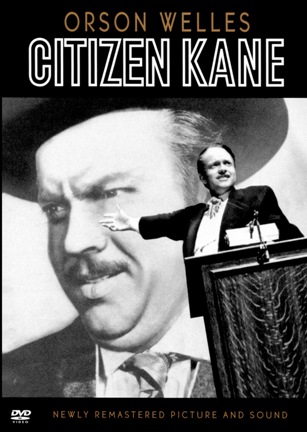
Citizen Kane is a 1941 American drama film directed, co-written, produced by, and starring Orson Welles. The picture was Welles’ first feature film. The film was nominated for Academy Awards in nine categories; it won an Academy Award for Best Writing (Original Screenplay) by Herman Mankiewicz and Welles. Considered by many critics, filmmakers, and fans to be the greatest film ever made, Citizen Kane was voted the greatest film of all time in five consecutive Sight & Sound‘s polls of critics, until it was displaced by Vertigo in the 2012 poll. It topped the American Film Institute’s 100 Years … 100 Movies list in 1998, as well as AFI’s 2007 update. Citizen Kane is particularly praised for its cinematography, music, and narrative structure, which were innovative for its time.
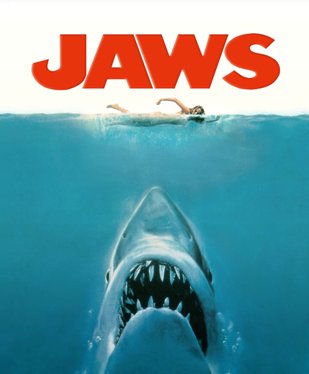
Jaws is a 1975 American thriller film directed by Steven Spielberg and based on Peter Benchley’s novel of the same name. The prototypical summer blockbuster, its release is regarded as a watershed moment in motion picture history. In the story, a giant man-eating great white shark attacks beachgoers on Amity Island, a fictional summer resort town, prompting the local police chief to hunt it with the help of a marine biologist and a professional shark hunter. The film stars Roy Scheider as police chief Martin Brody, Richard Dreyfuss as oceanographer Matt Hooper, Robert Shaw as shark hunter Quint, Murray Hamilton as the mayor of Amity Island, and Lorraine Gary as Brody’s wife, Ellen. The screenplay is credited to both Benchley, who wrote the first drafts, and actor-writer Carl Gottlieb, who rewrote the script during principal photography.
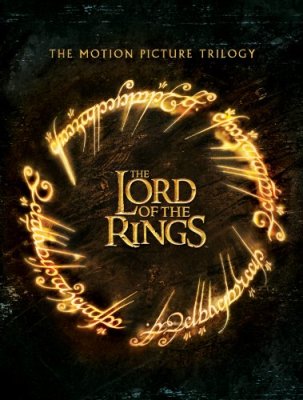
The Lord of the Rings is a film series consisting of three epic fantasy adventure films directed by Peter Jackson. They are based on the novel The Lord of the Rings by J. R. R. Tolkien. The films are subtitled The Fellowship of the Ring (2001), The Two Towers (2002) and The Return of the King (2003). They were distributed by New Line Cinema.
Considered to be one of the biggest and most ambitious film projects ever undertaken, with an overall budget of $280 million, the entire project took eight years, with the filming for all three films done simultaneously and entirely in New Zealand, Jackson’s native country. Each film in the series also had special extended editions released on DVD a year after their respective theatrical releases. While the films follow the book’s general storyline, they do omit some of the novel’s plot elements and include some additions to and deviations from the source material.
Draculais a 1931 vampire-horror film directed by Tod Browning and starring Bela Lugosi as the title character. The film was produced by Universal and is based on the 1924 stage play Dracula by Hamilton Deane and John L. Balderston, which in turn is loosely based on the novel Dracula by Bram Stoker.
Clue is a 1985 American mystery comedy film based on the board game of the same name. Not only is the film based on the board game but uses the same theme as well “Who did it?” The film is a murder mystery set in a Gothic Revival mansion, and is styled after Murder by Death (which also featured Clue star Eileen Brennan) and other various murder/dinner parties of mystery. The film was directed by Jonathan Lynn, who collaborated on the script with John Landis, and stars Eileen Brennan, Tim Curry, Madeline Kahn, Christopher Lloyd, Michael McKean, Martin Mull, and Lesley Ann Warren.
In keeping with the nature of the board game, in theatrical release the movie was shown with one of three possible endings, with different theaters receiving each ending. In the film’s home video release, all three endings were included.
National Treasureis a 2004 American adventure/heist film produced and released by Walt Disney Pictures. It is the first film in the National Treasure franchise and stars Nicolas Cage, Harvey Keitel, Jon Voight, Diane Kruger, Sean Bean, Justin Bartha, and Christopher Plummer.
Cage plays Benjamin Franklin Gates, a historian and amateur cryptologist searching for a lost treasure of precious metals, jewelry, artwork and other artifacts that was accumulated into a single massive stockpile by looters and warriors over many millennia starting in Ancient Egypt, later rediscovered by warriors who form themselves into the Knights Templar to protect the treasure, eventually hidden by American Freemasons during the American Revolutionary War. A coded map on the back of the Declaration of Independence points to the location of the “national treasure”, but Gates is not alone in his quest. Whoever can steal the Declaration and decode it first will find the greatest treasure in history.
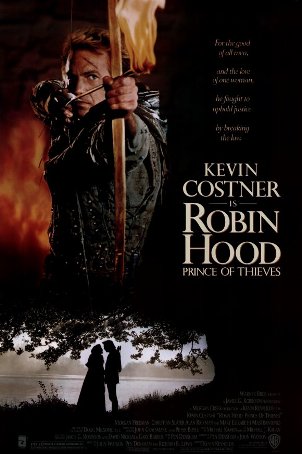
Robin Hood: Prince of Thieves is a 1991 American adventure film directed by Kevin Reynolds. The film stars Kevin Costner as Robin Hood, Morgan Freeman as Azeem, Christian Slater as Will Scarlet, Mary Elizabeth Mastrantonio as Maid Marian of Dubois, and Alan Rickman as the Sheriff of Nottingham.
Breakfast at Tiffany’s is a 1961 American romantic comedy film starring Audrey Hepburn and George Peppard, and featuring Patricia Neal, Buddy Ebsen, Martin Balsam, and Mickey Rooney. The film was directed by Blake Edwards and released by Paramount Pictures. It is loosely based on the novella of the same name by Truman Capote.
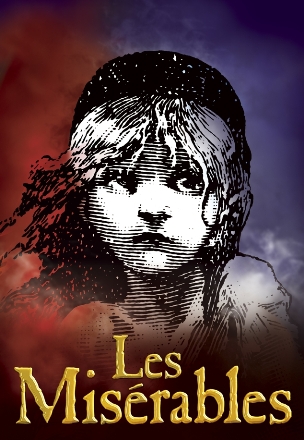
Les Miserables colloquially known as Les Mis or Les Miz (/leɪˈmɪz/) is a sung-through musical based on the novel Les Misérables by French poet and novelist Victor Hugo. It has music by Claude-Michel Schönberg, original French lyrics by Alain Boublil and Jean-Marc Natel, with an English-language libretto by Herbert Kretzmer.
Set in early 19th-century France, it is the story of Jean Valjean, a French peasant, and his quest for redemption after serving nineteen years in jail for having stolen a loaf of bread for his sister’s starving child. Valjean decides to break his parole and start his life anew after a kindly bishop inspires him by a tremendous act of mercy, but he is relentlessly tracked down by a police inspector named Javert. Along the way, Valjean and a slew of characters are swept into a revolutionary period in France, where a group of young idealists make their last stand at a street barricade.
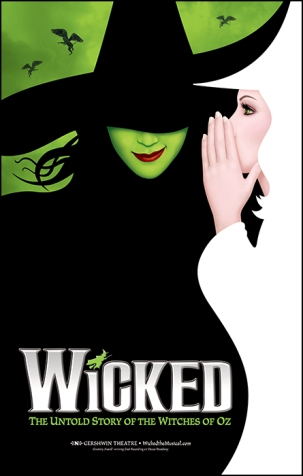
Wicked is a musical with music and lyrics by Stephen Schwartz and a book by Winnie Holzman. It is based on the 1995 Gregory Maguire novel Wicked: The Life and Times of the Wicked Witch of the West, a parallel novel of the 1939 film The Wizard of Oz and L. Frank Baum’s 1900 classic story The Wonderful Wizard of Oz. The musical is told from the perspective of the witches of the Land of Oz; its plot begins before and continues after Dorothy’s arrival in Oz from Kansas and includes several references to the 1939 film and Baum’s novel. Wicked tells the story of two unlikely friends, Elphaba (the Wicked Witch of the West) and Glinda (the Good Witch of the North), who struggle through opposing personalities and viewpoints, rivalry over the same love-interest, reactions to the Wizard’s corrupt government, and, ultimately, Elphaba’s public fall from grace.
Phantom of the Opera is a musical with music by Andrew Lloyd Webber and lyrics by Charles Hart with additions from Richard Stilgoe. Lloyd Webber and Stilgoe also wrote the musical’s book together. Based on the French novel Le Fantôme de l’Opéra by Gaston Leroux, its central plot revolves around a beautiful soprano, Christine Daaé, who becomes the obsession of a mysterious, disfigured musical genius.
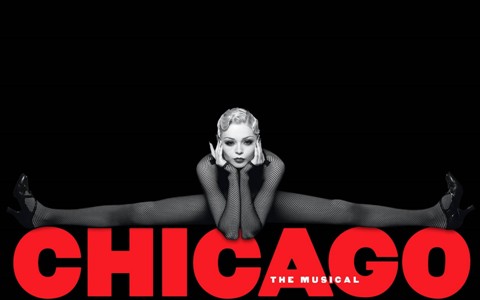
Chicago is a musical with music by John Kander, lyrics by Fred Ebb and a book by Ebb and Bob Fosse. Set in Prohibition-era Chicago, the musical is based on a 1926 play of the same name by reporter Maurine Dallas Watkins about actual criminals and crimes she reported on. The story is a satire on corruption in the administration of criminal justice and the concept of the “celebrity criminal.”
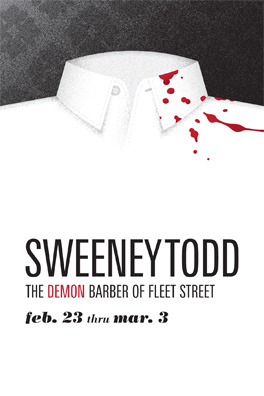
Sweeney Todd: The Demon Barber of Fleet Street is a 1979 musical thriller with music and lyrics by Stephen Sondheim and book by Hugh Wheeler. The musical is based on the 1973 play Sweeney Todd, the Demon Barber of Fleet Street by Christopher Bond. Set in 19th century England, the musical tells the story of Benjamin Barker, aka Sweeney Todd, who returns to London after 15 years’ transportation on trumped-up charges. When he finds out that his wife poisoned herself after being raped by the judge who transported him, he vows revenge on the judge and, later, other people too. He teams up with a piemaker, Mrs. Lovett, and opens a barbershop in which he slits the throats of customers and has them baked into pies.
Rent is a rock musical with music and lyrics by Jonathan Larson and loosely based on Giacomo Puccini’s opera La bohème. It tells the story of a group of impoverished young artists struggling to survive and create in New York City’s East Village in the thriving days of Bohemian Alphabet City, under the shadow of HIV/AIDS.
Evita is a musical with music by Andrew Lloyd Webber and lyrics by Tim Rice. It concentrates on the life of Argentine political leader Eva Perón, the second wife of Argentine president Juan Perón. The story follows Evita’s early life, rise to power, charity work, and eventual death.
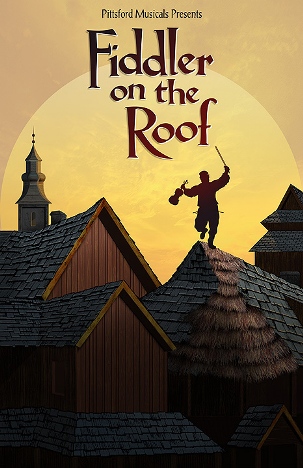
Fiddler on the Roof is a musical with music by Jerry Bock, lyrics by Sheldon Harnick, and book by Joseph Stein, set in the Pale of Imperial Russia in 1905. It is based on Tevye and his Daughters (or Tevye the Dairyman) and other tales by Sholem Aleichem. The story centers on Tevye, the father of five daughters, and his attempts to maintain his family and Jewish religious traditions while outside influences encroach upon their lives. He must cope both with the strong-willed actions of his three older daughters—each one’s choice of husband moves further away from the customs of his faith—and with the edict of the Tsar that evicts the Jews from their village.
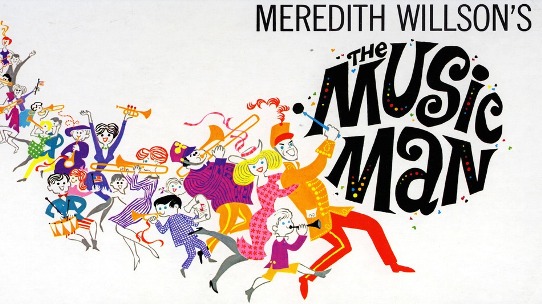
The Music Man is a musical with book, music, and lyrics by Meredith Willson, based on a story by Willson and Franklin Lacey. The plot concerns con man Harold Hill, who poses as a boys’ band organizer and leader and sells band instruments and uniforms to the naive Iowa townsfolk, promising to train the members of the new band. But Harold is no musician and plans to skip town without giving any music lessons. Prim librarian and piano teacher Marian sees through him, but when Harold helps her younger brother overcome his lisp and social awkwardness, Marian begins to fall in love. Harold risks being caught to win her.
Showboat is a 1927 musical in two acts, with music by Jerome Kern and book and lyrics by Oscar Hammerstein II. Based on Edna Ferber’s bestselling novel of the same name, the musical follows the lives of the performers, stagehands, and dock workers on the Cotton Blossom, a Mississippi River show boat, over forty years, from 1887 to 1927. Its themes include racial prejudice and tragic, enduring love. The musical contributed such classic songs as “Ol’ Man River”, “Make Believe”, and “Can’t Help Lovin’ Dat Man”.
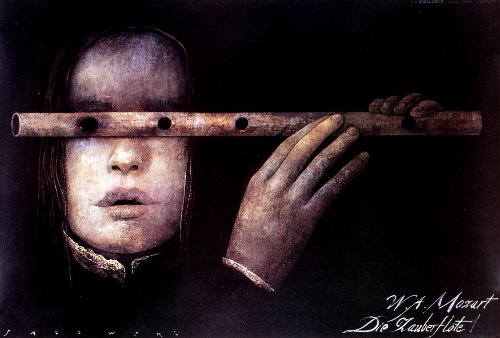
Die Zauberflöte (The Magic Flute) is an opera in two acts by Wolfgang Amadeus Mozart to a German libretto by Emanuel Schikaneder. The work is in the form of a Singspiel, a popular form that included both singing and spoken dialogue. The work premiered in 1791 at Schikaneder’s theatre, the Freihaus-Theater auf der Wieden in Vienna.
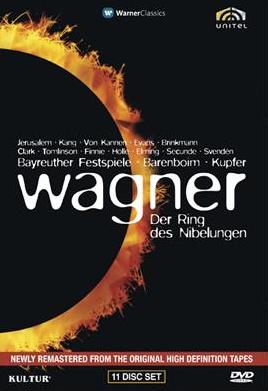
Der Ring des Nibelungen (The Ring of the Nibelung) is a cycle of four epic operas by the German composer Richard Wagner (1813–1883). The works are based loosely on characters from the Norse sagas and the Nibelungenlied. The composer termed the cycle a “Bühnenfestspiel” (stage festival play), structured in three days preceded by a Vorabend (“ante-evening”). It is often referred to as the Ring Cycle, Wagner’s Ring, or simply the Ring.
Wagner wrote the libretto and music over the course of about twenty-six years, from 1848 to 1874. The four operas that constitute the Ring cycle are Das Rheingold (The Rhine Gold),Die Walküre (The Valkyrie),Siegfried, and Götterdämmerung (Twilight of the Gods).
Although individual operas of the sequence are sometimes performed separately, Wagner intended them to be performed in series. The first performance as a cycle opened the first Bayreuth Festival in 1876, beginning with Das Rheingold on 13 August and ending with Götterdämmerung on 17 August.
Der fliegende Holländer (The Flying Dutchman) is a German language opera, with libretto and music by Richard Wagner.
Tosca is an opera in three acts by Giacomo Puccini to an Italian libretto by Luigi Illica and Giuseppe Giacosa. It premiered at the Teatro Costanzi in Rome on 14 January 1900. The work, based on Victorien Sardou’s 1887 French-language dramatic play, La Tosca, is a melodramatic piece set in Rome in June 1800, with the Kingdom of Naples’s control of Rome threatened by Napoleon’s invasion of Italy. It contains depictions of torture, murder and suicide, as well as some of Puccini’s best-known lyrical arias, and has inspired memorable performances from many of opera’s leading singers.
Carmen is an opera in four acts by the French composer Georges Bizet. The libretto was written by Henri Meilhac and Ludovic Halévy, based on a novella of the same title by Prosper Mérimée. The opera was first performed at the Opéra-Comique in Paris, on 3 March 1875, and at first was not particularly successful. Its initial run extended to 36 performances, before the conclusion of which Bizet died suddenly, and thus knew nothing of the opera’s later celebrity.
The opera, written in the genre of opéra comique with musical numbers separated by dialogue, tells the story of the downfall of Don José, a naïve soldier who is seduced by the wiles of the fiery Gypsy, Carmen. José abandons his childhood sweetheart and deserts from his military duties, yet loses Carmen’s love to the glamorous toreador Escamillo, after which José kills her in a jealous rage. The depictions of proletarian life, immorality and lawlessness, and the tragic death of the main character on stage, broke new ground in French opera and were highly controversial. After the premiere, most reviews were critical, and the French public was generally indifferent. Carmen initially gained its reputation through a series of productions outside France, and was not revived in Paris until 1883; thereafter it rapidly acquired celebrity at home and abroad, and continues to be one of the most frequently performed operas; the “Habanera” from act 1 and the “Toreador Song” from act 2 are among the best known of all operatic arias. Later commentators have asserted that Carmen forms the bridge between the tradition of opéra comique and the realism or verismo that characterised late 19th-century Italian opera.
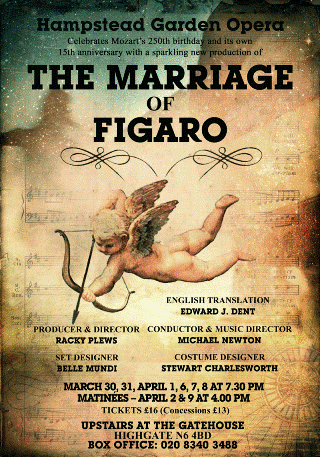
Le nozze di Figaro (The Marriage of Figaro) is an opera buffa (comic opera) in four acts composed in 1786 by Wolfgang Amadeus Mozart, with an Italian libretto written by Lorenzo Da Ponte based on a stage comedy by Pierre Beaumarchais, La folle journée, ou le Mariage de Figaro (1784).
Il Barbiere di Seville (The Barber of Seville) is an opera buffa in two acts by Gioachino Rossini with an Italian libretto by Cesare Sterbini. The libretto was based on Pierre Beaumarchais’s French comedy Le Barbier de Séville (1775). The première of Rossini’s opera (under the title Almaviva, o sia L’inutile precauzione) took place on 20 February 1816 at the Teatro Argentina, Rome.
Rossini’s Barber has proven to be one of the greatest masterpieces of comedy within music, and has been described as the opera buffa of all “opere buffe”. Even after two hundred years, its popularity on the modern opera stage attests to that greatness.
L’Elisir d’Amore (The Elixir of Love) is a comic opera (melodramma giocoso) in two acts by the Italian composer Gaetano Donizetti. Felice Romani wrote the Italian libretto, after Eugène Scribe’s libretto for Daniel Auber’s Le philtre (1831).
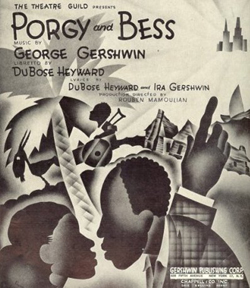
Porgy and Bess is an opera, first performed in 1935, with music by George Gershwin, libretto by DuBose Heyward, and lyrics by DuBose Heyward and Ira Gershwin. It was based on DuBose Heyward’s novel Porgy and subsequent play of the same title, which he co-wrote with his wife Dorothy Heyward. All three works deal with African-American life in the fictitious Catfish Row (based on the area of Cabbage Row in Charleston, South Carolina, in the early 1920s.
Eugene Onegin is an opera (“lyrical scenes”) in 3 acts (7 scenes), composed by Pyotr Ilyich Tchaikovsky. The libretto, organised by the composer and Konstantin Shilovsky, very closely follows certain passages in Alexander Pushkin’s novel in verse, retaining much of his poetry.
The Moldau is a set of six symphonic poems composed between 1874 and 1879 by the Czech composer Bedřich Smetana. While it is often presented as a single work in six movements and – with the exception of Vltava – is almost always recorded that way, the six pieces were conceived as individual works. They had their own separate premieres between 1875 and 1880; the premiere of the complete set took place on 5 November 1882 in Prague, under Adolf Čech, who had also conducted two of the individual premieres.
In these works Smetana combined the symphonic poem form pioneered by Franz Liszt with the ideals of nationalistic music which were current in the late nineteenth century. Each poem depicts some aspect of the countryside, history, or legends of Bohemia.
Symphony No. 9 by Philip Glass
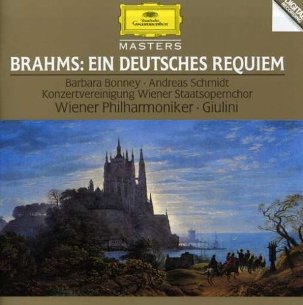
Ein Deutsches Requiem (A German Requiem) by Johannes Brahms, is a large-scale work for chorus, orchestra, and a soprano and a baritone soloist, composed between 1865 and 1868. It comprises seven movements, which together last 65 to 80 minutes, making this work Brahms’s longest composition. A German Requiem is sacred but non-liturgical, and unlike a long tradition of the Latin Requiem, A German Requiem, as its title states, is a Requiem in the German language.
The War Requiem is a large-scale, non-liturgical setting of the Requiem Mass composed by Benjamin Britten mostly in 1961 and completed in January 1962. The War Requiem was performed for the consecration of the new Coventry Cathedral, which was built after the original fourteenth-century structure was destroyed in a World War II bombing raid. The traditional Latin texts are interspersed, in telling juxtaposition, with settings of poems by Wilfred Owen, written in World War I. The work is scored for soprano, tenor and baritone soloists, chorus, boys’ choir, organ, and two orchestras (a full orchestra and a chamber orchestra). The chamber orchestra accompanies the intimate settings of the English poetry, while soprano, choirs and orchestra are used for the Latin sections; all forces are combined in the conclusion. The Requiem has a duration of approximately 85 minutes.
Also Sprach Zarathustra is a tone poem by Richard Strauss, composed in 1896 and inspired by Friedrich Nietzsche’s philosophical novel of the same name. The composer conducted its first performance on 27 November 1896 in Frankfurt. A typical performance lasts half an hour.
The work has been part of the classical repertoire since its first performance in 1896. The initial fanfare – entitled “Sunrise” in the composer’s program notes – became particularly well known to the general public due to its use in Stanley Kubrick’s 1968 film 2001: A Space Odyssey.
Rhapsody in Blue is a 1924 musical composition by American composer George Gershwin for solo piano and jazz band, which combines elements of classical music with jazz-influenced effects.
The editors of the Cambridge Music Handbooks opined that “The Rhapsody in Blue (1924) established Gershwin’s reputation as a serious composer and has since become one of the most popular of all American concert works.”
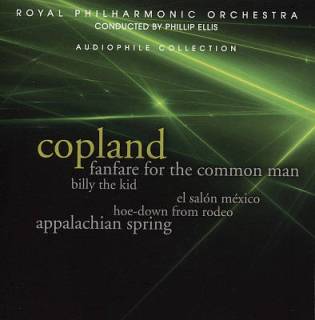
Fanfare for the Common Man is a musical work by American composer Aaron Copland. The piece was written in 1942 for the Cincinnati Symphony Orchestra under conductor Eugene Goossens. It was inspired in part by a famous speech made earlier in the same year where vice president Henry A. Wallace proclaimed the dawning of the “Century of the Common Man”. Several alternative versions have been made and fragments of work have appeared in many subsequent US and British cultural productions, such as in the musical scores of movies.
The Pope Marcellus Mass is a mass by Giovanni Pierluigi da Palestrina. It is his most well-known and most often-performed mass, and is frequently taught in university courses on music. It was traditionallysung at the Papal Coronation Mass (the last being the coronation of Paul VI in 1963).
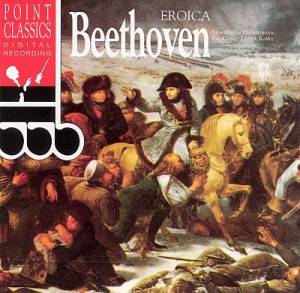
Eroica is a structurally rigorous composition of great emotional depth, which marked the beginning of the creative middle-period of the composer Ludwig van Beethoven.
As a type of orchestral music, the Sinfonia Eroica is a technically mature expression of the classical style of composition of the eighteenth century, yet also exhibits defining features of the romantic style that would be much used in nineteenth-century orchestral composition.
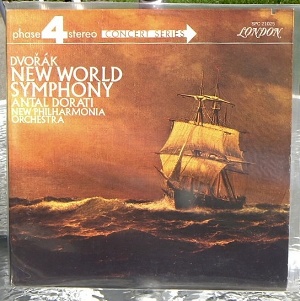
The New World Symphony was composed by Antonín Dvořák in 1893 while he was the director of the National Conservatory of Music of America from 1892 to 1895. It is by far his most popular symphony, and one of the most popular of all symphonies. In older literature and recordings, this symphony was often numbered as Symphony No. 5. Neil Armstrong took a recording of the New World Symphony to the Moon during the Apollo 11 mission, the first Moon landing, in 1969.
Chicken Pad Thai is a stir-fried rice noodle dish commonly served as a street food and at casual local eateries in Thailand. It is made with soaked dried rice noodles, which are stir-fried with eggs and chopped firm tofu, and flavored with tamarind pulp, fish sauce, chicken, garlic or shallots, red chili pepper and palm sugar, and served with lime wedges and often chopped roast peanuts. It may also contain other vegetables like bean sprouts, garlic chives, coriander leaves, pickled radishes or turnips, and raw banana flowers.
Eel sushi is a Japanese food consisting of cooked vinegared rice combined with eel and sometimes vegetables.
Tuna is a saltwater finfish that belongs to the tribe Thunnini.
Catfish are a diverse group of ray-finned fish.
Steak is generally a cut of beef sliced perpendicular to the muscle fibers, or of fish cut perpendicular to the spine. Meat steaks are usually grilled, pan-fried, or broiled, while fish steaks may also be baked. Steak can also be meat cooked in sauce, such as steak and kidney pie, or minced meat formed into a steak shape, such as Salisbury steak and hamburger steak. Without qualification, the word “steak” generally refers to beefsteak. Steaks from other animals are usually qualified as such – for example, ‘swordfish steak’ or ‘venison steak’.
Mashed Potatoes is a dish prepared by mashing boiled potatoes. Recipes started appearing no later than 1747 with an entry in The Art of Cookery by Hannah Glasse. Dehydrated and frozen mashed potatoes are available in many places.
Philly Cheese Steak is a sandwich made from thinly-sliced pieces of steak and melted cheese in a long roll. A popular regional fast food, it has its roots in the city of Philadelphia, Pennsylvania.
Sweet Corn is a variety of maize with a high sugar content. Sweet corn is the result of a naturally occurring recessive mutation in the genes which control conversion of sugar to starch inside the endosperm of the corn kernel. Unlike field corn varieties, which are harvested when the kernels are dry and mature (dent stage), sweet corn is picked when immature (milk stage) and prepared and eaten as a vegetable, rather than a grain. Since the process of maturation involves converting sugar to starch, sweet corn stores poorly and must be eaten fresh, canned, or frozen, before the kernels become tough and starchy.
Broccoli is an edible green plant in the cabbage family, whose large flowering head is used as a vegetable. The word broccoli comes from the Italian plural of broccolo, which means “the flowering crest of a cabbage”, and is the diminutive form of brocco, meaning “small nail” or “sprout”. Broccoli is often boiled or steamed but may be eaten raw.
Apples are the pomaceous fruit of the apple tree, Malus domestica of the rose family (Rosaceae). It is one of the most widely cultivated tree fruits, and the most widely known of the many members of genus Malus that are used by humans. Apples grow on deciduous trees which are large if grown from seed, but small if grafted onto roots (rootstock). The tree originated in Central Asia, where its wild ancestor, Malus sieversii, is still found today. Apples have been grown for thousands of years in Asia and Europe, and were brought to North America by European colonists. Apples have been present in the mythology and religions of many cultures, including Norse, Greek and Christian traditions. In 2010, the fruit’s genome was decoded as part of research on disease control and selective breeding in apple production.
Coffee is a brewed beverage prepared from the roasted or baked seeds of several species of an evergreen shrub of the genus Coffea. The two most common sources of coffee beans are the highly regarded Coffea arabica, and the “robusta” form of the hardier Coffea canephora. The latter is resistant to the coffee leaf rust (Hemileia vastatrix), but has a more bitter taste. Coffee plants are cultivated in more than 70 countries, primarily in equatorial Latin America, Southeast Asia, and Africa. Once ripe, coffee “berries” are picked, processed and dried to yield the seeds inside. The seeds are then roasted to varying degrees, depending on the desired flavor, before being ground and brewed to create coffee.
Lemonade is a lemon-flavored drink sweetened with sugar. In different parts of the world, there are variations on the drink and its name. Pink lemonade and frozen lemonade are also prepared.
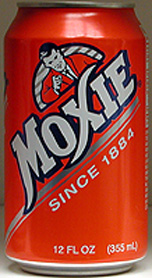
Moxie is a carbonated beverage that was an early example of mass-produced soft drinks in the United States. It continues to be regionally popular today.
Moxie’s flavor is unique, as it is not as sweet as most modern soft drinks and is described by some as “bitter.” Moxie is flavored with gentian root extract, an extremely bitter substance which was reputed to possess medicinal properties.
Moxie is closely associated with the state of Maine and was designated the official soft drink of Maine on May 10, 2005. Its creator, Dr. Augustin Thompson, was born in Union, Maine, but Moxie was invented and first produced in Lowell, Massachusetts.
Coke is a carbonated soft drink sold in stores, restaurants, and vending machines throughout the world. It is produced by The Coca-Cola Company of Atlanta, Georgia, and isa registered trademark of The Coca-Cola Company in the United States since March 27, 1944. It was originally intended as a patent medicine when it was invented in the late 19th century by John Pemberton.
Horchata is the name of several kinds of traditional beverages, made of ground almonds, sesame seeds, rice, barley, or tigernuts (chufas).
Ginger Ale is a carbonated soft drink flavored with ginger in one of two ways. The golden style is closer to the ginger beer original, and is credited to the American doctor Thomas Cantrell. The dry style (also called the pale style) is a paler drink with a much milder ginger-flavor to it, and was created by Canadian John McLaughlin.
Grapefruit Juice is the fruit juice from grapefruits. It is rich in Vitamin C and ranges from sweet-tart to very sour. Variations include white grapefruit, pink grapefruit and ruby red grapefruit juice.
Sweet Tea is a style of iced tea commonly consumed in the United States, especially the Southern United States. Sweet tea is made by adding sugar to bags of black tea brewing in hot water while the mixture is still hot. The tea is served ice-cold and plain but may also be flavored, traditionally with raspberry, lemon, or mint. Sweet tea can also be made with a simple syrup and is sometimes tempered with baking soda to reduce the drink’s acidity.
Orange Fanta originated as a result of difficulties importing Coca-Cola syrup into Nazi Germany during World War II due to a trade embargo. To circumvent this, Max Keith, the head of Coca-Cola Deutschland (Coca-Cola GmbH) during the Second World War, decided to create a new product for the German market, using only ingredients available in Germany at the time, including whey and pomace – the “leftovers of leftovers”, as Keith later recalled. The name was the result of a brief brainstorming session, which started with Keith exhorting his team to “use their imagination” (“Fantasie” in German), to which one of his salesmen, Joe Knipp, immediately retorted “Fanta!”
While the plant was effectively cut off from Coca Cola headquarters during the war, plant management did not join the Nazi Party. After the war, the Coca Cola corporation regained control of the plant, formula and the trademarks to the new Fanta product—as well as the plant profits made during the war.
Apple Cider is the name used in the United States and parts of Canada for an unfiltered, unsweetened, non-alcoholic beverage made from apples. Apple cider is easy and inexpensive to produce. It may be opaque due to fine apple particles in suspension and may be tangier than conventional filtered apple juice, depending on the apples used.
This untreated cider is a seasonally produced drink of limited shelf-life that is typically available only in fall, although it is sometimes frozen for use throughout the year. It is traditionally served on the Halloween, Thanksgiving, Christmas and various New Year’s Eve holidays, sometimes heated and mulled. It is the official state beverage of New Hampshire.
Giraffe Killed After Hitting Head on Motorway Bridge
Death to Israel
1400 plastinian killed by jews but u r silent ohoh oh
Talking about a giraffe´s death, meanwhile in Ghaza 1300 people (including more than 300 children) are killed. Yes. Humans are stupid.
Obama: “Stop Hating All The Time”
Yes they r still million times better than israelie children murderers. U r worst than animals
Stop supporting Israel … they’re the source of hate wherever they are
Stop funding Israel’s genocide
Maybe he should tell his Zionist friends to soft-pedal?
Boycott Israel
Hell fire is waiting Israel
A story reporting that an entire Japanese whaling crew were eaten alive by killer whales has been circulating on Facebook.
STOP! Israel’s crimes against humanity
I humbly pray that same should happen to Isreal..Ameen.
Did you spot this mildly interesting change to Facebook’s notification icon?
Stop Israel Crimes against Humanity
there is major unrest and many deaths in both the ukraine and in Gaza.
israel demolisiones mosques , churches and schools of united nations in gaza , the state of israel for not upholding the state convention , and do not respect the opinion of united states , and dreamed of discontent against John kerry !
I could do this all day . . .
Why did the world turn on Israel?
Oh, I see. It’s because Israel “kills civilians.” Please understand that
war is hell
William T. Sherman
and
the laws of celestial mechanics dictate that when two objects collide, there is always damage of a collateral nature.
Oh, it’s because Israel is the “aggressor” and HAMAS is the “victim.” From the Covenant of the HAMAS (est. 1988):
Israel will exist and will continue to exist until Islam will obliterate it, just as it obliterated others before it.
The Islamic Resistance Movement [HAMAS] is a distinguished Palestinian movement, whose allegiance is to Allah, and whose way of life is Islam. It strives to raise the banner of Allah over every inch of Palestine.
Palestine is an Islamic land . . . Since this is the case, the Liberation of Palestine is an individual duty for every Moslem (sic) wherever he may be.
The day the enemies usurp part of Moslem (sic) land, Jihad becomes the individual duty of every Moslem (sic). In the face of the Jews’ usurpation, it is compulsory that the banner of Jihad be raised.
[Peace] initiatives, and so-called peaceful solutions and international conferences are in contradiction to the principles of the Islamic Resistance Movement [HAMAS] . . . Those conferences are no more than a means to appoint the infidels as arbitrators in the lands of Islam . . . There is no solution for the Palestinian problem except by Jihad. Initiatives, proposals and international conferences are but a waste of time, an exercise in futility.
Zionism scheming has no end, and after Palestine, they will covet expansion from the Nile to the Euphrates River. When they have finished digesting the area on which they have laid their hand, they will look forward to more expansion. Their scheme has been laid out in the “Protocols of the Elders of Zion” . . . The HAMAS regards itself the spearhead and the vanguard of the circle of struggle against World Zionism . . . Islamic groups all over the Arab world should also do the same, since they are best equipped for their future role in the fight against the warmongering Jews.
Please tell me, how can Israel make peace with an organization/government existing solely for its destruction?
“Two-State Solution!” you cry.
1. Re-read HAMAS’ charter.
2. Israel tried in the mid-1990s as a result of the Oslo Accords. Israel gave the Palestinian Authority control over Gaza and a portion of the West Bank. Now, why do they sound familiar . . . ?
Oh, so Israel should never have been created in the first place? In that case, I assume you identify with the political Left.
The collective amnesia of the Left in this regard is especially striking since in the late 1940s, most Communists and socialists in the West enthusiastically hailed the “anti-colonialist” nature of the Israeli war of independence. Indeed they followed the USSR in strongly supporting the establishment of Israel as a blow against “Anglo-American domination of the Middle East.” . . . What today is eulogized as the Palestinian “struggle against Zionism” was considered by most Communists or Socialists in 1948 as utterly reactionary.
Robert S. Wistrich From Ambivalence to Betrayal: The Left, the Jews, and Israel
HAMAS stands for Sharia law, gender segregation, feminine oppression, modesty police, religious intolerance, martial law, and violence against LGBT persons, and other civil rights abuses.
Israel offers political, personal, and religious freedom (including the freedom to be non-religious). Although far from perfect, it is more enlightened.
What was your argument again?
To argue with a person who has renounced the use of reason is like administering medicine to the dead.
We found your post very funny – it had a nice, well paced buildup of detail which can be appreciated by Monty Python fans and non-fans alike. We thought it was a great read and think the rest of the community will agree — we’re really looking forward to the discussion that comes out of it, and are glad we can give it (and you) some more exposure.
– Ben Huberman
Indeed, I received a lot of exposure, but I didn’t know what to do with it. I had followers and readers, even a few I actually connected with, but I had nothing to say. My featured post was a listicle like those found on Cracked or Buzzfeed (two of my guilty pleasures), but it wasn’t really me.
You see, I hadn’t found my voice. In fact, I’m still finding it. Looking back, my post might be funny, but it’s not mine. Not really. It’s time that changed.
So I edited and included more pictures. I used my voice. I claimed it as my own.
Go and tell your master that we have been charged by God with a sacred quest. If he will give us food and shelter for the night, he can join us in our quest for the Holy Grail.
To Camelot!
Please note that this post is several pages in length. Scroll past the media buttons and keep reading!





































































 The Islamic Resistance Movement [HAMAS] is a distinguished Palestinian movement, whose allegiance is to Allah, and whose way of life is Islam. It strives to raise the banner of Allah over every inch of Palestine.