We found your post very funny – it had a nice, well paced buildup of detail which can be appreciated by Monty Python fans and non-fans alike. We thought it was a great read and think the rest of the community will agree — we’re really looking forward to the discussion that comes out of it, and are glad we can give it (and you) some more exposure.
– Ben Huberman
Indeed, I received a lot of exposure, but I didn’t know what to do with it. I had followers and readers, even a few I actually connected with, but I had nothing to say. My featured post was a listicle like those found on Cracked or Buzzfeed (two of my guilty pleasures), but it wasn’t really me.
You see, I hadn’t found my voice. In fact, I’m still finding it. Looking back, my post might be funny, but it’s not mine. Not really. It’s time that changed.
So I edited and included more pictures. I used my voice. I claimed it as my own.
Go and tell your master that we have been charged by God with a sacred quest. If he will give us food and shelter for the night, he can join us in our quest for the Holy Grail.
To Camelot!
Please note that this post is several pages in length. Scroll past the media buttons and keep reading!
It’s hard to write about current events: everyone has an opinion and – after a time – there’s nothing new to be said. I’ve spent the last several days trying to write about something mainstream: Hobby Lobby, Kendall Jones, Immigration, the World Cup, Israel and Gaza. I’ve only completed one of those, but I did write about it twice.
As I sat writing, editing, and deleting, I thought back to the first blog I ever wrote: a short-lived current events Blogger site whose only semi-redeeming feature was the title: 451 Revisited. I’d intended to use it as a place of information and discussion, but I only posted four articles in six months. Thinking on that failed abomination, I reflected on the title. Hadn’t I written a piece about Fahrenheit 451 for Banned Books Week? Maybe the time was right for another visit.
After days weeks of reading professional articles, personal blogs, Twitter feeds, and Facebook updates, I came to the opinion that many people would benefit from Captain Beatty’s speech to Montag about the history of the Firemen. I intended to update it for a modern audience, but found that Bradbury’s argument still held true – no rewriting necessary. Instead, I decided on a different tack entirely . . .
Captain Beatty’s Speech
Edited* and Illustrated for the Modern Reader
Original by Ray Bradbury – Fahrenheit 451 (1979 ed)
Declared Martial Law Suspended Habeas Corpus Ignored Supreme Court Jailed Dissenters Loved by Millions
When did it all start, you ask . . . ? Well, I’d say it really got started around about a thing called the Civil War . . . The fact is we didn’t get along well until photography came into its own. Then – motion pictures in the early twentieth century. Radio. Television. Things began to have mass . . .
And because they had mass, they became simpler . . . Once, books appealed to a few people, here, there, everywhere. They could afford to be different. The world was roomy. But then the world got full of eyes and elbows and mouths. Double, triple, quadruple population. Films and radios, magazines, books levelled down to a sort of paste pudding norm . . .
Ironic, isn’t it?
Picture it. Nineteenth-century man with his horses, dogs, carts, slow motion. Then, in the twentieth century, speed up your camera. Books cut shorter. Condensations, Digests. Tabloids. Everything boils down to the gag, the snap ending . . .
Classics cut to fit fifteen-minute radio shows, then cut again to fill a two-minute book column, winding up at last as a ten- or twelve-line dictionary resume. I exaggerate, of course. The dictionaries were for reference. But many were those whose sole knowledge of Hamlet . . . was a one-page digest in a book that claimed: ‘now at least you can read all the classics; keep up with your neighbours.’ Do you see? Out of the nursery into the college and back to the nursery; there’s your intellectual pattern for the past five centuries or more . . .
Sound Bites!
Politics? One column, two sentences, a headline! Then, in mid-air, all vanishes! Whirl man’s mind around about so fast under the pumping hands of publishers, exploiters, broadcasters, that the centrifuge flings off all unnecessary, time-wasting thought! . . .
School is shortened, discipline relaxed, philosophies, histories, languages dropped, English and spelling gradually neglected, finally almost completely ignored. Life is immediate, the job counts, pleasure lies all about after work. Why learn anything save pressing buttons, pulling switches, fitting nuts and bolts?
[sarcasm] Seriously, why waste time with extras? [/sarcasm]Sound Familiar?
The zipper displaces the button and a man lacks just that much time to think while dressing at dawn, a philosophical hour, and thus a melancholy hour . . .
Empty the theatres save for clowns and furnish the rooms with glass walls and pretty colours running up and down the walls like confetti or blood or sherry or sauterne . . .
More sports for everyone, group spirit, fun, and you don’t have to think, eh? Organize and organize and superorganize super-super sports. More cartoons in books. More pictures. The mind drinks less and less. Impatience. Highways full of crowds going somewhere, somewhere, somewhere, nowhere. The gasoline refugee. Towns turn into motels, people in nomadic surges from place to place, following the moon tides, living tonight in the room where you slept this noon and I the night before . . .
Now let’s take up the minorities in our civilization, shall we? Bigger the population, the more minorities. Don’t step on the toes of the dog-lovers, the cat-lovers, doctors, lawyers, merchants, chiefs, Mormons, Baptists, Unitarians, second-generation Chinese, Swedes, Italians, Germans, Texans, Brooklynites, Irishmen, people from Oregon or Mexico. The people in this book, this play, this TV serial are not meant to represent any actual painters, cartographers, mechanics anywhere.
The events depicted are fictitious. Any similarity to any person living or dead is purely coincidental.Why are you thinking? Don’t you have something better to do?
The bigger your market . . . the less you handle controversy, remember that! All the minor minor minorities with their navels to be kept clean. Authors, full of evil thoughts, lock up your typewriters. They did. Magazines became a nice blend of vanilla tapioca. Books, so the damned snobbish critics said, were dishwater. No wonder books stopped selling, the critics said. But the public, knowing what it wanted, spinning happily, let the comic-books survive. And the three-dimensional sex-magazines, of course . . .
It didn’t come from the Government down. There was no dictum, no declaration, no censorship, to start with, no! Technology, mass exploitation, and minority pressure carried the trick, thank God. Today, thanks to them, you can stay happy all the time, you are allowed to read comics, the good old confessions, or trade-journals . . .
Remember: You’re Unique! (just like everybody else)
With school turning out more runners, jumpers, racers, tinkerers, grabbers, snatchers, fliers, and swimmers instead of examiners, critics, knowers, and imaginative creators, the word `intellectual,’ of course, became the swear word it deserved to be. You always dread the unfamiliar. Surely you remember the boy in your own school class who was exceptionally ‘bright,’ did most of the reciting and answering while the others sat like so many leaden idols, hating him. And wasn’t it this bright boy you selected for beatings and tortures after hours? Of course it was. We must all be alike. Not everyone born free and equal, as the Constitution says, but everyone made equal. Each man the image of every other; then all are happy, for there are no mountains to make them cower, to judge themselves against.
So! A book is a loaded gun in the house next door. Burn it. Take the shot from the weapon. Breach man’s mind. Who knows who might be the target of the well-read man? Me? I won’t stomach them for a minute . . .
You must understand that our civilization is so vast that we can’t have our minorities upset and stirred. Ask yourself, What do we want in this country, above all? People want to be happy, isn’t that right? Haven’t you heard it all your life? I want to be happy, people say. Well, aren’t they? Don’t we keep them moving, don’t we give them fun? That’s all we live for, isn’t it? For pleasure,for titillation? And you must admit our culture provides plenty of these . . .
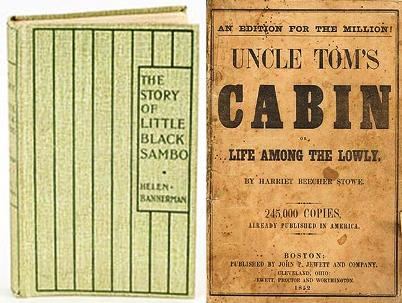
Coloured people don’t like Little Black Sambo. Burn it. White people don’t feel good about Uncle Tom’s Cabin. Burn it. Someone’s written a book on tobacco and cancer of the lungs? The cigarette people are weeping? Bum the book. Serenity, Montag. Peace, Montag. Take your fight outside. Better yet, into the incinerator. Funerals are unhappy and pagan? Eliminate them, too. Five minutes after a person is dead he’s on his way to the Big Flue, the Incinerators serviced by helicopters all over the country. Ten minutes after death a man’s a speck of black dust. Let’s not quibble over individuals with memoriams. Forget them. Burn them all, burn everything. Fire is bright and fire is clean . . .
Original Little Black Sambo: $14,850.00 Original Uncle Tom’s Cabin: $99.00 price source: biblio.com
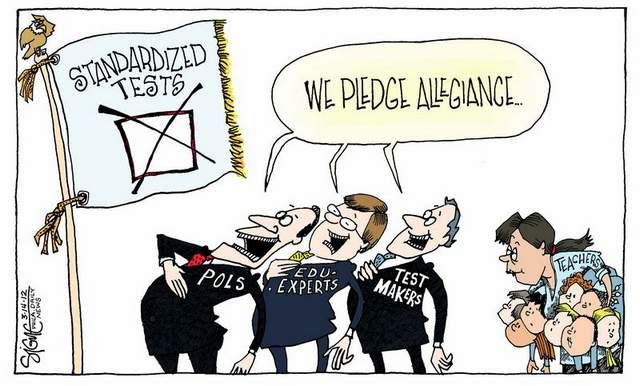
Heredity and environment are funny things. You can’t rid yourselves of all the odd ducks in just a few years. The home environment can undo a lot you try to do at school. That’s why we’ve lowered the kindergarten age year after year until now we’re almost snatching them from the cradle.
We had some false alarms . . . [but] [n]ever found a book. Mixed record; anti-social . . . [people are] a time bomb. The family had been feeding [the] subconscious, I’m sure . . . [People don’t] want to know how a thing was done, but why. That can be embarrassing. You ask why to a lot of things and you wind up very unhappy indeed, if you keep at it. [People are] better off dead . . .
CONFORM CONSUME OBEY
Luckily, queer ones like her don’t happen, often. We know how to nip most of them in the bud, early. You can’t build a house without nails and wood. If you don’t want a house built, hide the nails and wood. If you don’t want a man unhappy politically, don’t give him two sides to a question to worry him; give him one. Better yet, give him none. Let him forget there is such a thing as war. If the Government is inefficient, top-heavy, and tax-mad, better it be all those than that people worry over it . . .
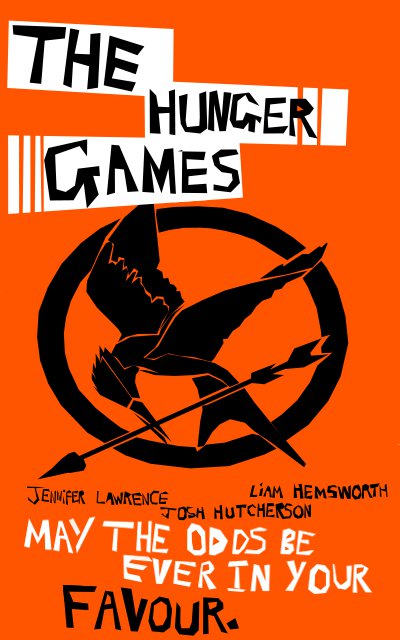
Give the people contests they win by remembering the words to more popular songs or the names of state capitals or how much corn Iowa grew last year. Cram them full of non-combustible data, chock them so damned full of ‘facts’ they feel stuffed, but absolutely `brilliant’ with information. Then they’ll feel they’re thinking, they’ll get a sense of motion without moving. And they’ll be happy, because facts of that sort don’t change.
Information age of hysteria. It’s going out to idiot America.
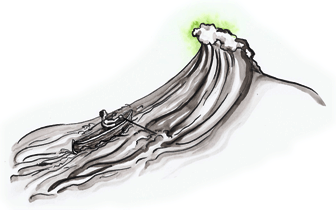
Don’t give them any slippery stuff like philosophy or sociology to tie things up with. That way lies melancholy. Any man who can take a TV wall apart and put it back together again, and most men can nowadays, is happier than any man who tries to slide-rule, measure, and equate the universe, which just won’t be measured or equated without making man feel bestial and lonely. I know, I’ve tried it; to hell with it. So bring on your clubs and parties, your acrobats and magicians, your dare-devils, jet cars, motor-cycle helicopters, your sex and heroin, more of everything to do with automatic reflex. If the drama is bad, if the film says nothing, if the play is hollow, sting me with the theremin, loudly. I’ll think I’m responding to the play, when it’s only a tactile reaction to vibration. But I don’t care. I just like solid entertainment.
* I have removed dialogue indicators, Montag’s remarks, and changed/added words when necessary.
Looking back, radio also helped me realize my introversion. I don’t remember the show, but I remember a book they were discussing: Quiet: The Power of Introverts in a World That Can’t Stop Talking by Susan Cain. (Disclaimer: I still haven’t read the book.) I do remember the host and Mrs. (Ms.?) Cain discussing the characteristics of introverts and thinking “Hey! That’s me!”
I never considered myself an introvert before. I’d always been told that introverts are shy, lonely, depressed individuals; I am none of these (generally). Nevertheless, my perspective changed.
I know that the internet is not the fount of all knowledge, especially when it comes to personality tests and the like. However, I discovered things about introversion that helped my understand myself.
I discovered that as an introvert . . .
I don’t have to be shy. I don’t like meeting new people, but I will if I have to. I won’t ignore you, but normally you’ll have to make the first move.
I find energy in being alone. This explains why my perfect day consists of curling up with a good book, lots of coffee, and toast. It also explains why I crave “me time” after a day of teaching.
I concern myself with my inner world and mind. For years people have said “He’s in his own little world over there.” Now I know the reason.
I’m in my own little word. But it’s okay; they know me here!
I enjoy simply thinking. Sometimes I even think about thinking. And yes, it is possible to think about nothing all all.
I *can* have good social skills. Just because I don’t like groups doesn’t mean I can’t function!
I tire quickly in large groups. This explains why, even when I visit friends or family, I start feeling drained and just want to go home. Failing that, I’ll find a quiet space and attempt to recharge. For the record, once a group is larger than 5 people I start feeling drained.
I am not automatically depressed. I can’t tell you how many times people have asked “What’s wrong?”. How many times do I have to tell them nothing’s wrong before they’ll believe me? Apparently they equate “quiet” with “depressed.”
I prefer to have deep conversations about ideas and concepts and become bored with small talk. YES! This is who I am! I constantly tell others that I don’t want to discuss unimportant topics like singers, actors, athletes, and the like. Oh, so they’re important to you? Well excuse me for desiring an intelligent conversation. Granted, I could have an intelligent conversation with Ke$ha; I understand she was offered a scholarship to study history. See, we have something in common!
Sorry, I got carried away there. I guess my people skills need some work.
There is no such thing as a pure extrovert or a pure introvert.
Such a man would be in the lunatic asylum.
~ C. Jung
I also took the “Quiet Quiz” from the Quiet website and recorded my responses:
I prefer one-on-one conversations to group activities.
True.
I often prefer to express myself in writing.
True. This blog, for instance.
I enjoy solitude.
True. I also guard my solitude with general cantankerousness.
I appear to value wealth, fame, and status less than my peers.
True. At least, I think so.
People tell me I am a good listener.
False, but only because I don’t talk to people unless I have to.
I’m not a big risk taker.
Define risk. I’ll eat anything once (especially if there’s money involved) and would love to bungee jump, skydive. or hang glide (but not snorkel or dive). However, I thrive on routine and schedules and despise being told to “go with the flow”. I prefer the known to the unknown, so I’ll say . . .
True.
I enjoy work that allows me to “dive in” with no interruptions.
True. Interruptions are distractions and distractions are evil incarnate.
I like to celebrate birthdays on a small scale, with only one or two close friends or family members.
True. Even if everyone in attendance could be considered “close,” I’d prefer a small group.
People describe me as “soft spoken” or “mellow.”
False, because once I speak, I speak my mind, and it’s often because I disagree vehemently with you.
I prefer not to show or discuss my work with others until its finished.
True. And even then I probably won’t share it.
I tend to think before I speak.
True, but my wife would disagree.
I often let calls go through to voice mail.
True. There’s only one number I will automatically answer. The rest get voicemail.
Isn’t it ironic the series is named “Things in Glass Cases”?
In this case, the “thing in the glass case” is me.
via Flikr
This post is being published as part of Writing 101. Challenge 13: Earlier in the course, you wrote about losing something. Today, write about finding something. View day four’s post and today’s post as installments in a series.
Warning: This post may contain politically incorrect language and expletives. They exist for the purpose of example and edification; they are not intended to disparage or defame any particular person, race, creed, color, or religion. If you feel you may be offended by such language, stop reading now. You have been warned.
SPOILERS AHEAD
From the Back Cover
Here is a novel, glamorous, ironical, compassionate – a marvelous fusion into unity of the curious incongruities of the life of the period – which reveals a hero like no other – one who could live at no other time and in no other place. But he will live as a character, we surmise, as long as the memory of any reader lasts.
It is the story of this Jay Gatsby who came so mysteriously to West Egg, of his sumptuous entertainments, and of his love for Daisy Buchanan – a story that ranges from pure lyrical beauty to sheer brutal realism, and is infused with a sense of the strangeness of human circumstance in a heedless universe.
It is a magical, living book, blended of irony, romance, and mysticism.
~ 1953 Scribner Edition
Why the Book was Banned
1. Language
2. Sexual references
3. Hedonism
4. Racism
Synopsis
Meet our main cast: Nick (the narrator), Daisy and Tom Buchanan (Nick’s cousins), Jordan Baker (Nick’s love interest), and Jay Gatsby (a mysterious, eccentric individual)
Tom introduces Nick to Myrtle, his mistress; Nick is unimpressed.
Gatsby throws open-invitation parties; Nick meets both Gatsby and Jordan at one of these affairs. Gatsby recounts some history: he had been in love with Daisy before the war (WWI) and lost her to Tom. Now, he wants her back and desires Nick’s help.
The plan works, an affair ensues. Everything is fine until Tom meets Gatsby, becomes suspicious, and starts researching his background. (Hint: Tom knows everything).
Eventually, the truth comes out and everyone parts ways in foul moods. Daisy accidentally kills Myrtle, Tom tells her husband, George, that Gatsby is to blame. George commits first-degree murder and then suicide. Daisy and Tom leave; Nick ends it with Jordan and arranges Gatsby’s funeral.
The book ends with an invective against nostalgia.
Fitzgerald packed a variety of themes into such a short book, i find it difficult to choose just a few to write about. Therefore, I picked three; two were at random, one was not. No prizes for guessing which one I purposefully chose.
First, in the Jazz Age, wealth and class went hand-in-hand. Gatsby tries to change his class by changing his wealth; people of a different era might call him nouveau riche. However, Gatsby never fully assimilates into the class he desires. Despite his wealth and lavish expenditures, Gatsby never becomes “one of them.” This begs the question: can America be a classless society? Even today, media pundits talk of “class division.” If we are to believe Fitzgerald, not only is a classless America a myth, but so is the American Dream. Gatsby’s life evidences that no matter what wealth one obtains, others will still judge him by his past. Taken to the extreme, any attempt to change class results in tragedy. Lotto winners, anyone?
Second, “only fools fall in love,” and Gatsby is the greatest fool of all. Other characters possess tolerance, infatuation, perhaps even affection, but only Gatsby is actually in love – and look how it ended for him. In this, Gatsby resembles Romeo and Juliet much more than The Sun Also Rises.
Third, history defines every character in Gatsby. Some, like Gatsby, try to hide or rewrite it. Others, like the Buchanans, base their way of life on it. Despite living in such a progressive era, everyone actually lives in the past (some despite their best intentions). It’s one thing to remember the past; it’s another to live in the past. No good comes from living in the past. Remembering the past helps us learn, grow, progress. Living in the past stunts growth and slows progress. (Trust me: I teach history for a living). Ultimately, living in the past results in insurmountable frustration. As Nick says in the last line of Gatsby:
And so we beat on, boats against the current, borne back ceaselessly into the past.
I tell ya, I tell ya a guy gets too lonely an’ he gets sick.
Warning: This post may contain politically incorrect language and expletives. They exist for the purpose of example and edification; they are not intended to disparage or defame any particular person, race, creed, color, or religion. If you feel you may be offended by such language, stop reading now. You have been warned.
From the Back Cover
They are an unlikely pair: George is “small and quick and dark of face”; Lennie, a man of tremendous size, has the mind of a young child. Yet they have formed a “family,” clinging together in the face of loneliness and alienation.
Laborers in California’s dusty vegetable fields, they hustle work when they can, living a hand-to-mouth existence. For George and Lennie have a plan: to own an acre of land and a shack they can call their own. When they land jobs on a ranch in the Salinas Valley, the fulfillment of these dreams seems to be within their grasp. But even George cannot guard Lennie from the provocations of a flirtatious woman, nor predict the consequences of Lennie’s unswerving obedience to the things George taught him.
~ 1993 Penguin Book Edition
Why the Book was Banned
1. Offensive language
2. Racial slurs
3. Promoting euthanasia
4. Anti- business ideas
Synopsis
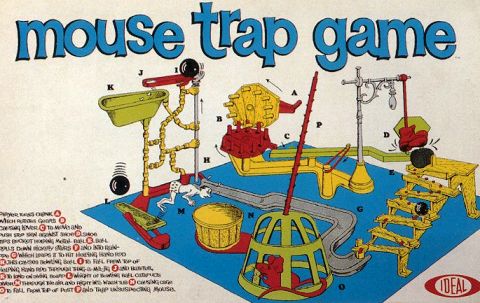
A short book begets a short synopsis. Lennie and George eke out a living in Depression-era California. Forced to leave town when Lennie causes a “misunderstanding,” the two find work on a ranch in Salinas County. Hoping to own their own land, this will be the last time they work for someone else. Then Lennie causes another “misunderstanding.” You know what Shakespeare said about “the best laid plans of mice and men…”
The polar opposite of Ockham’s Razor
My Thoughts
Steinbeck covers a variety of themes in Of Mice and Men, including dreams, prejudice, weakness, and violence. Here’s several that stood out to me:
First, he addresses the idea of equality.
Ranch workers represent the plight of migrant workers. Set during the Depression, Lennie, George, and others are forced to find work where they can, often traveling long distances on the mere rumor of work. Employers negotiate pay upon their arrival and renegotiate at will. Workers receive substandard room and board while their masters (for lack of a better word) live in luxury. In his sympathy for the overworked and underpaid, Steinbeck calls attention to the abuses of impersonal corporations.
Crooks, the stable hand, highlights racialinequality. Although born and raised in California, Crooks is treated as an outsider. The men force him to live apart and constantly refer to him as “nigger.” Even the name Crooks is insulting; it refers not to his given name, but to his crooked back. Nevertheless, Steinbeck shows Crooks to be a normal human being. Neat and bookish, Crooks dispels the “ignorant savage” stereotype common in the 1930s (and still existing today). Crooks even opens up to Lennie and begins to dream of partnering with George and Lennie in their dream to own some land. Sadly, Crooks’ dream dies when Curely’s wife threatens his life in front of Lennie and some other men.
Curley’s wife highlights gender inequality. She possess no name in the novel; she is the property of her husband. The only woman on the ranch, she must make do with “men talk” and tolerate Curley’s narcissism. Desiring her own form of freedom, she dreams of Hollywood. Admittedly, she is self-obsessed and cruel, but I also feel sympathy for her. When she dies, we see what she might have been under different circumstances:
[T]he meanness and the plannings and the discontent and the ache for attention were all gone from her face. She was very pretty and simple, and her face was sweet and young. Now her rouged cheeks and her reddened lips made her seem alive and sleeping very lightly.
Second, Steinbeck addresses the ruthlessness of big business. Curley, the boss’ son and main antagonist of the novel, embodies this idea. Relatively small and weak, Curley is obsessed with appearance and power. Some might say he possesses a Napoleon Complex, but that would be insulting to Napoleon. Curley habitually picks fights with larger men (often ambushing them) to “prove” his prowess (not unlike a corporate businessman in an unfriendly merger). To Curley, power is everything: sexual power, physical strength, and business acumen are his goals.
Third, Steinbeck’s overarching theme is friendship. The relationship between George and Lennie resembles that of a bromance, after all, their friendship is the only real constant in either of their lives. However, I’m not sure what Steinbeck meant to achieve with this theme. For Lennie and George to be so close, why do they choose a job seemingly more well-suited to loners? Was Steinbeck trying to show that their friendship was solid, or that it was merely superficial? Was it even friendship, or was George just using Lennie? After all, he constantly had to protect Lennie from getting into trouble (something he wasn’t always successful at doing) and spends some time telling us how much better off he’d be if he didn’t have Lennie to look after. If that’s the case, why not just leave him? Furthermore, if that’s how he really felt, is George’s final act done to protect Lennie or to free George from further obligation?
To the chase: Overall, I’m not sure what to think about Of Mice and Men. Throughout most of the book, Steinbeck keeps the reader hopeful of a happy ending. George and Lennie’s friendship seems to last insurmountable odds. The men find work (and good work at that) and a partner to help make their dream a reality. Hope disappears in the last 17 pages. Lennie accidentally kills Curley’s wife and runs away. George tries to help him, but this time there is nothing to be done. George must either turn Lennie in, or . . .
This is too depressing. Here’s what another reader thought of the ending:
Even though the dream never becomes reality, Steinbeck does leave us with an optimistic message. George and Lennie do not achieve their dream, but their friendship stands out as a shining example of how people can live and love even in a word of alienation and disconnectedness.
I wonder what book this reviewer read; it certainly wasn’t Mice and Men. What optimism is there? Facing the loss of his dream and the necessity of turning Lennie over to the authorities, George opts to shoot Lennie and claim “self-defense.” How then does their friendship “stand out?” That the people you trust the most will be the one to stab you in the back? That the mentally challenged should be treated like animals, to the point of being “put down” if they pose a danger to society? I might be confused about the book as a whole, but I’m not confused about George and Lennie: George used Lennie, and, when Lennie was no longer useful, threw him to the wolves.
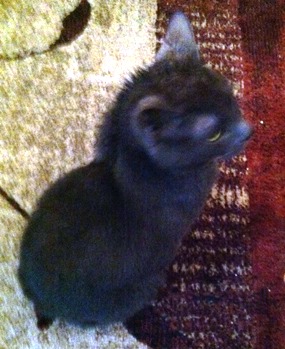
I wish I could end this review on a happy note, but I can’t. Instead, here’s a picture of my cat:
How do you know what you’re going to do until you do it?
Warning: This post may contain politically incorrect language and expletives. They exist for the purpose of example and edification; they are not intended to disparage or defame any particular person, race, creed, color, or religion. If you feel you may be offended by such language, stop reading now. You have been warned.
From the Back Cover
This is one of the most remarkable books published in years. It is the story of sixteen-year-old Holden Caulfield, who wants desperately to find himself, but who goes underground in New York for forty-eight hours when he is overwhelmed by the perplexing circumstances of his life. Read the first page – and you will not be able to stop until you have completed this wild and magic adventure with him.
~ New American Library Edition
Why the Book was Banned
1. Profanity
2. Advocating Rebellion
Synopsis
Set in the 1950s, Catcher in the Rye is the story told by the central character, sixteen-year-old Holden Caulfield, of how he came to be at a sanatorium in California.
Saturday: Expelled from a prep school in Pennsylvania and annoyed by his professors, neighbors and roommates, Holden makes an early return his Manhattan home. Rather than face his parents, he checks into a hotel; there he spies on his neighbors, smokes cigarettes, attempts to find a stripper, and connives to get drunk. Holden ends up flirting with women twice his age and paying their tab. Undefeated, Holden makes his way to a jazz club in Greenwich Village, where he watches the other patrons and ignores a family acquaintance. When he returns to the hotel, Holden is swindled out of $10 by the elevator operator and a prostitute.
Sunday: Holden arranges a date with his old friend, Sally. He eats breakfast with 2 nuns while discussing Romeo and Juliet. He starts to look for his sister, Phoebe, but instead heads to the Biltmore Hotel for his date. The date fails: Sally spends her time talking to someone else and she and Holden fail at ice skating. When Sally refuses to run away with him, Holden calls her a “pain in the ass” and she leaves. After driving off another acquaintance with talk of homosexuals and foreigners, Holden drunk-calls Sally, visits the frozen lagoon in Central park, and breaks into his own apartment. Here he reveals to Phoebe his fantasy of being “the catcher in the rye.” His parents return, Holden creeps out and calls up an old English teacher, who in turn offers him a pace to sleep. When he perceives the man making homosexual advances, Holden instead spends the night in Grand Central Station. Later, Holden decides to run away for good, but he tells Phoebe, who tries to go with him. To make up for refusing her, Holden takes Phoebe to the carousel, where he is overcome with emotion and moved to tears. The story abruptly ends here with Holden declaring that he’s not going to tell anything else.
My Thoughts
Without a doubt two of Catcher‘s themes are alienation and adolescence. However, phoninessoutshines all other contenders. On nearly every page Holden finds something hypocritical to complain about: a headmaster’s favoritism, a teacher’s mannerisms, jocks, nerds, football, his Dorm Mother, tabloids, taxis, magazines, and night trains. All this and more in the first 52 pages.
It is ironic, therefore, that Holden is the biggest phony in the book.
He considers magazine discussions phony, yet continues to buy them.
He can’t stand emotional girls; yet will do anything to keep his sister from crying.
He hates jocks who get it on in the back of cars, yet tries at least twice to hire a stripper.
He hates people who use other people, but he uses his brother to meet girls and old friends to get drunk.
He despises people who arbitrarily judge others, yet he constantly does the same.
He lies multiple times about who he is and why he is leaving Pencey.
He thinks people should work for their money when he hasn’t had to work a day in his life.
He wants people to act the same all the time, yet he act different every time he meets someone new.
He wishes people would be better than they are, yet he refuses to better himself.
In short, he is the exact definition of a hypocrite.
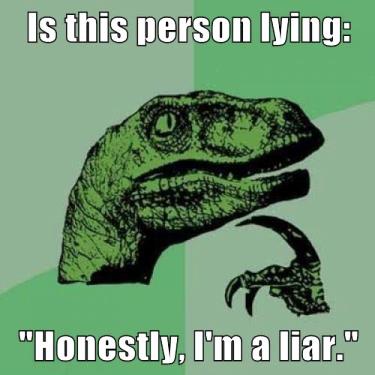
I’m the most terrific liar you ever saw in your life. It’s awful. If I’m on the way to the store to buy a magazine, even, and somebody asks me where I’m going, I’m liable to say I’m going to the opera. It’s terrible.
Holden Caulfield thinks Philosoraptor is a phony.
In my opinion, this quote throws the entire story into question. If Caulfield is such a terrific liar, what’s to keep him from inventing a story about how he came to the sanatorium? We’ve seen from his story that, above all else, he craves sympathetic attention. Perhaps we’ve spent several hours with Holden for nothing; the whole thing was an elaborate ruse to gain some sympathetic human contact. Challenge: read it for yourself and come to your own conclusion. Otherwise, Holden Caulfiend might think you’re a phony.


 As I sat writing, editing, and deleting, I thought back to the first blog I ever wrote: a short-lived current events Blogger site whose only semi-redeeming feature was the title: 451 Revisited. I’d intended to use it as a place of information and discussion, but I only posted four articles in six months. Thinking on that failed abomination, I reflected on the title. Hadn’t I written a piece about




 Heredity and environment are funny things. You can’t rid yourselves of all the odd ducks in just a few years. The home environment can undo a lot you try to do at school. That’s why we’ve lowered the kindergarten age year after year until now we’re almost snatching them from the cradle.

 making man feel bestial and lonely. I know, I’ve tried it; to hell with it. So bring on your clubs and parties, your acrobats and magicians, your dare-devils, jet cars, motor-cycle helicopters, your sex and heroin, more of everything to do with automatic reflex. If the drama is bad, if the film says nothing, if the play is hollow, sting me with the theremin, loudly. I’ll think I’m responding to the play, when it’s only a tactile reaction to vibration. But I don’t care. I just like solid entertainment.







 Running In My Head