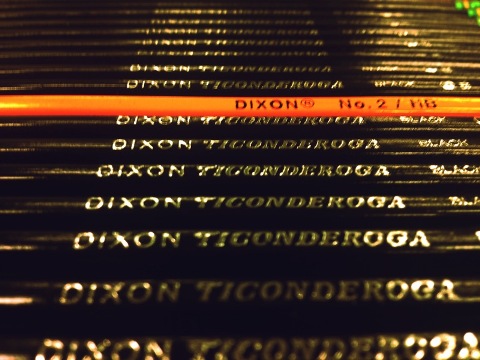
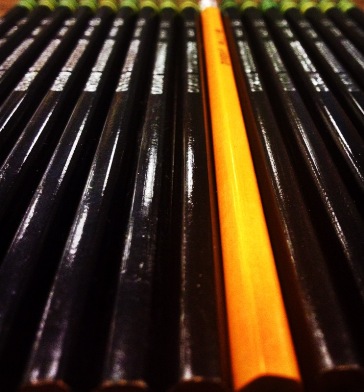
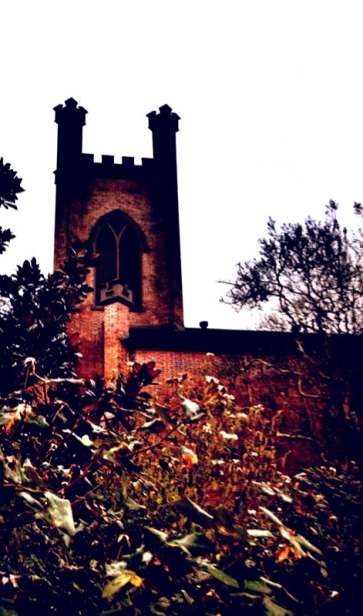
I struggled finding a subject that hinted at mystery using shadows and the so-called Golden Hour for dramatic effect.
Eventually I hit upon two possibilities.
What mysteries do you see?
rantings & ramblings
The recent time change seems to have affected me more this year than any other year.
My colleagues tell me it’s because I’m getting older.
“Just wait ’til you’re our age!” they say.
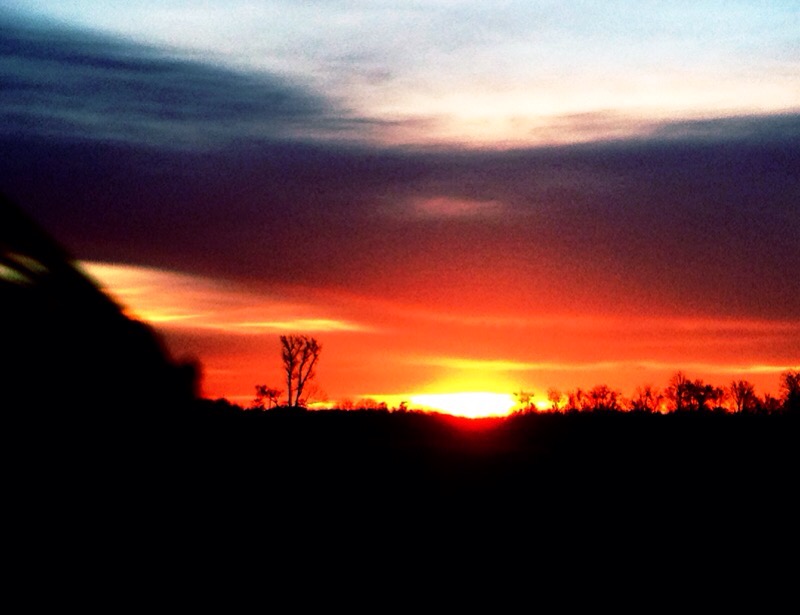
But the benefit to the change is I can see things like this:
The sun rose slowly, as if it wasn't sure it was worth all the effort. ~ Sir Terry Pratchett, The Light Fantastic
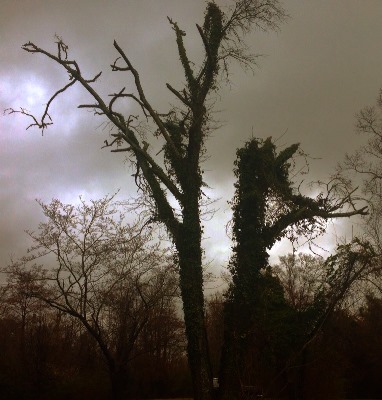
Winter in eastern North Carolina comes in one color: brown.
Winter rains transform open ground into a morass of dirt and mud, covered by the winter winds with a blanket of dead leaves and pine straw, leaving barren trees standing as skeletal sentinels waiting for spring’s resurrection.
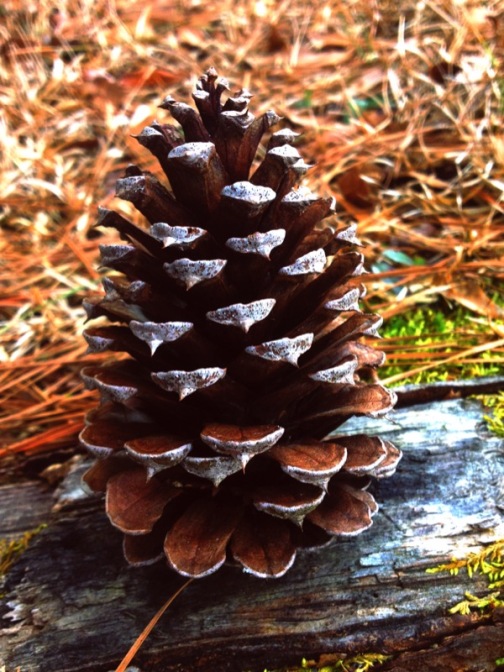
In this scene of seasonal tedium I discovered a hint of things to come:
Our assignment was this:
Capture the natural world with your camera: document a moment outside, big or small. From a panorama snapped during your morning hike to a close-up of a leaf in your yard, we invite you to document this wondrous world around us.
Can’t go outside? Photograph something — furniture, architecture, etc. — that looks or feels organic, or mimics the shapes and movements of nature.
Today’s Tip: Exploring the outdoors, with camera in hand, is an opportunity to look for natural lines that lead our eyes to different parts of a frame. Envision the bend of a stream, or the curve of a petal: how can you use these lines in your composition? If you see strong vertical, horizontal, or diagonal lines, can you play with the orientation to create a more dynamic composition? Can you apply — or break — the “Rule of Thirds“?
I find a sort of beauty in the asymmetrical radial lines of the pine cone against the horizontal wood grain.
I’m also kind of proud; this is the first time I can recall producing any sort of natural soft focus in the background.
What do you think?
Yesterday’s big perspective theme stumped me . . . until I arrived at work this morning.
As I walked outside, I looked up, expecting the same overcast, cloudy sky obscuring the morning moon.
To my surprise, the clouds had begun to dissipate, their rapid movement permitting brief glimpses of a majestic silver orb suspended in a sea of blue.
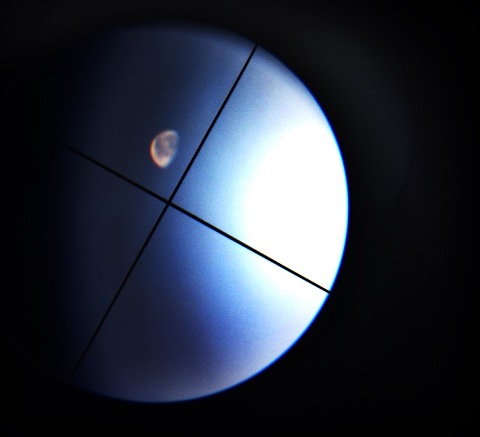
I ran inside to the science supplies, grabbed the telescope I’d been experimenting with, rushed out to the nearly-empty parking lot, and pointed the sighting lens at my target.
After a few brief adjustments, everything was in place. Lacking a camera mount and unable to correctly focus the telescope, I did the next best thing: I placed my camera against the sighting lens, manually focused, and clicked when I thought the frame appeared decent.
I took six photographs overall, but only one captured the moon with minimal shake.
I’ll let you be the judge of any relative success:
My First Attempt at Shooting the Moon!
Today was a good day – one of the times I really felt I was making some headway with my classes.

It began with the first physics lab of the year – determining the density of a brass cylinder using linear measurement and water displacement methods. Good old Archimedes! Everything went extremely well with two groups completing the lab and all the supplemental material withing the class period. They even came to within .5 percent error on their math tables! Now, some students did get carried away the water-filled graduated cylinders, and one learned an early lesson on weak vacuum seals and centrifugal force. Good thing 50 mL of water is easy to clean, right?

It continued in my World History section, where we were completing our section on Egypt. I wanted to jump up and down when students asked questions like
You mean Egypt was attacked by Assyria and Persia? You mean like Sennacherib and Cyrus and Xerxes? I remember those guys!
You said that Hatshepsut’s successor tried to remove her from living memory. Was that because he wanted to destroy her in the afterlife, too?
Wait. If the Greeks conquered Egypt, and Cleopatra is decidedly non-Egyptian, does that mean Cleopatra was Greek?
This class is going to love the Egypt section of Engineering an Empire, an excellent look at ancient civilizations narrated by Peter Weller – yes, that Peter Weller – and produced by the History Channel back when the History Channel was actually about history and not, well, whatever it is now.
Now, two good classes is one day is rare, but three is unheard of. At least, it is in my experience. Nevertheless, it happened. I taught a double American Government section wherein we discussed the Mayflower Compact and the Great Awakening. I was beaten to the punch on one of my class discussion questions when one of my students asked “Wait a minute. If the Great Awakening had such a positive impact in America, then how did people reconcile slavery?” I kid you not, I just about fainted. This is the class that getting any class-related interaction is like convincing me that e-books are a good idea. But that question set things in motion. We were able to discuss concepts of equality and the roots of slavery. We compared the slavery of the ancient and medieval world with American slavery. We talked about how things weren’t necessarily as bad as Stowe’s Uncle Tom’s Cabin but neither were they afforded basic human dignity. I didn’t teach much of what I had planned to, but this was enrichment time!
As class was winding down, I asked them what caused the change. Turns out most of them were actually paying attention to the supplemental material I’d been providing. Some of them even read it! One of them put it this way: “I figured if you were going to take the time to find extra stuff to help us understand, I’d at least make the effort to participate.”
No lie, that’s gonna keep me going for a while, even if they don’t make it through Blackstone’s Commentaries on the Laws of England or Burke’s Reflections on the Revolution.