Coming Unplugged: Music and Running

iPod shuffle 2nd generationI was talking to some running friends the other day when one of them brought up the subject of music. I hadn’t realized how divided the running community is over music; nearly every runner I know goes out with an mp3 player and upbeat playlist. Nevertheless, one friend’s adamant opinion that music absolutely ruins the running experience provided excellent fodder for rumination.

Right at the start, I’ll admit to favoring music; I run more with it than without it. Nevertheless, running purists make several valid points.

First, music creates risk. How often do we become “lost in the music” and fail to heed our surroundings? Distraction can be both dangerous and deadly; every runner knows this. Most pro-music runners would say “That can’t happen to me!”, but like the cautious new driver that turns into the reckless “experienced” driver, humans rely on routine. We grow familiar with our route and the world it inhabits and become complacent. Distraction and complacency are anathemas to safety; this is a special concern at intersections: drivers aren’t always looking for runners (or cyclists for that matter), and no runner wants a detour through the emergency room.

Second, music distracts from thinking. My blog is centered around my running thoughts, so this argument may have more credence with me than with others. As a society, we’ve become so used to being connected – and distracted – that we simply can’t spend time with ourselves. When running is an escape, why insist on running with the flavor-of-the-week teeny-bopper? When running is supposed to relieve stress, why bring the caustic talk radio host? I’ve heard the claims that music helps people think, but it is more accurate to say that music directs our thoughts. Do we really want the Top 40 or another political talking head to dictate what we think about? Running should be refreshing a relaxing; Justin Bieber and Rush Limbaugh are neither.

Finally, music can negate the camaraderie of running. Personally, I find this argument the least defensible since it assumes most runners belong to clubs or attend many events throughout the year. Although I am not this type of runner, I understand the sentiment. Meeting new people, learning about other parts of the world, giving and receiving tips and tricks – all of these are a part of the running experience. With earbuds planted firmly in our heads, we tend to ignore others and miss wonderful, once-in-a-lifetime opportunities.

In contrast, there are very few arguments in support of music. One valid argument is that the beats per minute (BPM) of a song can help improve one’s pace. I’ve tested this theory over the last several months by running to music with 152 BPM, and my personal pace has improved roughly 13%. I don’t know how scientific the argument is; I imagine that, like most running aids, it depends on the individual.

Personally, I think most pro-music runners’ opinions are based on preference rather than any perceived benefit. In addition to being uncomfortable with our own company, we (as a society in general) don’t like to be told what we can’t do. People everywhere, and Americans in particular, value their rights, and I think pro-music runners view their headphones as a personal freedom. Such runners see any attack on their music as an attack on them. There are even some extremists who will skip an event – even one already paid for – if headphones aren’t permitted. In my opinion, this kind of reasoning shows misplaced priorities. We don’t go to the movies to hear the soundtrack, so why treat running any different? Sometimes life is best enjoyed in the raw.

So how can the two factions get along? Well, there are a few things we can do:

  • Remember there are times when it simply isn’t smart to run with an mp3 player, such as when visibility is low or when running unfamiliar terrain. Just because you can do something doesn’t mean you should. Speaking of which . . .
  • There are also times when you shouldn’t run with music, particularly when it’s prohibited. If you’ve entered such an event, then train without the iPod. Trust me, doing so will make race day easier.
  • Be excellent to one another. Coexist. Get along.  Purists, we’re all out there for the same reason, so don’t get bent out of shape when others don’t share your opinion. Music lovers, if you’re running with friends but absolutely need your tunes, try running with one earbud in – and remember to keep the volume low. You’ll still get your beat, but you’ll also enjoy running with a companion, and not everyone has that opportunity. Share the road.

So, what will I do now? Unplug more – not totally – and get back to running for running’s sake. What you do is up to you.

Until next time, get out there and enjoy the run!

Camptown Races 187.5 Miles Long

ToyotaCare 250 April 26, 2012
Richmond International Raceway
ToyotaCare 250
April 26, 2012

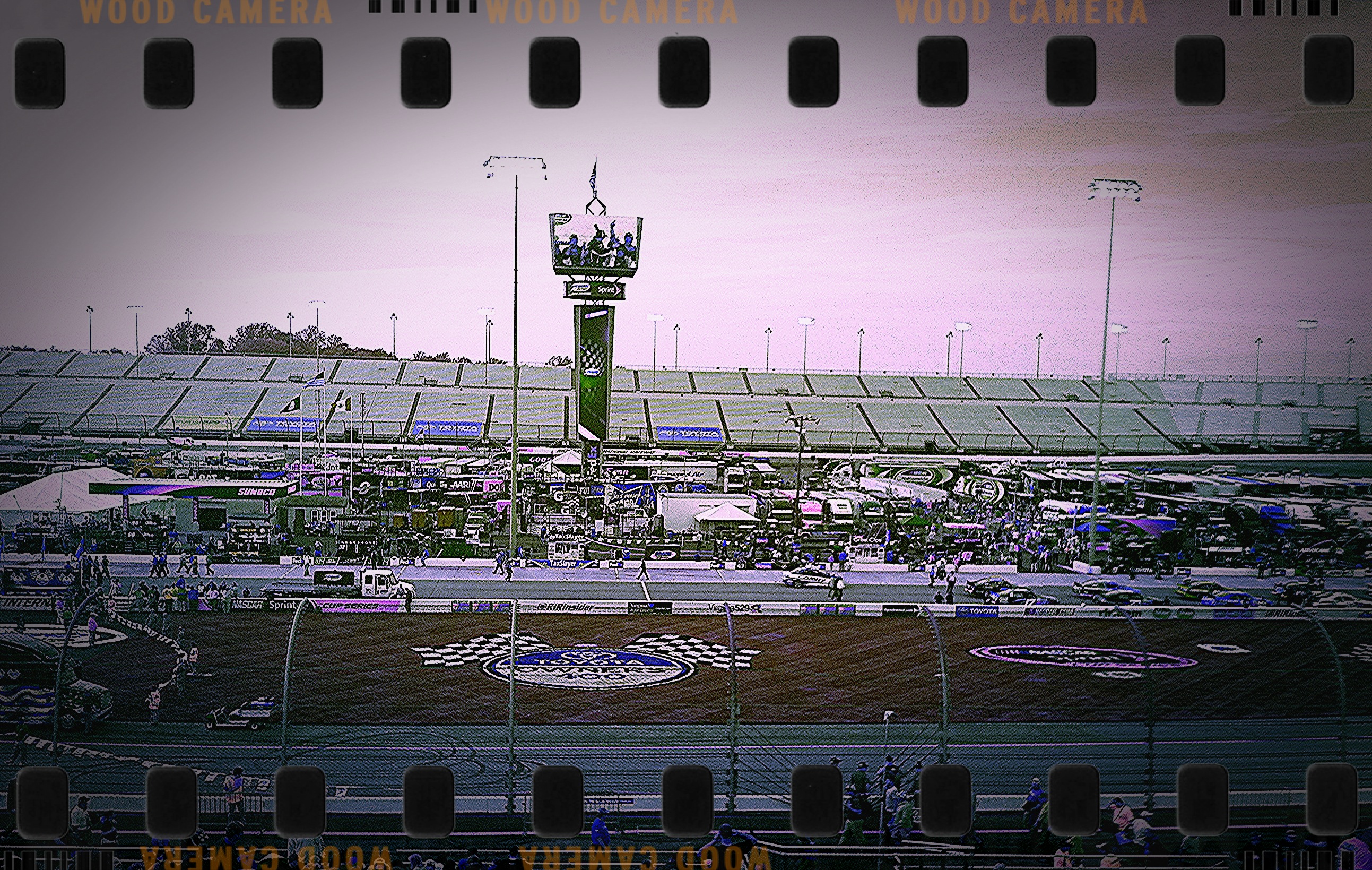
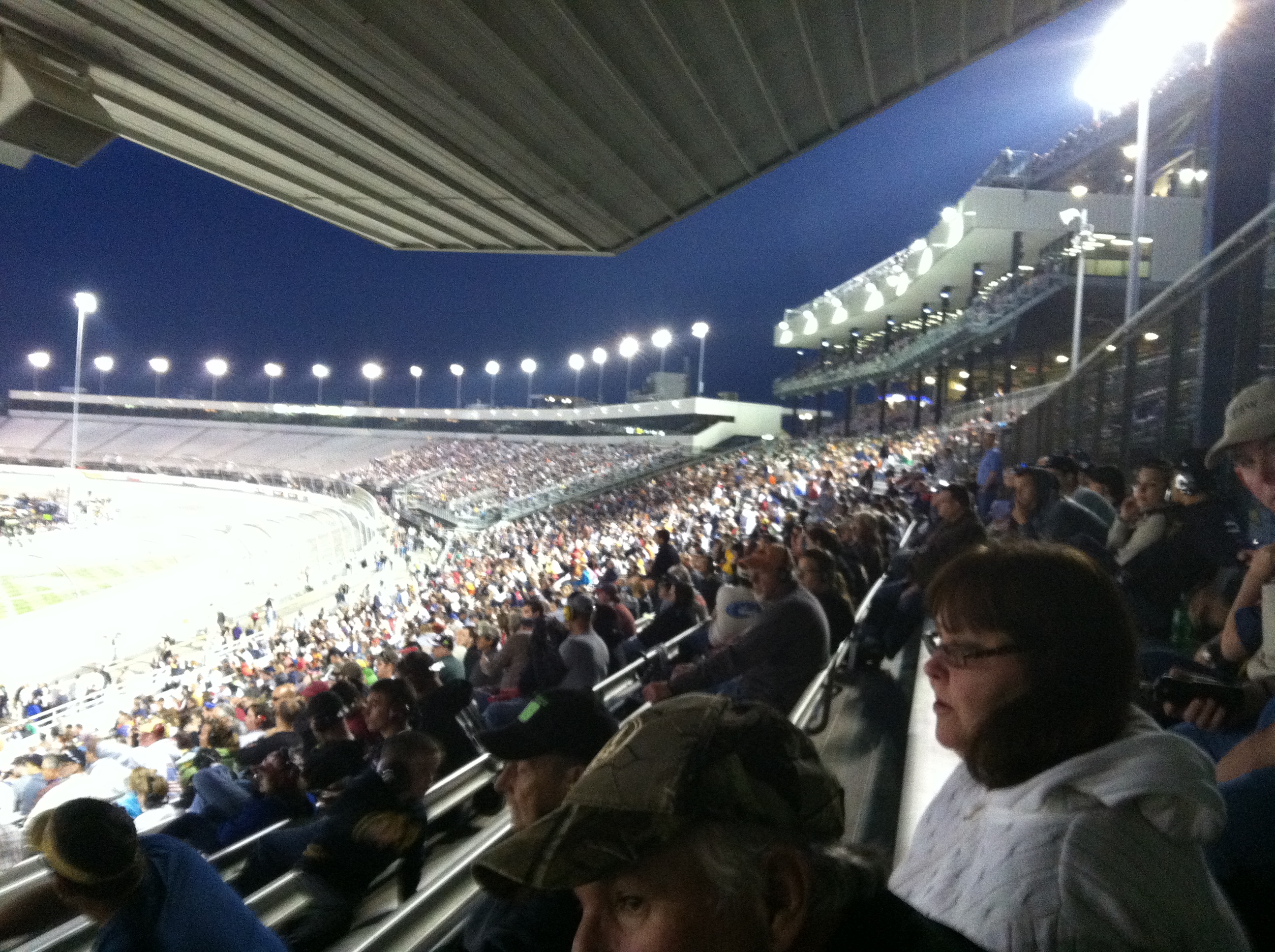
Last night I had the opportunity to attend my first car race: the NASACR Nationwide Series ToyotaCare 250 at the Richmond International Raceway in Richmond, VA. Up to this point in my life, I’ve never been particularly interested in NASCAR-style auto racing; I’ve always preferred European-style Grand Prix racing, and even then it’s more about the scenery and the track than it is about the cars and drivers. Nevertheless, when my father-in-law asked if I’d like to go to this particular race, I said yes for three equally compelling reasons: I didn’t have to pay for the tickets, I’d get a day off from work, and my wife (who is an avid NASCAR fan) would finally – after about 8 years – get to attend another race.

We drove the four-plus hours to Richmond with little excitement. When we arrived, the parking lot was much like the minor-league baseball games I’ve attended: a large empty field with workers in reflective vests directing drivers where to park. A piece of advice for those that haven’t been to an event like this before: remember to look at the lot numbers when you park, it’ll save you some trouble later on.

After making the short trek to the entrance, I began to smell the smell of racing. Every sport that I’ve come in contact with has a particular smell: running events generally smell of perspiration and – for some reason unknown to me – plastic; basketball smells of leather, soccer does as well, and if it’s been raining, wet dog, too; baseball games smell of popcorn, peanuts, and cheap beer. This race smelled of something I’ve never encountered at a sporting event, and it was wonderful. To me, the smell of racing is a mix of hot rubber, metal as it’s under a welding torch, sweat, and that wonderful mix of food smells that you normally find on the midway of a state fair. (It also smelled a bit like the period of time when I worked with a chain-smoker making cutting edges for snowplows, but that’s okay).

Then there were the people. For the last two weeks I’d been told that racing fans were some of the nicest – if somewhat inebriated – people I’d ever meet. I admit I had a hard time believing this. In my experience, sports spectators don’t get along, and alcohol only makes this situation worse. The only sport I’ve personally attended where all opponents actually get along is at the marathons that I’ve run. However, I must admit that I was wrong in my assumptions. Even while three sheets to the wind, the fans around us were nice and willing to engage in a good bit of rivalry that didn’t extend beyond the last lap of the race. The same could not be said of the drivers and their pit crews, two of which began fighting each other immediately after the race due to a somewhat minor altercation in the last 15 laps of the race.

There’s actually very little to say about the race itself. It consists of several hours of a couple dozen cars traveling at 115+ mph in an oval pattern. It’s incredibly loud, but in a pleasing way. Our seats were situated so that we could see every inch of the track, and therefore every accident as well. There were only a few spectacular wrecks during the race: one car blew a gasket and spread oil over the whole track, causing a delay and eventual stoppage of the race; several cars blew tires and sent the race into caution while they made it to the pit and the chunks of rubber cleared off the road; the most unfortunate wreck was when the crowd favorite was hit from behind and sent into the wall in the last 25 laps of the race, effectively ending his decent chance at victory; and the stupidest driver was the driver of car 01, which smoked for two laps (with no caution) before pitting, then continuing to smoke for another two laps (under caution) after pitting, and then refusing to pull out of the race for two more laps after being told by the officials that he must do so. Everyone cheered when this last guy finally got the hint and left the race.

I was told that the only real rule of watching a car race was to pick a driver and cheer for him loudly. Since I had no clue about who any of the drivers were, I picked the guy who was driving the car with my favorite number, number 32 (I later found out his name is Kyle Larson). He ended finishing the race in 8th place.

Overall, I had a great time and would probably go again, provided I don’t have to pay for tickets.

What Spectators Add To The Marathon Experience

I was listening to my unheard podcast playlist and I came across this snippet from Talk of the Nation. Take some time to check it out; the audio is only 17 minutes long.

Thoughts on Boston

My first thought went out to the runners. As a marathoner myself, I understand the pure joy of simply being in a race, but this wasn’t just any other weekend marathon; this was Boston. In my opinion, the Boston Marathon is the premier long-distance race in the United States. I know everyone has that one race where they set their PR or that one vacation getaway that they go to every year. Nevertheless, there’s a reason why all races are compared to Boston: they’re either Boston Qualifiers or they’re not. I can only imagine the thrill of actually qualifying for Boston, let alone running it. These runners had trained long and hard to participate, and now many of them lay injured on the ground, some perhaps unable to ever run again.

My second thought was about the time. When I heard that the bombs exploded about 3 hours after the winners crossed the finish line, I realized “that would have been me!“. My average pace for a marathon is a little over 5 hours, so assuming that the winners would have crossed the finish line between 02:30 and 03:00, then one of those runners injured could very well have been me. And then as I thought more about the time, I realized that whoever planted this bomb had thought things through. After roughly five hours the finish line would be somewhat crowded with finishers, families, and cheer squads encouraging the somewhat slower racers. This terrorist understood how races work and used it to his advantage. The thought sickened me.

My next thought went out to the emergency personnel. It was here that America demonstrated that heroes still exist. Too often we think that heroes have some supernatural ability or multimillion-dollar tactical armor. They wear capes and disguises and live lives apart from the rest of us. And yet, as the bombs exploded and the innocent were injured and the cameras of the major news networks spread the news to every corner of the globe, we saw the true definition of heroism. A hero is simply someone who runs toward danger instead of away from it.

I’m sure that in the weeks to come more information will come to light. Perhaps other targets will be uncovered, suspects may be taken into custody, and motives become clear. But until then, the thoughts and prayers of a nation are with the people of Boston and the victims of this tragic day.

Website Powered by WordPress.com.

Up ↑