I find the poem “Jabberwocky” to be quite conducive to keeping a steady running pace. I present it here for your enjoyment:
from Through the Looking-Glass and What Alice Found There
Jabberwocky
by Lewis Carroll
rantings & ramblings
I find the poem “Jabberwocky” to be quite conducive to keeping a steady running pace. I present it here for your enjoyment:

from Through the Looking-Glass and What Alice Found There
by Lewis Carroll

Let’s get one thing straight: circumnavigation isn’t easy.
Ferdinand Magellan’s expedition took 3 years to sail around the world; the man himself killed due to his own arrogance and ineptitude in the Philippines. Likewise, Francis Drake spent 3 years and 3 months trying to prove “anything a Portuguese sailing for Spain can do, an Englishman can do better,” failing only because of his secret mission to find the Atlantis of the Sands in the Rub’ al Khali for Queen Elizabeth the First. Wait. Strike that. Naughty Dog’s Uncharted series is about as accurate as Wikipedia, albeit far more interesting. What is certain is that these men faced challenges like no other: uncertain winds, brutal climates, and native peoples. Add to these the “normal” threats of mutiny, debilitating disease, and the very real possibility of starvation, and going once around the world was no picnic by half.
Modern circumnavigators have it no easier.
In 2002, Steve Fossett became the first person to fly around the world alone, nonstop, in any kind of aircraft; his vehicle of choice was the 10-story high balloon Spirit of Freedom. From takeoff to landing, this journey took him 14 days 19 hours 50 minutes over a course of 20,626.48 miles (33,195.10 km). Of his entire aircraft, only the capsule survived the landing; it was later given the the Smithsonian in Washington, DC. In addition to the circumnavigation record, the voyage also set a number of ballooning records: Fastest (200 miles per hour), Fastest Around the World (13.5 days), Longest Distance Flown Solo in a Balloon (20,482.26 miles), and 24-Hour Balloon Distance (3,186.80 miles).
And then there’s Jason Lewis, who traversed the world under human power. Lewis and his companion Stevie Smith mountain-biked through France, Spain and Portugal; peddled a paddle-boat across the Atlantic to Miami; roller-bladed across much of North America; and then peddled the paddle-boat from San Fransisco to Hilo, Hawaii, where Smith ended his journey. Lewis then hiked across Hawaii; paddle-boated from Hawaii to Tarawa atoll and then – along with the boat’s builder – on to the Solomon Islands. There he was joined by April Abril, who helped him cross the Coral Sea to Australia. Lewis then cycled across Australia and had to spend some time raising funds to continue his journey. Once again, Lewis took to his paddle-boat, paddling from Darwin, Australia to East Timor; there he traded his paddle-boat for a kayak, with which he traversed the Indonesian archipelago. Landing in Singapore, he biked from Singapore to the Himalayas, where he hiked and biked to the Indian port of Mumbai. There, he was reunited with his paddle-boat and crossed the Arabian Sea to Djibouti. He faced legal problems in Africa and was forced to complete his journeys there mainly by night. Lewis finally reached Syria, where he completed the remainder of his circumnavigation by bicycle. Most notable in an expedition beset by hazards of all types, Lewis survived two bouts of malaria, septicemia, mild schizophrenia, and a crocodile attack. The entire expedition took roughly 13 years.
Now, I haven’t come close to the accomplishments of any of these men in any respect but one: I’ve gone the distance. Using the accepted distance of 24,091.5 miles as the distance around the world at the equator, I completed my 14 year journey at 4:15 PM EST on October 10, 2013.
I began running back in the seventh grade because I didn’t make the basketball team. Although I eventually succeeded, by that time running had become my passion. There’s something soothing about the rhythm and pace of placing one foot after another for miles on end. I memorized poetry, songs, and learned to be alone with my own thoughts. In that regard, my failure to make the basketball team is also responsible for this blog.
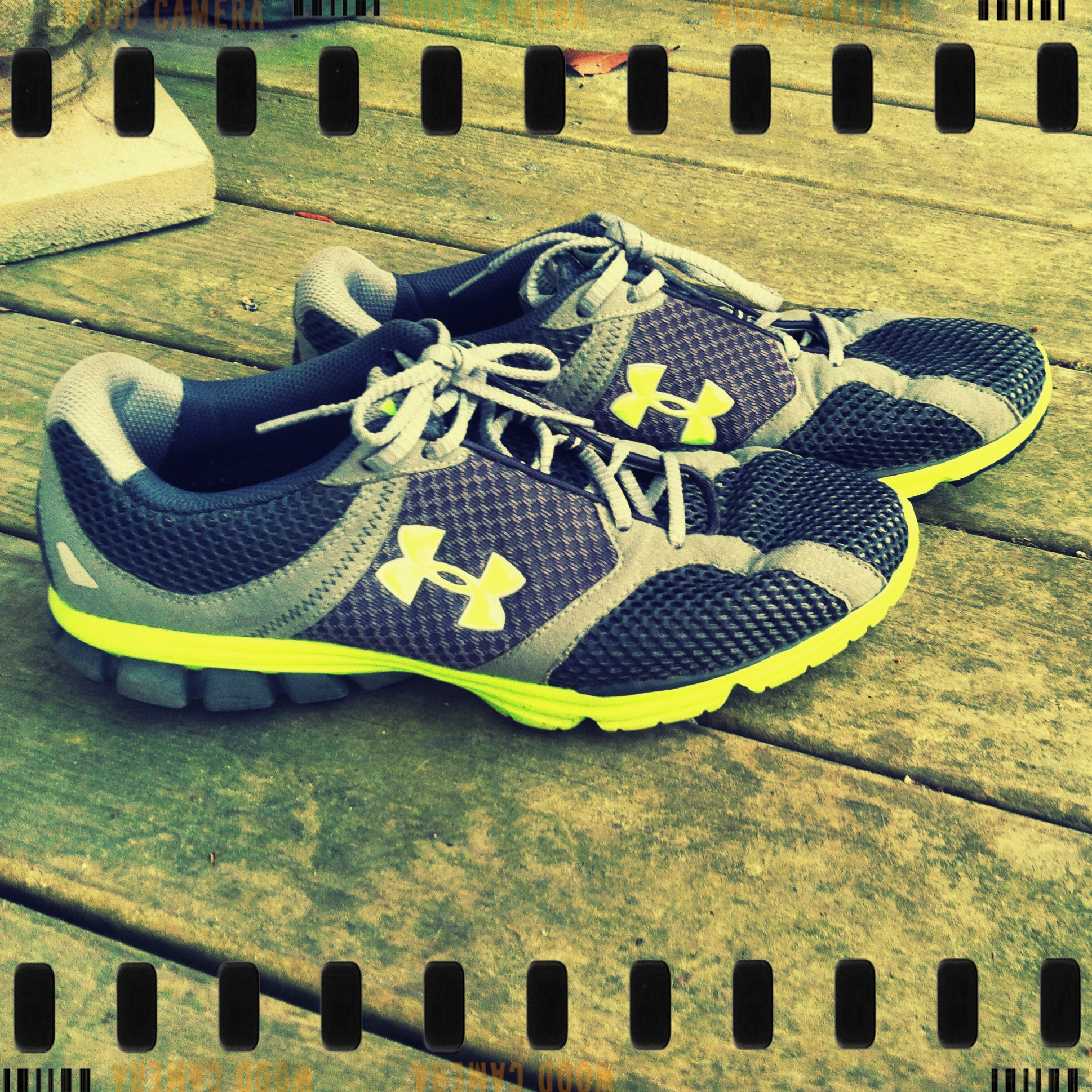
So, what did this circumnavigation cost me? By my count, I used at least 14 pairs of shoes, 60 pairs of socks, 5 rolls of duct tape, 20 large boxes of band-aids, hundreds of Cliff energy gels, and copious amounts of water. But at least I didn’t suffer from scurvy.
Many of these can apply to marathons as well. Therefore, I can relate to most of the list. Can you?
I asked the question on Facebook and I got an incredible response. In actual fact, the answers keep coming in, so, I will try to add and update on a regular basis.
Look at some of the names who have posted too. A few Talk Ultra interviewees crop up.
Holly Rush you consider running to your friend’s house for lunch and she lives 30 miles away…
Carl Wibberley A marathon is a training run.
Ben Wittenberg You sell your road bike to buy a Fenix gps.
Wayne Sylvester 26.2 sounds like an aid station.
George Knights you can count your toenails on one hand.
Chris Beaven You’re diagnosed with atrial fibrillation…
Ceri Careful Roberts When you’ve vomited all…
View original post 905 more words
June 5 was National Running Day. This post was intended to be published then, but for some reason it sat in the draft folder untouched and unnoticed as June 5 came and went. But, as they say, better late than never.
I suppose it all began in the 9th grade, the first year we boys were eligible for the varsity basketball team. Now, I’d been “playing” basketball since the fourth grade, but I use the term very loosely. I wasn’t very good at any aspect of the game, I was really just an extra body needed to give the real players a breather once in a while. Anyway, tryouts came, and in the end, it came down to me and my best friend. I lost. At first, I figured he was chosen since his dad worked at the school where we held practices and games. However, Coach took me aside and explained that it had come down to one deciding factor: stamina. I simply couldn’t keep up with the other players. I vowed that day to show them all what I could do.
For the next year, I tried to run at least a mile every day: in the sun, in the rain, in the snow – it didn’t matter. Somewhere in that year, my goal of making the basketball team took second place to the joy I found in running. For the first time I experience the runner’s high. I learned to love the wind in my face and the steady rhythm of my feet hitting the ground. I found comfort in my own thoughts. And when tryouts were held the next year, I could outlast them all; by my senior year, I had turned into a punishment: “You can stop running when Jay does!”
I continued to run in college; taking advantage of “proper” athletic tracks to relieve academic stress and brain fatigue. It was during my freshman year that I participated in my first organized race: the Turkey Run, an annual event held the Saturday before Thanksgiving. My first official time: 31.16. My best time would be during my senior year: 20:15. I began running longer distances, too. I’d run between 8 and 10 miles every other day and about 13 on weekends. I didn’t realize it, but I was already training myself for a half-marathon.
And then, real life got in the way. I graduated and landed a second-shift job in Quality Assurance at Moen. I began remodeling a house – a real fixer upper that had been left empty for at least 15 years. I just didn’t have time to run. No, let me be honest, I didn’t make the time to run.
8 months after graduating college, I got married; two weeks later I lost my job. I was despondent: no-one was hiring someone of my age with my limited experience. For whatever reason, my unemployment never came through. In short, I was depressed; the last thing I wanted to do was run again. After three months, I found some summer work with a general contractor. That fall, I was hired by a local school to teach social studies. Again, I just didn’t make time to run.
December 17, 2010 changed everything. It was the first day of Christmas Vacation, and I was driving across town to pick my wife up from work. An idiot distracted by his cell phone blew a red light and t-boned me in the driver’s side door with his Yukon Denali XL. I was driving a Pontiac Grand Am. Although the EMT’s first words to me were “Why aren’t you dead?” I escaped with relatively minor injuries. Nevertheless, I became extremely depressed. After several months of this, my wife was fed up with it and suggested I do something I enjoyed: get back into running.
So I did. I signed up for a marathon, and 11 months to the day of my accident I finished my first official 26.2 miles at the North Carolina Marathon (High Point, NC) in 06.13.27. I was hooked. Several months later I ran the Cherry Point Half Marathon in 2:05:19. Let me tell you, it felt good to pass a quite a few Marines in the last 2 miles, some of whom were drill sergeants. Last fall I ran the Freedom’s Run Marathon in Shepherdstown, WV in 05:29:38. In my opinion, every marathoner should try to complete this run. It’s an absolutely beautiful course with history everywhere. On November 10, I’ll be running my 3rd marathon: the Outer Banks Marathon in coastal North Carolina. My goal is to finish in 04:30:00 or less, but any time under 05:00:00 will do.
To be honest, my training has been slack. As the heat of summer approaches here in Eastern NC, it’s important to avoid heat exhaustion. Right now I can do around 10 miles no problem and push through to 15, but I really want to keep a 10 minute mile pace (or better) for the duration.
Some people don’t understand why I run. They don’t see the point in running long distances. All that effort – for what? There really isn’t a personal, tangible benefit to running a marathon. I’ll finish hours after the winner and most spectators will be gone; even the volunteers will most likely be winding down. It could be to benefit organizations such as Big Brother/Big Sister, the Wounded Warrior Project, or the Civil War Preservation Trust. However, I don’t put in long hours on the trail thinking about “the cause”. Neither do I run purely for my health: I’m strengthening my heart and lungs at the cost of my knees.
So why do I run? I run to relieve stress. I run to be alone with my thoughts. I run to once again enjoy the wind in my face and the rhythm of my feet as they hit the ground. I run for the same reason others have sailed oceans, climbed mountains, crossed deserts, and ascended into space: I run because the road is there.
I was talking to some running friends the other day when one of them brought up the subject of music. I hadn’t realized how divided the running community is over music; nearly every runner I know goes out with an mp3 player and upbeat playlist. Nevertheless, one friend’s adamant opinion that music absolutely ruins the running experience provided excellent fodder for rumination.
Right at the start, I’ll admit to favoring music; I run more with it than without it. Nevertheless, running purists make several valid points.
First, music creates risk. How often do we become “lost in the music” and fail to heed our surroundings? Distraction can be both dangerous and deadly; every runner knows this. Most pro-music runners would say “That can’t happen to me!”, but like the cautious new driver that turns into the reckless “experienced” driver, humans rely on routine. We grow familiar with our route and the world it inhabits and become complacent. Distraction and complacency are anathemas to safety; this is a special concern at intersections: drivers aren’t always looking for runners (or cyclists for that matter), and no runner wants a detour through the emergency room.
Second, music distracts from thinking. My blog is centered around my running thoughts, so this argument may have more credence with me than with others. As a society, we’ve become so used to being connected – and distracted – that we simply can’t spend time with ourselves. When running is an escape, why insist on running with the flavor-of-the-week teeny-bopper? When running is supposed to relieve stress, why bring the caustic talk radio host? I’ve heard the claims that music helps people think, but it is more accurate to say that music directs our thoughts. Do we really want the Top 40 or another political talking head to dictate what we think about? Running should be refreshing a relaxing; Justin Bieber and Rush Limbaugh are neither.
Finally, music can negate the camaraderie of running. Personally, I find this argument the least defensible since it assumes most runners belong to clubs or attend many events throughout the year. Although I am not this type of runner, I understand the sentiment. Meeting new people, learning about other parts of the world, giving and receiving tips and tricks – all of these are a part of the running experience. With earbuds planted firmly in our heads, we tend to ignore others and miss wonderful, once-in-a-lifetime opportunities.
In contrast, there are very few arguments in support of music. One valid argument is that the beats per minute (BPM) of a song can help improve one’s pace. I’ve tested this theory over the last several months by running to music with 152 BPM, and my personal pace has improved roughly 13%. I don’t know how scientific the argument is; I imagine that, like most running aids, it depends on the individual.
Personally, I think most pro-music runners’ opinions are based on preference rather than any perceived benefit. In addition to being uncomfortable with our own company, we (as a society in general) don’t like to be told what we can’t do. People everywhere, and Americans in particular, value their rights, and I think pro-music runners view their headphones as a personal freedom. Such runners see any attack on their music as an attack on them. There are even some extremists who will skip an event – even one already paid for – if headphones aren’t permitted. In my opinion, this kind of reasoning shows misplaced priorities. We don’t go to the movies to hear the soundtrack, so why treat running any different? Sometimes life is best enjoyed in the raw.
So how can the two factions get along? Well, there are a few things we can do:
So, what will I do now? Unplug more – not totally – and get back to running for running’s sake. What you do is up to you.
Until next time, get out there and enjoy the run!
What Spectators Add To The Marathon Experience
I was listening to my unheard podcast playlist and I came across this snippet from Talk of the Nation. Take some time to check it out; the audio is only 17 minutes long.