
 The following is the result of a free write exercise after grading forty-some-odd history assignments and consuming ten cups of coffee – at least, what my coffee maker indicates as a “cup”; measured using my actual coffee mug, it’s only three cups – with Smokey on my lap and House Season 6 on Netflix.
According to my schedule, I’m supposed to write something.
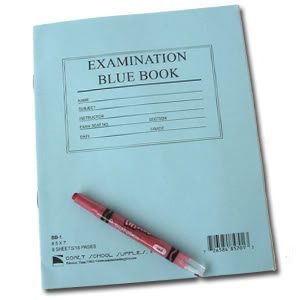 Today, it feels like a Blue Book Exam for which I haven’t studied – or worse, one for which I studied the completely wrong material. Like the exam which cost me an A in History of England I because I studied the wrong material and tried verbosity over substance and ended up with a 93.9 in a class with a six-point grading scale and a teacher who didn’t round and whose law was that of the Medes and Persians. She also wore military-style jackets [military circa the turn of the last century] and reminded most of us of Napoleon. She was great!
Seriously, I sat down and did the math – I only needed one more point anywhere else on any assignment over the course of the semester and I’d have my A. Now, I use this tale of woe as an academic morality tale for my students – especially the freshman.
And you know what? I, too, follow the law of the Medes and Persians. By that I mean I cannot change my own class policy, not that you’ll lose your hand if you cheat. Was that a law of the Medes and Persians? I’m not sure, but it sounds like it could be. You’d think I’d know this, being a history teach and all.

Students think being a teacher is fun because you can make the rules. Being a teacher is extremely enjoyable, but enforcing the rules isn’t always fun, like when a top student completes the wrong assignment or fails to completely follow the directions. I suppose that’s what discourages me sometimes: as a teacher I provide direction, but if my students cannot follow simple written directions, does this reflect badly on them or on me? Who is to blame in this scenario?
I suppose reading comprehension must enter the equation somewhere, and if teachers are being honest, we’d have to admit that most students don’t read as much as they should. Thankfully, that’s beginning to change with the recent surge in YA Literature.
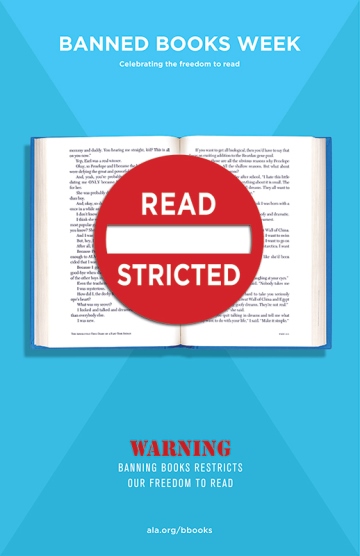 YA Literature – a definite misnomer if there ever was one. It’s very label implies it shouldn’t be taken seriously or that adults shouldn’t enjoy it. Hogwash. There’s excellent YA Literature and there’s trash Adult Literature because – shocker – it’s all literature. Let’s forget the labels and focus on a well-written story, shall we?
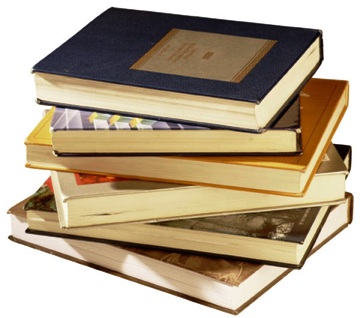
Now’s a perfect time to start a new reading habit, what with Banned Books Week starting in a week or so. I’m already working on some special posts, so stay tuned. You may even get to hear me read from some of my favorite banned/challenged books!
So, what’s new with you?
Do you have a suggestion for a poem, photograph, or future post?
Drop a note in the prompt box!
Don’t forget to follow me on:
Facebook – where I share news stories, articles from other blogs, and various and sundry miscellany that happens to catch my eye. It’s stuff you won’t see here! Well, mostly.
Instagram – where I show you my Life in Motion and share quotes and such. The widget only shows my last three photographs – don’t you want to see them all?
Twitter – where you can see my thoughts in 140 characters or less. Also, funny retweets.






 Running In My Head