Banned Book Week is “officially” over, but that doesn’t mean you should stop reading. Books give food for thought; without nourishment free thought dies. Go to your library or local bookstore and discover what you’re missing. Every time we read or request a banned book, we hammer another nail into the coffin of censorship. Do your part.
Books can not be killed by fire. People die, but books never die . . .
books are weapons . . . make them weapons for man’s freedom.
It is the story of what it’s like to grow up in high school. More intimate than a diary, Charlie’s letters are singular and unique, hilarious and devastating. We may not know where he lives. We may not know to whom he is writing. All we know is the world he shares. Caught between trying to live his life and trying to run from it puts him on a strange course through uncharted territory. The world of first dates, family dramas, and new friends. The world of sex, drugs, and The Rocky Horror Picture Show, where all you need is that perfect song on that perfect drive to feel infinite.
~ 1999 MTV Books Edition
Why the Book was Banned
1. Homosexuality
2. Drug use
3. Sexual content
In general, all the normal stuff teens go through.
Synopsis
Charlie writes a series of letters to an anonymous friend (the reader) about his freshman year of high school. Unlike most books this week, the back cover actually said what the book was about, so just go back and read that. Thanks.
My Thoughts
I really don’t want to give too much of this book away. I didn’t feel bad about revealing plot lines for the other books; as most are over 50 years old, you deserve to have the plots spoiled. However, Perks was written in 1999, so it’s only about 14 years old. This was the most enjoyable book I read all week. This was the book I couldn’t put down and stayed up until three in the morning to finish. So, if you haven’t read the book yet, and you really want to, stop reading now.
Read the book before seeing the movie. Obviously.
At various times, Charlie experiments with drugs, and notjust pot. Charlie experiences the highs – and lows – of cigarettes, alcohol, acid, marijuana, and hard liquor. Even though his friends enable him, Charlie’s imbibing doesn’t ingratiate himself to them. Rather, they clean up after him, help him down, and drag him out of snowbanks. Charlie could be both the “before” and “after” model for a DARE poster.
Charlie’s family looks like the model family from a 1940s or 1950s magazine, but inside the bounds of the white picket fence things are far from perfect. His parents favor their oldest son, remain ignorant of their daughter’s shenanigans, and essentially ignore Charlie. His family reminds us not to judge appearances. I know that when I was growing up I thought other kids’ families were better than mine. Now I know better; every family has drama.
Chbosky accurately portrays the double-edged sword of friendship. Charlie’s friends help him through some dark times; one even helps him break through a repressed memory. However, some of those very same friends were the ones responsible for Charlie’s despondency in the first place.
Charlie also experiences love in its many forms: lust, infatuation, affection, and familial. As expected, each introduces unique challenges into Charlie’s life.
Perks addresses teenage sexuality. This topic is the main reason the book was banned. Charlie is a witness to abuse, date rape, homosexuality, unplanned pregnancy, and abortion. Written from the perspective of someone who doesn’t want to be there, this is the stuff you probably won’t learn in health class (and I should know – I teach it). Again, Perks isn’t glamorizing these things; it’s a warning against them.
Finally, Charlie writes. Charlie’s first letters talking about his English teacher and the “bonus work” meant to develop Charlie’s natural abilities. Throughout his letters, we learn what Charlie reads (mostly banned classics) and how his writing improves. The letters themselves indicate Charlie’s progress; there is a dramatic change from the first letter to the last in quality and substance. By the end, Charlie opens up and lets us into his life.
Even wallflowers bloom.
Photo Credit: keltiecolleen.buzznet.com
Things change. And friends leave. Life doesn’t stop for anybody.
Warning: This post may contain politically incorrect language and expletives. They exist for the purpose of example and edification; they are not intended to disparage or defame any particular person, race, creed, color, or religion. If you feel you may be offended by such language, stop reading now. You have been warned.
SPOILERS AHEAD
From the Back Cover
Here is a novel, glamorous, ironical, compassionate – a marvelous fusion into unity of the curious incongruities of the life of the period – which reveals a hero like no other – one who could live at no other time and in no other place. But he will live as a character, we surmise, as long as the memory of any reader lasts.
It is the story of this Jay Gatsby who came so mysteriously to West Egg, of his sumptuous entertainments, and of his love for Daisy Buchanan – a story that ranges from pure lyrical beauty to sheer brutal realism, and is infused with a sense of the strangeness of human circumstance in a heedless universe.
It is a magical, living book, blended of irony, romance, and mysticism.
~ 1953 Scribner Edition
Why the Book was Banned
1. Language
2. Sexual references
3. Hedonism
4. Racism
Synopsis
Meet our main cast: Nick (the narrator), Daisy and Tom Buchanan (Nick’s cousins), Jordan Baker (Nick’s love interest), and Jay Gatsby (a mysterious, eccentric individual)
Tom introduces Nick to Myrtle, his mistress; Nick is unimpressed.
Gatsby throws open-invitation parties; Nick meets both Gatsby and Jordan at one of these affairs. Gatsby recounts some history: he had been in love with Daisy before the war (WWI) and lost her to Tom. Now, he wants her back and desires Nick’s help.
The plan works, an affair ensues. Everything is fine until Tom meets Gatsby, becomes suspicious, and starts researching his background. (Hint: Tom knows everything).
Eventually, the truth comes out and everyone parts ways in foul moods. Daisy accidentally kills Myrtle, Tom tells her husband, George, that Gatsby is to blame. George commits first-degree murder and then suicide. Daisy and Tom leave; Nick ends it with Jordan and arranges Gatsby’s funeral.
The book ends with an invective against nostalgia.
Fitzgerald packed a variety of themes into such a short book, i find it difficult to choose just a few to write about. Therefore, I picked three; two were at random, one was not. No prizes for guessing which one I purposefully chose.
First, in the Jazz Age, wealth and class went hand-in-hand. Gatsby tries to change his class by changing his wealth; people of a different era might call him nouveau riche. However, Gatsby never fully assimilates into the class he desires. Despite his wealth and lavish expenditures, Gatsby never becomes “one of them.” This begs the question: can America be a classless society? Even today, media pundits talk of “class division.” If we are to believe Fitzgerald, not only is a classless America a myth, but so is the American Dream. Gatsby’s life evidences that no matter what wealth one obtains, others will still judge him by his past. Taken to the extreme, any attempt to change class results in tragedy. Lotto winners, anyone?
Second, “only fools fall in love,” and Gatsby is the greatest fool of all. Other characters possess tolerance, infatuation, perhaps even affection, but only Gatsby is actually in love – and look how it ended for him. In this, Gatsby resembles Romeo and Juliet much more than The Sun Also Rises.
Third, history defines every character in Gatsby. Some, like Gatsby, try to hide or rewrite it. Others, like the Buchanans, base their way of life on it. Despite living in such a progressive era, everyone actually lives in the past (some despite their best intentions). It’s one thing to remember the past; it’s another to live in the past. No good comes from living in the past. Remembering the past helps us learn, grow, progress. Living in the past stunts growth and slows progress. (Trust me: I teach history for a living). Ultimately, living in the past results in insurmountable frustration. As Nick says in the last line of Gatsby:
And so we beat on, boats against the current, borne back ceaselessly into the past.
Everyone behaves badly . . . Give them the proper chance.
Warning: This post may contain politically incorrect language and expletives. They exist for the purpose of example and edification; they are not intended to disparage or defame any particular person, race, creed, color, or religion. If you feel you may be offended by such language, stop reading now. You have been warned.
From the Back Cover
An absorbing, beautifully and tenderly absurd, heartbreaking narrative….It is a truly gripping story, told in lean, hard athletic prose . . . magnificent writing, filled with that organic action which gives a compelling picture of character. ~ The New York Times
~ 1970 Scribner Edition
Sounds like a Mad-Lib, doesn’t it?
Why the Book was Banned
1. Language and profanity
2. Focus on sex and adultery
3. Overall hedonism
Synopsis
Jake Barnes (the narrator), Robert Cohn (a writer), and Brett Ashley (a nymphomaniac divorcée) live a hedonistic lifestyle in post-WWI Paris. Jake and Brett love each other, but aren’t together because Jake’s war wound rendered him impotent. Cohn falls for Brett and the two secretly travel to San Sebastian, Spain. When they return, the group – which now includes Jake’s friend Bill and Brett’s fiancé Mike – plan a trip to Spain, where they will fish and watch the running of the bulls in Pamplona.
The group separates due to illness, so only Bill and Jake fish. The group reunites in Pamplona for a week of alcohol-imbued celebrations. Of the group, only Jake cares about the bullfights, everyone else is there to party. Nevertheless, Brett falls for a bullfighter (shocker); and Cohn’s jealousy leads him to pummel the man to the point of death. Rather than rejuvenation, the excursion causes tension within the group.
Jake stops over in San Sebastian before returning to Paris. While there, Brett telegrams him; she is in trouble in Madrid and needs help. Jake agrees, but there is no hope. He and Brett agree that although they love each other, there is no future for them.
My Thoughts
As I was reading, I felt I was reading someone’s diary. Therefore, I found a several repeated themes, such as
Dissatisfaction. Every character seems focused on immediate satisfaction. The constantly find “fun” things to do, but never find happiness. Jake wants Brett; it’s obvious that this will never happen. Cohn wants someone to love him rather than use him; good luck with that Mr. Semi-Famous Author. Brett wants security, but is generally unwilling to show her insecurities. Bill wants money; he’s always in debt to someone. Mike just wants another drink, but one more is never enough. In the world they inhabit, it is not just difficult, it is impossible for them to find true satisfaction.
Exile. Although the novel is set in France and Spain, none of the central characters are French or Spanish. Instead, they are American and British nationals living in self-imposed exile from their home countries. Defined by their upbringing, they attempt to make their way in a culture completely foreign to them. Never truly fitting in anywhere, we can add “fish out of water syndrome” to the reasons for their dissatisfaction.
Identity. Every character has a facade. As the novel progresses, we see the effort exerted in keeping the facade from crumbling.
Love. Every character desires love, but few realize what love actually is. Although set in Paris, the “City of Love,” there is little – if any – romance in the novel. Instead, the so-called “love” exhibited by the characters centers mainly around coercion.
Manliness. The men of the novel are constantly posturing to prove themselves men, especially when it comes to impressing Brett. However, each male character experiences insecurities causing each to doubt their own masculinity.
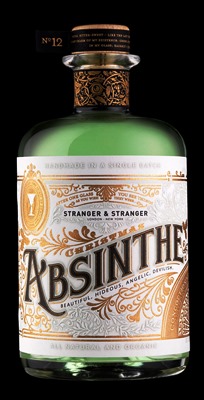
Substance Abuse. Everyone in the novel is an alcoholic. For Mike, it’s practically his job. Alcohol provides a short respite from fears and frustrations, but it is only temporary. Therefore, most characters spend their time talking about which bar to visit next.
It was a good story, but nothing really made sense for me until the last line. On their way back to Paris from Madrid, Brett remarks, “Jake, we could have had such a . . . good time together.” Jake replies, “Yes, isn’t it pretty to think so?” I wanted to scream “NO! It isn’t pretty, it’s stupid! You’re all a bunch of despondent alcoholics with manic-depressive tendencies. Continue this way and you’ll all end up dead.” But since that would have annoyed my wife at 2:30 in the morning, I thought the words in my head instead.
There is no real satisfying conclusion to the story. The characters have not changed since the beginning of the novel. We have seen their thoughts, their actions, their motives, their mistakes. At times, these flaws are visible to the other characters, but nobody actually learns anything. One reviewer called The Sun Also Rises a modern-day Romeo and Juliet. If that is, indeed, the case, the remake is far worse than the original. As least in the original play there was the chance for happiness; in Hemingway’s novel happiness isn’t even on the table.
Overall, The Sun Also Rises can be summed up with one line:
Oh, darling, I’ve been so miserable.
I imagine this played a major role in their misery.
I tell ya, I tell ya a guy gets too lonely an’ he gets sick.
Warning: This post may contain politically incorrect language and expletives. They exist for the purpose of example and edification; they are not intended to disparage or defame any particular person, race, creed, color, or religion. If you feel you may be offended by such language, stop reading now. You have been warned.
From the Back Cover
They are an unlikely pair: George is “small and quick and dark of face”; Lennie, a man of tremendous size, has the mind of a young child. Yet they have formed a “family,” clinging together in the face of loneliness and alienation.
Laborers in California’s dusty vegetable fields, they hustle work when they can, living a hand-to-mouth existence. For George and Lennie have a plan: to own an acre of land and a shack they can call their own. When they land jobs on a ranch in the Salinas Valley, the fulfillment of these dreams seems to be within their grasp. But even George cannot guard Lennie from the provocations of a flirtatious woman, nor predict the consequences of Lennie’s unswerving obedience to the things George taught him.
~ 1993 Penguin Book Edition
Why the Book was Banned
1. Offensive language
2. Racial slurs
3. Promoting euthanasia
4. Anti- business ideas
Synopsis
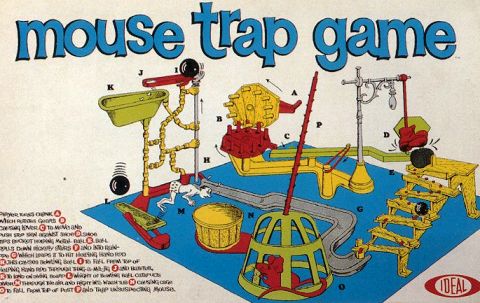
A short book begets a short synopsis. Lennie and George eke out a living in Depression-era California. Forced to leave town when Lennie causes a “misunderstanding,” the two find work on a ranch in Salinas County. Hoping to own their own land, this will be the last time they work for someone else. Then Lennie causes another “misunderstanding.” You know what Shakespeare said about “the best laid plans of mice and men…”
The polar opposite of Ockham’s Razor
My Thoughts
Steinbeck covers a variety of themes in Of Mice and Men, including dreams, prejudice, weakness, and violence. Here’s several that stood out to me:
First, he addresses the idea of equality.
Ranch workers represent the plight of migrant workers. Set during the Depression, Lennie, George, and others are forced to find work where they can, often traveling long distances on the mere rumor of work. Employers negotiate pay upon their arrival and renegotiate at will. Workers receive substandard room and board while their masters (for lack of a better word) live in luxury. In his sympathy for the overworked and underpaid, Steinbeck calls attention to the abuses of impersonal corporations.
Crooks, the stable hand, highlights racialinequality. Although born and raised in California, Crooks is treated as an outsider. The men force him to live apart and constantly refer to him as “nigger.” Even the name Crooks is insulting; it refers not to his given name, but to his crooked back. Nevertheless, Steinbeck shows Crooks to be a normal human being. Neat and bookish, Crooks dispels the “ignorant savage” stereotype common in the 1930s (and still existing today). Crooks even opens up to Lennie and begins to dream of partnering with George and Lennie in their dream to own some land. Sadly, Crooks’ dream dies when Curely’s wife threatens his life in front of Lennie and some other men.
Curley’s wife highlights gender inequality. She possess no name in the novel; she is the property of her husband. The only woman on the ranch, she must make do with “men talk” and tolerate Curley’s narcissism. Desiring her own form of freedom, she dreams of Hollywood. Admittedly, she is self-obsessed and cruel, but I also feel sympathy for her. When she dies, we see what she might have been under different circumstances:
[T]he meanness and the plannings and the discontent and the ache for attention were all gone from her face. She was very pretty and simple, and her face was sweet and young. Now her rouged cheeks and her reddened lips made her seem alive and sleeping very lightly.
Second, Steinbeck addresses the ruthlessness of big business. Curley, the boss’ son and main antagonist of the novel, embodies this idea. Relatively small and weak, Curley is obsessed with appearance and power. Some might say he possesses a Napoleon Complex, but that would be insulting to Napoleon. Curley habitually picks fights with larger men (often ambushing them) to “prove” his prowess (not unlike a corporate businessman in an unfriendly merger). To Curley, power is everything: sexual power, physical strength, and business acumen are his goals.
Third, Steinbeck’s overarching theme is friendship. The relationship between George and Lennie resembles that of a bromance, after all, their friendship is the only real constant in either of their lives. However, I’m not sure what Steinbeck meant to achieve with this theme. For Lennie and George to be so close, why do they choose a job seemingly more well-suited to loners? Was Steinbeck trying to show that their friendship was solid, or that it was merely superficial? Was it even friendship, or was George just using Lennie? After all, he constantly had to protect Lennie from getting into trouble (something he wasn’t always successful at doing) and spends some time telling us how much better off he’d be if he didn’t have Lennie to look after. If that’s the case, why not just leave him? Furthermore, if that’s how he really felt, is George’s final act done to protect Lennie or to free George from further obligation?
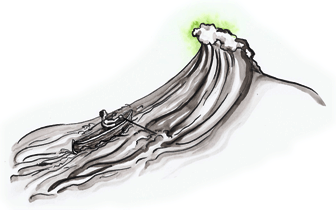
To the chase: Overall, I’m not sure what to think about Of Mice and Men. Throughout most of the book, Steinbeck keeps the reader hopeful of a happy ending. George and Lennie’s friendship seems to last insurmountable odds. The men find work (and good work at that) and a partner to help make their dream a reality. Hope disappears in the last 17 pages. Lennie accidentally kills Curley’s wife and runs away. George tries to help him, but this time there is nothing to be done. George must either turn Lennie in, or . . .
This is too depressing. Here’s what another reader thought of the ending:
Even though the dream never becomes reality, Steinbeck does leave us with an optimistic message. George and Lennie do not achieve their dream, but their friendship stands out as a shining example of how people can live and love even in a word of alienation and disconnectedness.
I wonder what book this reviewer read; it certainly wasn’t Mice and Men. What optimism is there? Facing the loss of his dream and the necessity of turning Lennie over to the authorities, George opts to shoot Lennie and claim “self-defense.” How then does their friendship “stand out?” That the people you trust the most will be the one to stab you in the back? That the mentally challenged should be treated like animals, to the point of being “put down” if they pose a danger to society? I might be confused about the book as a whole, but I’m not confused about George and Lennie: George used Lennie, and, when Lennie was no longer useful, threw him to the wolves.
I wish I could end this review on a happy note, but I can’t. Instead, here’s a picture of my cat:
How do you know what you’re going to do until you do it?
Warning: This post may contain politically incorrect language and expletives. They exist for the purpose of example and edification; they are not intended to disparage or defame any particular person, race, creed, color, or religion. If you feel you may be offended by such language, stop reading now. You have been warned.
From the Back Cover
This is one of the most remarkable books published in years. It is the story of sixteen-year-old Holden Caulfield, who wants desperately to find himself, but who goes underground in New York for forty-eight hours when he is overwhelmed by the perplexing circumstances of his life. Read the first page – and you will not be able to stop until you have completed this wild and magic adventure with him.
~ New American Library Edition
Why the Book was Banned
1. Profanity
2. Advocating Rebellion
Synopsis
Set in the 1950s, Catcher in the Rye is the story told by the central character, sixteen-year-old Holden Caulfield, of how he came to be at a sanatorium in California.
Saturday: Expelled from a prep school in Pennsylvania and annoyed by his professors, neighbors and roommates, Holden makes an early return his Manhattan home. Rather than face his parents, he checks into a hotel; there he spies on his neighbors, smokes cigarettes, attempts to find a stripper, and connives to get drunk. Holden ends up flirting with women twice his age and paying their tab. Undefeated, Holden makes his way to a jazz club in Greenwich Village, where he watches the other patrons and ignores a family acquaintance. When he returns to the hotel, Holden is swindled out of $10 by the elevator operator and a prostitute.
Sunday: Holden arranges a date with his old friend, Sally. He eats breakfast with 2 nuns while discussing Romeo and Juliet. He starts to look for his sister, Phoebe, but instead heads to the Biltmore Hotel for his date. The date fails: Sally spends her time talking to someone else and she and Holden fail at ice skating. When Sally refuses to run away with him, Holden calls her a “pain in the ass” and she leaves. After driving off another acquaintance with talk of homosexuals and foreigners, Holden drunk-calls Sally, visits the frozen lagoon in Central park, and breaks into his own apartment. Here he reveals to Phoebe his fantasy of being “the catcher in the rye.” His parents return, Holden creeps out and calls up an old English teacher, who in turn offers him a pace to sleep. When he perceives the man making homosexual advances, Holden instead spends the night in Grand Central Station. Later, Holden decides to run away for good, but he tells Phoebe, who tries to go with him. To make up for refusing her, Holden takes Phoebe to the carousel, where he is overcome with emotion and moved to tears. The story abruptly ends here with Holden declaring that he’s not going to tell anything else.
My Thoughts
Without a doubt two of Catcher‘s themes are alienation and adolescence. However, phoninessoutshines all other contenders. On nearly every page Holden finds something hypocritical to complain about: a headmaster’s favoritism, a teacher’s mannerisms, jocks, nerds, football, his Dorm Mother, tabloids, taxis, magazines, and night trains. All this and more in the first 52 pages.
It is ironic, therefore, that Holden is the biggest phony in the book.
He considers magazine discussions phony, yet continues to buy them.
He can’t stand emotional girls; yet will do anything to keep his sister from crying.
He hates jocks who get it on in the back of cars, yet tries at least twice to hire a stripper.
He hates people who use other people, but he uses his brother to meet girls and old friends to get drunk.
He despises people who arbitrarily judge others, yet he constantly does the same.
He lies multiple times about who he is and why he is leaving Pencey.
He thinks people should work for their money when he hasn’t had to work a day in his life.
He wants people to act the same all the time, yet he act different every time he meets someone new.
He wishes people would be better than they are, yet he refuses to better himself.
In short, he is the exact definition of a hypocrite.
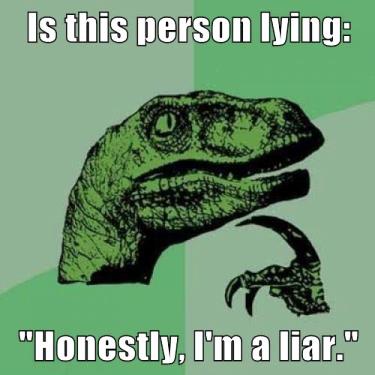
I’m the most terrific liar you ever saw in your life. It’s awful. If I’m on the way to the store to buy a magazine, even, and somebody asks me where I’m going, I’m liable to say I’m going to the opera. It’s terrible.
Holden Caulfield thinks Philosoraptor is a phony.
In my opinion, this quote throws the entire story into question. If Caulfield is such a terrific liar, what’s to keep him from inventing a story about how he came to the sanatorium? We’ve seen from his story that, above all else, he craves sympathetic attention. Perhaps we’ve spent several hours with Holden for nothing; the whole thing was an elaborate ruse to gain some sympathetic human contact. Challenge: read it for yourself and come to your own conclusion. Otherwise, Holden Caulfiend might think you’re a phony.












 Running In My Head