My adopted grandfather, Mr. Tom (USN 1938-1957), remembers D-Day:
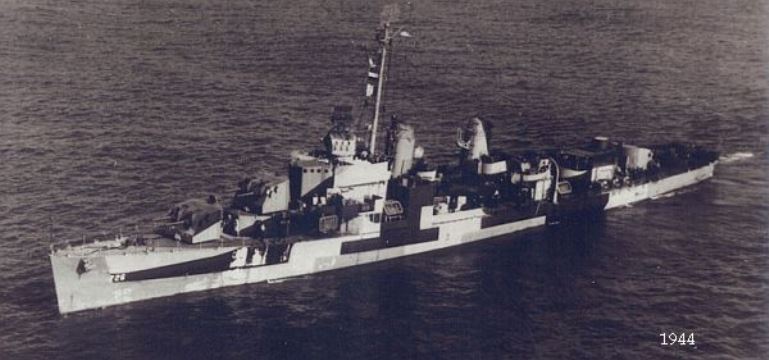
I was assigned to the Meredith*, an American destroyer out of Plymouth England. She was new – so new parts were still wet with paint. As at Pearl, my duty was the engine room. The Meredith wasn’t transport, she was a destroyer; we shelled the shore to soften it up for the landing. We stayed there in the [English] Channel for the entire day and the next, that’d make it June 7 when we were ordered to change position. I don’t recall where we were going; regardless, we struck a mine. That brand-new ship struck a mine and threatened to break in half. We ended up abandoning ship and I spent the night in the English Channel tied to my buddies so we wouldn’t drift. There was fuel all over, some of it ignited. One of my buddies [name redacted] was burned so badly he knew he was dying. He gave me some effects to pass on to his girl and some of the others started accusing me of robbing the dead. What was I supposed to do? What was I supposed to say? Well, we were picked up in the morning and I was shipped on to Scotland for recovery before being sent back to the States for a spell. I really can’t describe it. D-day was the worst day of my life. Worse than Pearl. Worse than the day my wife died. It was the absolute worst day of my life.
USS Meredith – navalwarfare.blogspot.com
USS Meredith – navsource.org
USS Meredith – wikimapia.org
*You can read the official Commander’s Narrative here.
Don’t forget to follow me on:
Facebook – where I share news stories, articles from other blogs, and various and sundry miscellany that happens to catch my eye. It’s stuff you won’t see here! Well, mostly.
Instagram – where I show you my Life in Motion and share quotes and such. The widget only shows my last three photographs – don’t you want to see them all?
Twitter – where you can see my thoughts in 140 characters or less. Also, funny retweets.
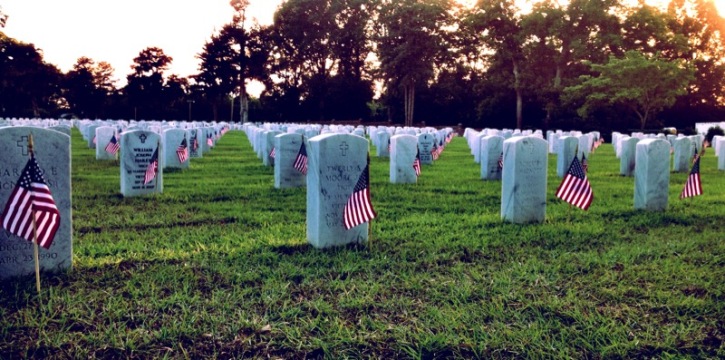
However, I’ve begun to think differently about Memorial Day.
Yes, men gave their lives.
Yes, we should be grateful for their sacrifice.
But I’ve also begun to ask: what – exactly – did they sacrifice their lives for?
I don’t think those who gave their lives would want us to perpetually mourn.
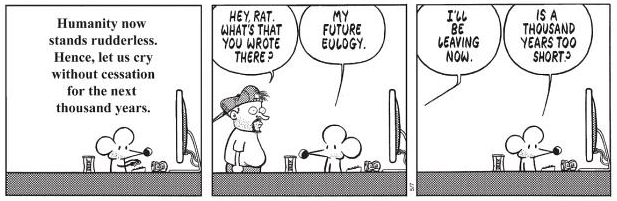
After all, I sincerely doubt they held Rat’s opinion:
From Unsportsmanlike Conduct (p. 37) A Pearls Before Swine Collection by Stephan Pastis
Yes, remember their sacrifice. But they died so we could live normal lives. So that we could hold barbecues on the beach while listening to our preferred sport on the radio with our families. Or whatever your tradition is this weekend.
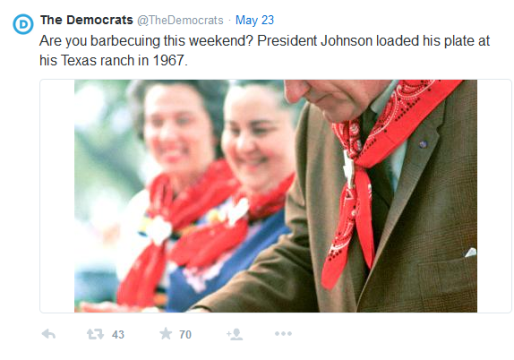
You know what? I have no problem with the President enjoying an ice cream.
What I do have a problem with was this being the very first Memorial Day post from the Democratic Party.
Things didn’t get much better with their second and third Memorial Day posts:
They finally got around to thanking the fallen two days after posting that first image:
Again, this is just my opinion and I understand that this Twitter feed belongs to the Democratic Party and not President Obama, but since one of the President’s roles is Commander in Chief, it only makes sense that the first Memorial Day posts would thank the troops. Maybe that just me.
All this to say: enjoy your Memorial Day how you see fit, but take a moment of silence to remember those who gave their lives for normalcy.
How can I resist sharing a poem on Memorial Day?
This year I’ve selected
                  For the Fallen
              Robert Laurence Binyon

With proud thanksgiving, a mother for her children,
England mourns for her dead across the sea.
Flesh of her flesh they were, spirit of her spirit,
Fallen in the cause of the free.

Solemn the drums thrill: Death august and royal
Sings sorrow up into immortal spheres.
There is music in the midst of desolation
And a glory that shines upon our tears.

They went with songs to the battle, they were young,
Straight of limb, true of eye, steady and aglow.
They were staunch to the end against odds uncounted,
They fell with their faces to the foe.

They shall grow not old, as we that are left grow old:
Age shall not weary them, nor the years condemn.
At the going down of the sun and in the morning
We will remember them.

They mingle not with their laughing comrades again;
They sit no more at familiar tables of home;
They have no lot in our labour of the day-time;
They sleep beyond England's foam.

But where our desires are and our hopes profound,
Felt as a well-spring that is hidden from sight,
To the innermost heart of their own land they are known
As the stars are known to the Night;

As the stars that shall be bright when we are dust,
Moving in marches upon the heavenly plain,
As the stars that are starry in the time of our darkness,
To the end, to the end, they remain.
Don’t forget to follow me on:
Facebook – where I share news stories, articles from other blogs, and various and sundry miscellany that happens to catch my eye. It’s stuff you won’t see here! Well, mostly.
Instagram – where I show you my Life in Motion and share quotes and such. The widget only shows my last three photographs – don’t you want to see them all?
Twitter – where you can see my thoughts in 140 characters or less. Also, funny retweets.
Now, I’m not a copyright lawyer, but I imagine that at some point contracts were signed.
One cannot simply get out of a contract because they find the recipient distasteful. Were that the case, the real estate, automotive, and student loan companies would immediately collapse.
In this case, Cordula Schacht – the copyright holder – is of no relation to Mr. Goebbels; in fact, her own father was acquitted at Nuremberg. Therefore, one cannot make the claim that royalties would benefit a convicted war criminal.
Peter Longerich, the biographer involved in the matter, has argued that a private person should not be given control of important historical documents. To which I ask: who gets to decide what is important?
Were I the judge in this case, I’d rule against Herr Longerich. Others disagree with me; some selections from Twitter:
All royalties should be paid to the Holocaust Museum / Memorials! He shouldn’t even be allowed an estate!
Any money paid by the publishers to any estate connected to the Nazis would be blood money.
No one should profit from this unless it’s as a donation to those affected by the Holocaust or a memorial/museum. Disgusting!
The Spawn of Satan should have no royalty rights under the law.
They ought to be ashamed that he is a family member. But people are greedy and will take $ from whatever source.
And now, a word from our sponsor:
It might not be the original (because let’s face it, Gene Wilder is beyond compare), but John Barrowman redeems the production. Pun intended.
Second, yet another former Nazi is on trial seventy years after the war ended, this time the so-called “Bookkeeper of Auschwitz“. Now, before you get offended or hot and bothered about my tone of type, please hear me out. I am not an apologist for Nazism by any stretch of the imagination, neither do I think war crimes have a statute of limitations. However, I find the overall treatment of former Nazis incongruous.
Case in point: Japanese pilots who bombed Pearl Harbor were welcomed back sixty years after the fact. In fact, it seems they were forgiven some time ago, as evidenced by this article from the New York Times. I wonder why the world holds such special hatred for the Nazis when other dictators and regimes have been responsible for death on a much larger scale (like the Soviets and – by some estimates – the Chinese).
I suppose what I’m trying to say is that I’ve nothing against prosecuting Nazis guilty of crimes for which they’ve never been punished, but I don’t understand why we’ve forgiven some and not others.
Another part of me wonders what will happen in ten years’ time (give or take) when the final Nazi is dead. Who will then become the bogeymen of the world?
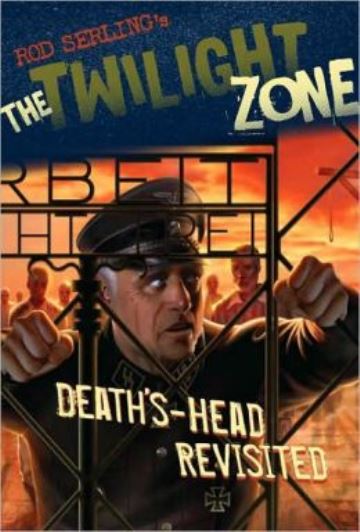
I suppose it’s also fitting that I’m watching/listening to a Twilight Zone marathon while I work on this. Rod Serling dished out devious damnations to nefarious Nazis in “Judgment Night”, “Deaths-Head Revisited”, and “He’s Alive”. There may be more, but those are the three that come immediately to mind.
In fact, Serling’s closing narration to “Deaths-Head Revisited” has become a staple in my classroom when discussing World War II and how we come to terms with what happened:
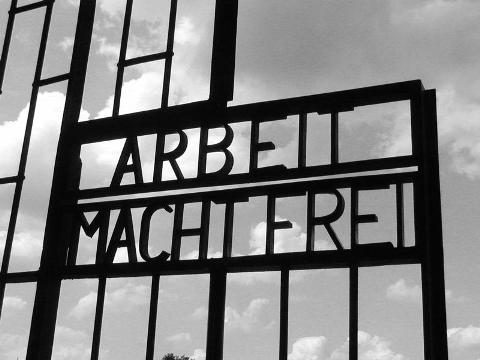
All the Dachaus must remain standing. The Dachaus, the Belsens,
the Buchenwalds, the Auschwitzes – all of them. They must remain
standing because they are a monument to a moment in time when some
men decided to turn the Earth into a graveyard. Into it they
shoveled all of their reason, their logic, their knowledge, but
worst of all their conscience. And the moment we forget this, the
moment we cease to be haunted by its remembrance, then we become
the gravediggers. Something to dwell on and to remember, not only
in the Twilight Zone but wherever men walk God's Earth.
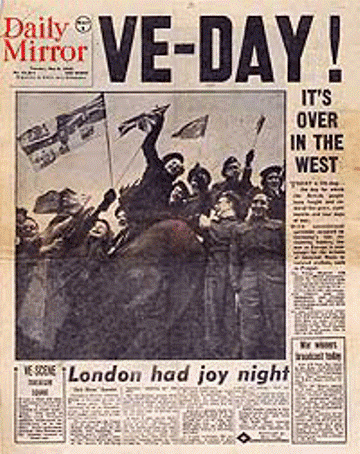
Seventy years ago, this was not the case. Seventy years ago, the Allied Powers declared victory over Adolf Hitler’s Reich.
I could write about the power and significance of this moment, but the historian in me knows that only those who lived it can truly understand.
In his speech to the British people, Winston Churchill said
My dear friends, this is your hour. This is not victory of a party or of any class. It’s a victory of the great British nation as a whole. We were the first, in this ancient island, to draw the sword against tyranny. After a while we were left all alone against the most tremendous military power that has been seen. We were all alone for a whole year . . . The lights went out and the bombs came down. But every man, woman and child in the country had no thought of quitting the struggle. London can take it. So we came back after long months from the jaws of death, out of the mouth of hell, while all the world wondered. When shall the reputation and faith of this generation of English men and women fail? I say that in the long years to come not only will the people of this island but of the world, wherever the bird of freedom chirps in human hearts, look back to what we’ve done and they will say “do not despair, do not yield to violence and tyranny, march straightforward and die if need be-unconquered.”
Every year I have students ask how things like the Holocaust could have happened and explain what they would have done under similar circumstances. After kindly explaining that no-one knows what they will do in any given situation until they are in it, I share this quote from Rod Sterling’s Twilight Zone episode Deaths-Head Revisited:
All the Dachaus must remain standing. The Dachaus,
the Belsens, the Buchenwalds, the Auschwitzes – all
of them. They must remain standing because they are a
monument to a moment in time when some men decided to
turn the Earth into a graveyard. Into it they
shoveled all of their reason, their logic, their
knowledge, but worst of all their conscience. And the
moment we forget this, the moment we cease to be
haunted by its remembrance, then we become the
gravediggers.

Something to dwell on and to remember, not only in
the Twilight Zone but wherever men walk God's Earth.
I’m not one to give trigger warnings. That said, I’m giving one now.
Things have a tendency to not go as planned. Several weeks ago, a dear friend’s health declined rapidly – unexpectedly, even – and he passed away. Even after days of relative sleeplessness, I found it hard to rest. My thoughts kept turning and churning and refusing to let me be until I wrote them down. This is an exercise in catharsis.
Some of my readers knew F_____. One of my regular readers is his wife.
[edit] For the record, I have permission and outright encouragement from the family to share this. [/edit]
Every once in a while history and real life collide.
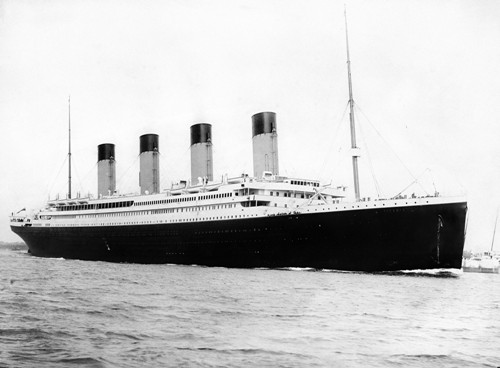
This year marks the 103rd anniversary of the sinking of the Titanic.
Given the number of film and articles written and dispersed over that time, I don’t think I need to retell the story.
What does this have to do with me? My great-grandfather was supposed to be on Titanic as a ship’s printer; that’s right, my great-grandfather was employed by White Star Line. I never knew my great-grandfather, so I’ll never know exactly why he quit instead of jumping at the chance to serve on what was already the most famous ship of its day. But quit he did; he obtained new employment on the banana boats. I know this because of the matchsafe he left behind:
I do know great-granddad lost friends and colleagues and acquaintances that cold April night; it is only by Divine Providence he did not perish as well.
And while I couldn’t find his immigration records (I forget his first name), here’s the immigration record for my grandpa:
Oh, and today marks the two-year anniversary of this blog. Happy Anniversary to Me!


 I was assigned to the Meredith*, an American destroyer out of Plymouth England. She was new – so new parts were still wet with paint. As at Pearl, my duty was the engine room. The Meredith wasn’t transport, she was a destroyer; we shelled the shore to soften it up for the landing. We stayed there in the [English] Channel for the entire day and the next, that’d make it June 7 when we were ordered to change position. I don’t recall where we were going; regardless, we struck a mine. That brand-new ship struck a mine and threatened to break in half. We ended up abandoning ship and I spent the night in the English Channel tied to my buddies so we wouldn’t drift. There was fuel all over, some of it ignited. One of my buddies [name redacted] was burned so badly he knew he was dying. He gave me some effects to pass on to his girl and some of the others started accusing me of robbing the dead. What was I supposed to do? What was I supposed to say? Well, we were picked up in the morning and I was shipped on to Scotland for recovery before being sent back to the States for a spell. I really can’t describe it. D-day was the worst day of my life. Worse than Pearl. Worse than the day my wife died. It was the absolute worst day of my life.