I asked the question on Facebook and I got an incredible response. In actual fact, the answers keep coming in, so, I will try to add and update on a regular basis.
But here goes… ‘You know you are an Ultra Runner when… ?’
Look at some of the names who have posted too. A few Talk Ultra interviewees crop up.
Holly Rush you consider running to your friend’s house for lunch and she lives 30 miles away…
June 5 was National Running Day. This post was intended to be published then, but for some reason it sat in the draft folder untouched and unnoticed as June 5 came and went. But, as they say, better late than never.
I suppose it all began in the 9th grade, the first year we boys were eligible for the varsity basketball team. Now, I’d been “playing” basketball since the fourth grade, but I use the term very loosely. I wasn’t very good at any aspect of the game, I was really just an extra body needed to give the real players a breather once in a while. Anyway, tryouts came, and in the end, it came down to me and my best friend. I lost. At first, I figured he was chosen since his dad worked at the school where we held practices and games. However, Coach took me aside and explained that it had come down to one deciding factor: stamina. I simply couldn’t keep up with the other players. I vowed that day to show them all what I could do.
For the next year, I tried to run at least a mile every day: in the sun, in the rain, in the snow – it didn’t matter. Somewhere in that year, my goal of making the basketball team took second place to the joy I found in running. For the first time I experience the runner’s high. I learned to love the wind in my face and the steady rhythm of my feet hitting the ground. I found comfort in my own thoughts. And when tryouts were held the next year, I could outlast them all; by my senior year, I had turned into a punishment: “You can stop running when Jay does!”
I continued to run in college; taking advantage of “proper” athletic tracks to relieve academic stress and brain fatigue. It was during my freshman year that I participated in my first organized race: the Turkey Run, an annual event held the Saturday before Thanksgiving. My first official time: 31.16. My best time would be during my senior year: 20:15. I began running longer distances, too. I’d run between 8 and 10 miles every other day and about 13 on weekends. I didn’t realize it, but I was already training myself for a half-marathon.
And then, real life got in the way. I graduated and landed a second-shift job in Quality Assurance at Moen. I began remodeling a house – a real fixer upper that had been left empty for at least 15 years. I just didn’t have time to run. No, let me be honest, I didn’t make the time to run.
8 months after graduating college, I got married; two weeks later I lost my job. I was despondent: no-one was hiring someone of my age with my limited experience. For whatever reason, my unemployment never came through. In short, I was depressed; the last thing I wanted to do was run again. After three months, I found some summer work with a general contractor. That fall, I was hired by a local school to teach social studies. Again, I just didn’t make time to run.
December 17, 2010 changed everything. It was the first day of Christmas Vacation, and I was driving across town to pick my wife up from work. An idiot distracted by his cell phone blew a red light and t-boned me in the driver’s side door with his Yukon Denali XL. I was driving a Pontiac Grand Am. Although the EMT’s first words to me were “Why aren’t you dead?” I escaped with relatively minor injuries. Nevertheless, I became extremely depressed. After several months of this, my wife was fed up with it and suggested I do something I enjoyed: get back into running.
So I did. I signed up for a marathon, and 11 months to the day of my accident I finished my first official 26.2 miles at the North Carolina Marathon (High Point, NC) in 06.13.27. I was hooked. Several months later I ran the Cherry Point Half Marathon in 2:05:19. Let me tell you, it felt good to pass a quite a few Marines in the last 2 miles, some of whom were drill sergeants. Last fall I ran the Freedom’s Run Marathon in Shepherdstown, WV in 05:29:38. In my opinion, every marathoner should try to complete this run. It’s an absolutely beautiful course with history everywhere. On November 10, I’ll be running my 3rd marathon: the Outer Banks Marathon in coastal North Carolina. My goal is to finish in 04:30:00 or less, but any time under 05:00:00 will do.
To be honest, my training has been slack. As the heat of summer approaches here in Eastern NC, it’s important to avoid heat exhaustion. Right now I can do around 10 miles no problem and push through to 15, but I really want to keep a 10 minute mile pace (or better) for the duration.
Some people don’t understand why I run. They don’t see the point in running long distances. All that effort – for what? There really isn’t a personal, tangible benefit to running a marathon. I’ll finish hours after the winner and most spectators will be gone; even the volunteers will most likely be winding down. It could be to benefit organizations such as Big Brother/Big Sister, the Wounded Warrior Project, or the Civil War Preservation Trust. However, I don’t put in long hours on the trail thinking about “the cause”. Neither do I run purely for my health: I’m strengthening my heart and lungs at the cost of my knees.
So why do I run? I run to relieve stress. I run to be alone with my thoughts. I run to once again enjoy the wind in my face and the rhythm of my feet as they hit the ground. I run for the same reason others have sailed oceans, climbed mountains, crossed deserts, and ascended into space: I run because the road is there.
This week I attempted to travel around the world. No, I’m not trying to be some kind of modern-day Phileas Fogg, breaking a new record for circumnavigating the globe. Instead, I’m working on a project.
As some of you know, I teach middle and high school social studies. Last year, my Geography class was decidedly lackluster. This year, though, I have a plan: every two weeks, I’m going to create a travel montage highlighting a particular country. I want to include posters, brochures, postcards, a clock with the local time, and – of course – sample the national cuisine.
Of course, the obvious solution would be to employ the vast knowledge of Wikidpedia and Google Image Search, but I want things to be more real. Therefore, I set about contacting the embassies of 34 countries from around the world. The list was entirely arbitrary; I sat down and made a list of the countries that I would want to learn more about. Here’s the list:
Europe
Germany, United Kingdom, Czech Republic, Portugal, Greece, Romania, Italy, France, Ireland, Norway, Spain
Asia
Turkey, Israel, Saudi Arabia, India, China, Japan, Indonesia, Thailand, Philippines
Africa
Cote D’Ivoire, Morocco, Egypt, South Africa, Zaire (D.R. Congo), Madagascar
South America
Brazil, Argentina, Chile, Peru
Central/North America
Panama, Costa Rica, Mexico, Canada
Believe it or not, I heard back quite quickly from several embassies. Norway wins the prize for promptness, though, with a response time of 5 minutes. Garrison Keillor would be proud. So far, several countries have promised to send me supplies: Germany, France, Norway, and South Africa. I am on a waiting list for Peru. I was disappointed to learn that several countries do not send out information, including Italy, Japan, Cote D’Ivorie, and Costa Rica. I have not received a response from any of the other countries.
Now, I would appreciate your help. I know from the site stats that I have visitors from around the world. If you live outside the US – or know someone who lives outside the US – and are willing to help me out by sending me some local brochures, posters, magazines, newspapers, or anything of the sort, please let me know. It doesn’t have to be a country from the list, any country would do.
I could hope beyond hope that this would get picked up by Freshly Pressed, but somehow I don’t think this article meets those standards. So, if you can help, let me know. If you can’t help personally, repost, reblog, or share my plea; you can help make Geography class a more interesting place to be!
On December 25, 2009, I said goodbye to my first Doctor. I’d been hooked for nearly a year, having first seen the episode “Tooth and Claw” on the SyFy network. I’d since made up for lost time, quickly tracking down the previous seasons in time to watch Series 4 in real time. And so, on that Christmas Day 4 years ago, I watched in horrified silence as Doctor No. 11 defeated the Master and stopped the Time Lords from escaping time lock, only to be undone by his (in my opinion) most heartwarming companion, Wilf. However, nothing could have prepared me for what followed. I’d seen the Regeneration of No. 10 (Eccleston) into No. 11 (Tennant) and had been just fine. But when the well-dressed and debonair Tennant regenerated into nerdy-looking Smith, I was heartbroken. Alons-y was out and Geronimo was in. Wonderfully long coats were out of fashion, replaced by conservative sport coats and suspenders. I was mortified.
So, Matt Smith fans, I know what you’re going through; I was there. But please, please, please, don’t make the same mistake I did. Distraught with losing the Tenth Doctor, I watched Season 5 as if Tennant was still the Doctor and Russel T. Davies was still head writer. Everything that I disagreed with I chalked up as “mistakes” due to changes in the cast and staff. In retrospect, things weren’t really that bad. They were different, yes, but I shouldn’t have let that ruin the season for me. Indeed, upon re-watching Series 5, I see that Steven Moffat had a unique style I hadn’t noticed before.
Cracks. Cracks are Scary.
Now that Smith has announced he’s leaving the show, I can finally admit that he’s grown on me. Looking back, I think that in some ways Smith was better for Dr. Who than Tennant. Now don’t get me wrong, I still think Tennant is the superior actor, but there are some things Smith was able to accomplish that Tennant couldn’t.
First and foremost, Matt Smith’s doctor became popular in America. I don’t know exactly how it happened, but it did. Through the Tennant years, I had to buy my Whophernalia offline, namely amazon.co.uk. Now the entire series is in stock at Target or Wal-Mart, Hot Topic sells t-shirts and buttons galore, and Suncoast always has something random like a TARDIS cookie jar or Weeping Angel standee. Barnes and Noble and even Books-a-Million have Who tables selling books, puzzles, bookmarks, and games. And somehow, all this was done without turning Who into an American show; remember the failed attempt to bring Torchwood stateside? It makes me want to shout Fantastic!
Trade them in for Valuable Prizes!
Second, Doctor 11 introduced us Americans to a whole new culinary experience. We learned the joys of British-style custard and, yes, even tried it with fish fingers. Really, it’s not as bad as you’d think. Then there are the Jammie Dodgers, which are simply wonderful (and sold in the International section of my local grocer). If you haven’t tried either of these things, you should. Just don’t try them at the same time, your stomach can handle only so many new things at a time. Trust me on this.
Eat These. Now.
Third, bow ties became popular. I’ve always liked bow ties, but others haven’t always appreciated them. They’ve been considered apparel for nerds, dorks, or old men. Admittedly, I fall into one of these three categories. Nevertheless, thanks to a 30 year old actor playing a 900+ year old alien, I can wear one in public without fear. In fact, I received several bow ties as gifts from my students this year, and several boys wore bow ties to the Spring Banquet because “bow ties are cool.” Matt Smith, I can’t thank you – and your costume designer – enough.
Bow Ties Are Cool
Therefore, I look forward to this Christmas with anticipation. Not because Smith is leaving – although at one point that would have been the case – but because I’m excited to see what the next Doctor will bring to Who. Maybe the next Doctor will introduce Americans to Spotted Dick or – one can only hope – make fezzes cool.
I was talking to some running friends the other day when one of them brought up the subject of music. I hadn’t realized how divided the running community is over music; nearly every runner I know goes out with an mp3 player and upbeat playlist. Nevertheless, one friend’s adamant opinion that music absolutely ruins the running experience provided excellent fodder for rumination.
Right at the start, I’ll admit to favoring music; I run more with it than without it. Nevertheless, running purists make several valid points.
First, music creates risk. How often do we become “lost in the music” and fail to heed our surroundings? Distraction can be both dangerous and deadly; every runner knows this. Most pro-music runners would say “That can’t happen to me!”, but like the cautious new driver that turns into the reckless “experienced” driver, humans rely on routine. We grow familiar with our route and the world it inhabits and become complacent. Distraction and complacency are anathemas to safety; this is a special concern at intersections: drivers aren’t always looking for runners (or cyclists for that matter), and no runner wants a detour through the emergency room.
Second, music distracts from thinking. My blog is centered around my running thoughts, so this argument may have more credence with me than with others. As a society, we’ve become so used to being connected – and distracted – that we simply can’t spend time with ourselves. When running is an escape, why insist on running with the flavor-of-the-week teeny-bopper? When running is supposed to relieve stress, why bring the caustic talk radio host? I’ve heard the claims that music helps people think, but it is more accurate to say that music directs our thoughts. Do we really want the Top 40 or another political talking head to dictate what we think about? Running should be refreshing a relaxing; Justin Bieber and Rush Limbaugh are neither.
Finally, music can negate the camaraderie of running. Personally, I find this argument the least defensible since it assumes most runners belong to clubs or attend many events throughout the year. Although I am not this type of runner, I understand the sentiment. Meeting new people, learning about other parts of the world, giving and receiving tips and tricks – all of these are a part of the running experience. With earbuds planted firmly in our heads, we tend to ignore others and miss wonderful, once-in-a-lifetime opportunities.
In contrast, there are very few arguments in support of music. One valid argument is that the beats per minute (BPM) of a song can help improve one’s pace. I’ve tested this theory over the last several months by running to music with 152 BPM, and my personal pace has improved roughly 13%. I don’t know how scientific the argument is; I imagine that, like most running aids, it depends on the individual.
Personally, I think most pro-music runners’ opinions are based on preference rather than any perceived benefit. In addition to being uncomfortable with our own company, we (as a society in general) don’t like to be told what we can’t do. People everywhere, and Americans in particular, value their rights, and I think pro-music runners view their headphones as a personal freedom. Such runners see any attack on their music as an attack on them. There are even some extremists who will skip an event – even one already paid for – if headphones aren’t permitted. In my opinion, this kind of reasoning shows misplaced priorities. We don’t go to the movies to hear the soundtrack, so why treat running any different? Sometimes life is best enjoyed in the raw.
So how can the two factions get along? Well, there are a few things we can do:
Remember there are times when it simply isn’t smart to run with an mp3 player, such as when visibility is low or when running unfamiliar terrain. Just because you can do something doesn’t mean you should. Speaking of which . . .
There are also times when you shouldn’t run with music, particularly when it’s prohibited. If you’ve entered such an event, then train without the iPod. Trust me, doing so will make race day easier.
Be excellent to one another. Coexist. Get along. Purists, we’re all out there for the same reason, so don’t get bent out of shape when others don’t share your opinion. Music lovers, if you’re running with friends but absolutely need your tunes, try running with one earbud in – and remember to keep the volume low. You’ll still get your beat, but you’ll also enjoy running with a companion, and not everyone has that opportunity. Share the road.
So, what will I do now? Unplug more – not totally – and get back to running for running’s sake. What you do is up to you.
By the time I was born there were no names left to give out. Grandparents, great-grandparents, and even a great uncle had all been recognized. Charles, Leroy, Christopher, Lehman, John, and Glenn had all been used, and – given the rather unimaginative naming process of my forbears – there was simply no other family name to pass on. Only my sister had a totally unique name, since my parents realized that any child named Gertrude or Marillda in the late 70s and early 80s would be teased relentlessly.
Family legend says that my father wanted to name me Hey You, but my mother put an end to that idea rather quickly. What is certain is that they wanted a name no-one could shorten. People tried to call my brothers Chuck, Roy, and Chris. For a time, even m y sister was “Abe” because of her initials. Therefore, I was given the name of a letter of the alphabet: Jay. Nevertheless, I have to wonder: if my parents wanted a name that no-one could shorten, why did they name me Jay Peter? That’s just asking for people to call me J.P. You’d think that their experiences with my sister would have proven that.
Since I’m not named for anyone, I guess that means I get to choose. Over the last several years I’ve narrowed the options down to three possibilities:
Because I love history and politics, at times I’ve claimed to be named for John Jay.
Like myself, John Jay was a December baby, although he was born in 1745 and I was born in 1985. Unlike myself, Jay was born into wealth and status. Jay’s accomplishments include:
Founding Father of the United States
Member of the New York Committee of Correspondence
American Ambassador to Spain and France
Secretary of Foreign Affairs
Signer of the Treaty of Paris (ending the Revolutionary War)
Author – along with Alexander Hamilton and James Madison – of the Federalist Papers
First Chief Justice of the United States
Author of the Jay Treaty, which kept America out of the Napoleonic Wars
Governor of New York (He ended slavery in the state through gradual emancipation.)
For years I was “J.P.” (a name I despise), so I could claim John Pierpont Morgan.
Morgan dominated American banking and finance in the late 1800s and early 1900s. Highlights of his life include:
Arranging the creation of General Electric (commonly called GE today)
Financing the creation of the United States Steel Corporation (receiving a shout out in Godfather Part II)
Directing the banking scheme that stopped the Panic of 1907
Leading financier of the Progressive Era
Finally, I can claim perhaps the most famous Jay of all time: Jay Gatsby
Jay Gatsby is the title character in F. Scott Fitzgerald’s The Great Gatsby. Gatsby’s life can be summed up thusly:
Gatsby is a college dropout who falls in with a copper tycoon. Cheated out of money, Gatsby enlists in World War I, where he is decorated for valor. He then finishes his college degree; while studying, he learns that his love interest, Daisy Fay, has married the aristocratic Tom Buchanan. Gatsby determines to win her back by becoming a man of wealth and status.
Gatsby returns to an America in the midst of Prohibition, where he is able to make a fortune from bootlegging. Gatsby uses his wealth to buy a mansion and attempts to attract Daisy by hosting extravagant, weekend-long parties; eventually he succeeds in convincing Daisy to leave Tom, who is cheating on her.
Through a series of unfortunate events, Daisy kills Tom’s lover, Myrtle, with Gatsby’s car. In a rage, Tom tells Myrtle’s husband, George, where he can find the car that killed his wife. George tracks down the car, shoots Gatsby, and then kills himself. Despite his wealth and relative popularity, only two people attend Gatsby’s funeral.
If all of that is too confusing, check out this excellent infographic.
But what do you think? Who should I be named after?
This post was written in response to the Daily Prompt: Say Your Name.


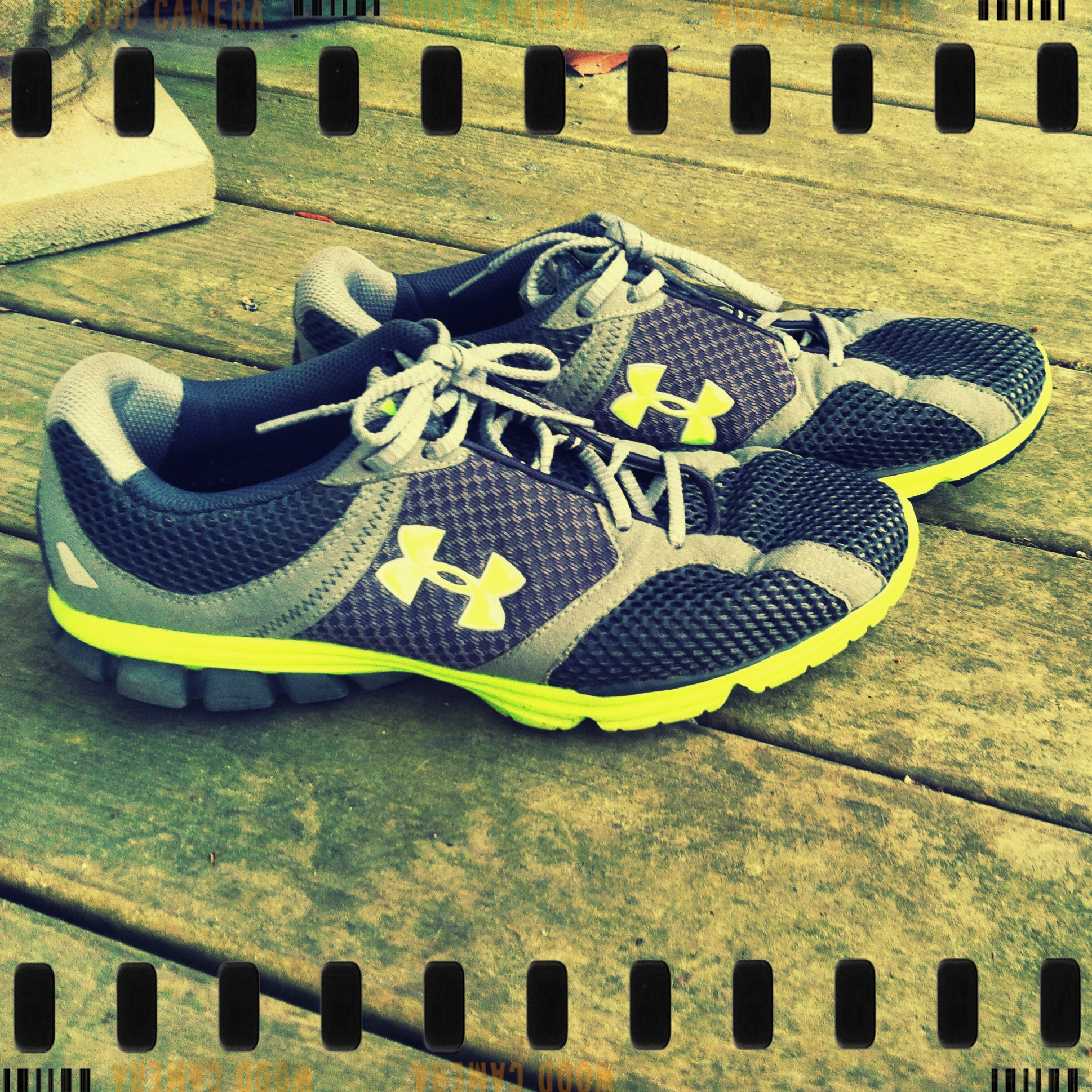








 Running In My Head