Misunderstanding Misunderstanding

After several weeks of frivolity with photography, it’s time to post a more serious piece.

Over the past days weeks months years public speech in America has come under intense scrutiny, particularly on college campuses. From my perspective, it appears that certain people operate under the assumption that they have a right not to be offended; if they are offended, then something must be wrong.

The following opinion piece crossed my news feed; I felt compelled to write a rebuttal.

Letter: Mills ’15 and others misunderstand safe spaces

I am greatly disappointed that Walker Mills ’15’s opinion piece “Playing it Safe — Too Safe” falls into the same semantic trap that New York Times contributing opinion writer Judith Shulevitz and many other generational pundits have been making in recent editorial comments across news outlets. The current rally that generational pundits make against me and my peers in college today is that we have forsaken freedom of speech and multiple view points for “comfort.” What does this word “comfort” even mean? I’m afraid that it is a product of jargon that is too easily mistranslated by these opinion columnists hoping to pass a deadline.

Logical Fallacy: Strawman

What does “comfort” mean, you ask? Well, according to the American Heritage College Dictionary:

com·fort (kŭmfərt)

tr.v. com·fort·ed, com·fort·ing, com·forts

1. To soothe in time of affliction or distress.
2. To ease physically; relieve: comforted the feverish patient with a cool cloth.

n.

1.

a. A condition or feeling of pleasurable physical ease or relief from pain or stress: finally sat in comfort on the soft pillows.
b. A condition of well-being, contentment, and security: an income that allowed them to live in comfort.

2.

a. Solace or consolation in time of sorrow or distress: soothing words of comfort.
b. Help; assistance: gave comfort to the enemy.

3.

a. Something providing ease, convenience, or security: the comforts of modern living.
b. A person or thing that brings consolation or mental ease: a friend who was a comfort to me in my grief.
4. Chiefly Southern & Lower Northern US A quilted bedcover; a comforter.

Therefore, when you say you want to be comfortable, I take it you want to be at ease, strengthened in your own beliefs, and soothed in spirit.

Fair warning: none of these should be demanded – let alone accepted or expected – in debate. It is the nature of debate to challenge our innermost beliefs and heartfelt desires. Otherwise, what is the purpose? This argument reminds me of this utterly absurd cartoon, claiming that using dictionary definitions in debate is akin to arguing from a position of privilege and power.

If they delved with any honest intent into the vast discourse of social justice, they would see how far from the mark they really are.

Logical Fallacy: Fallacy Fallacy; smacks of Ad Hominem

What is this “vast discourse” other than a reiteration of the 1970s “Stick it to the man”? There is no understanding of the past; the past is invalid because anyone older than your own generation “doesn’t understand society today.”

To begin, when students claim a lecture or event is “uncomfortable,” it’s not because the chair cushion is sagging. Nor is it because we simply don’t like the ideas being touted before us. It is because the speakers promoting these ideas do not display an effort to be inclusive in their thoughts.

Logical Fallacy: Genetic

Remember: Don’t kill the messenger!

A speaker’s language may not recognize the differences in gender identity or expression, and thus speak in ways that exclude and marginalize certain groups. Their arguments may not acknowledge the position of power they inherently have when making certain claims. The solutions they offer to whatever discussion at hand many not consider the long history of injustice performed against people of color.

Logical Fallacy: Burden of Proof, Personal Incredulity

One cannot claim the moral high ground while also advocating moral equivalency.

Or, to put it another way, you can’t have your cake and eat it, too.

Take note: not every word, thought, and action is an attempt to keep and save power.

These examples may seem vague, but I am trying to generalize a range of possible situations that have caused dismay across college campuses. To outside observers, make no mistake, these problems are not analogous to me sitting on an uncomfortable lumpy mattress.

Logical Fallacy: Anecdotal

Based on your own argument, you imply that everyone who doesn’t think like you think they should think is an ignorant, bigoted megalomaniac. How is that inclusive?

When I say your argument makes me uncomfortable, it is because I am greatly concerned that you have not done the requisite thought and research into generating an inclusive thesis that considers as many nuances as necessary to deliver a sound debate.

Logical Fallacy: Fallacy Fallacy; hints of Burden of Proof

Perhaps one considers those nuances and rejects them. What then?

Why should a thesis be inclusive? It is the very nature of hypotheses and theses to be divisive!

If you do not believe that skin color, age, religious identity, sexuality, class or (dis)ability have an effect in cultural, political or economic problems that we debate at universities, then it is you who is trying to remain comfortable despite such frightening realities. In this sense, being uncomfortable is the strongest form of rhetoric that our millennial generation wields in the struggle against all forms of oppression.

Joseph DiZoglio ’15

Logical Fallacy: Appeal to Emotion, Ad Hominem

I can “believe that skin color, age, religious identity, sexuality, class or (dis)ability have an effect in cultural, political or economic problems that we debate at universities” and still disagree with you or make you feel uncomfortable!

Again, that is the very nature of debate.

Ultimately, this piece is built on the logical fallacies of Ad Hominem, Tu Quoque, and Personal Incredulity.

I would direct the author to read Beatty’s Speech from Fahrenheit 451.


What do you think? Am I off the mark? Is there something I’m missing?

Let me know in the comments!
A Sticky Wicket

Spring is in the air, which means that so too are pollen and bees and other nasty allergens.

I’m doing battle with the bees today, given that they’ve begun to dig into our porch railings. The pollen, well, there’s not much I can personally do about that, is there? Seriously, I just washed the car two days ago, and yesterday it was already yellow instead of white; thankfully, we had a good downpour today, which really helped me out this time.

Traditionally, spring has been a time for cleaning; cleaning house, cleaning the attic, cleaning the yard, just cleaning in general. And so, in addition to sorting through several decades of National Geographic bestowed upon me (I should have known something was up when he said there was no place to store them) I’m also trying to spruce up the blog.

We love our blogs; we’re often our number one fans. But that can get in the way of meaningful progress.

Therefore, I need your help.

Take a look around and tell me what could me moved, improved, or removed all together.

I promise not to take it too personally.

I’ve already modified the background; while I liked the word cloud, I felt it distracted my actual content.

Let me know your suggestions in the comments!


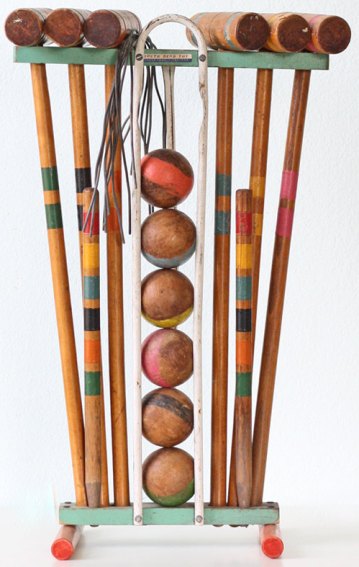
I just know there was a Far Side cartoon about a sticky wicket in a wicket factory.

Google, you have failed me!

Teaser Tuesday: Fragile Things

Allergies and back pain may have laid me low the last few days, but that hasn’t stopped me reading! Which means that . . .

Once again the wheel of time has turned to

Teaser TuesdayJust in case you don’t know, Teaser Tuesday is a weekly bookish meme, hosted by A Daily Rhythm. Anyone can play along! All you have to do is grab the book you’re currently reading, open to a random page and share two sentences from that page. But make sure you don’t share any spoilers!*

*I wish I could take credit for this introduction, but I shamelessly stole it from Heather over at bitsnbooks. To help me make amends, you should go check out her blog.

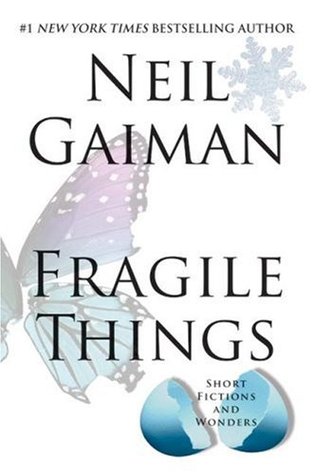
This week I’m reading Fragile Things by Neil Gaiman. Having previously read The Ocean at the End of the Lane, I’m looking forward to this collection of short stories.

This selection comes from “Instructions”

Trust the wolves, but do not tell them
    where you are going.
The river can be crossed by the ferry.
    The ferryman will take you.
(The answer to his question in this:
If he hands his oar to his passenger, he
    will be free to leave the boat.
Only tell him this from a safe distance.)

fragile things

In Retrospect

I haven’t yet finished 1916: The Easter Rising, but it’s proving quite enlightening and a valuable asset in my MOOC.

I did finish The Long Mars (yesterday!). As a whole I thought it a satisfactory ending to the trilogy, yet some things bothered me as unnecessary or overtly contrived. Not quite a Deus Ex Machina, but close . . .

Easter Sunday 2015

I don’t know how many of you are religious or not, or – since one does not necessitate the other – how many of you observe Easter.

Easter is my favorite holiday; it is a time of reflection and introspection and meditation.


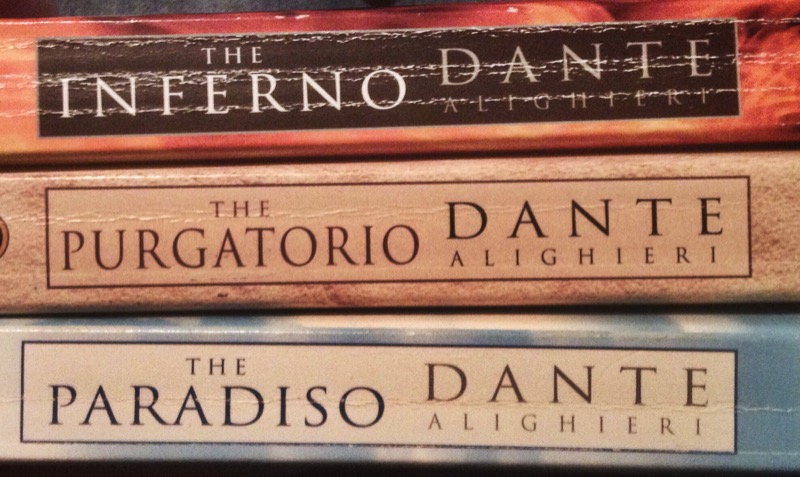
Now a nine-year tradition, I am again reading Dante’s Divine Comedy (Ciardi translation).

IMG_2530


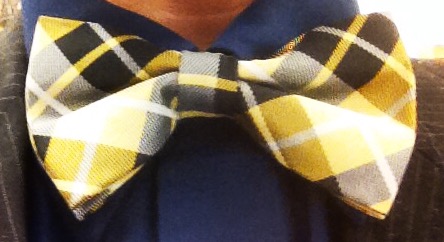
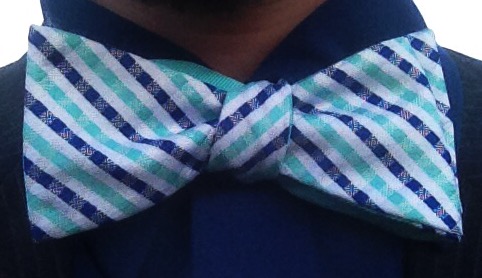
I never thought my “Triumph” post would be as popular as it was; apparently many people had an opinion about which bow tie I wore Easter Sunday. For the record, it was this one:

IMG_2536


I’ve also been meditating on two songs sung as part of our Easter program:


Finally, you’re never to old to get an Easter Basket!

IMG_2540


Happy Easter, Everyone!

Triumph

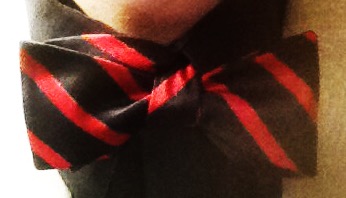
Nothing says “Triumph” better than a bow tie – even if one of them is pre-tied.

IMG_2446Sunday

IMG_2456Monday

IMG_2477Tuesday

IMG_2484Wednesday

IMG_2493Thursday


Feature Image courtesy Steeevie @ deviantart . com

April: First Guest Post!

It is with great pleasure I present to you a wonderful stream-of-consciousness guest post.

Enjoy!


I have never begun a novel with more misgiving. Granted: I am an inmate of a mental hospital; my keeper is watching me, he never lets me out of his sight; there’s a peephole in the door, and my keeper’s eye is the shade of brown that can never see through a blue-eyed type like me. If I am out of my mind, it’s all right with me. I write this sitting in the kitchen sink.

Lolita, light of my life, fire of my loins, call me Ishmael. I am a sick man . . . I am a spiteful man . . . I am an invisible man. You don’t know about me without you have read a book by the name of The Adventures of Tom Sawyer; but that ain’t no matter.

If you really want to hear about it, the first thing you’ll probably want to know is where I was born, and what my lousy childhood was like, and how my parents were occupied and all before they had me, and all that David Copperfield kind of crap, but I don’t feel like going into it, if you want to know the truth. Whether I shall turn out to be the hero of my own life, or whether that station will be held by anybody else, these pages must show.

In a sense, I am Jacob Horner. I was born twice: first, as a baby girl, on a remarkably smogless Detroit day in January of 1960; and then again, as a teenage boy, in an emergency room near Petoskey, Michigan, in August of 1974. I am an American, Chicago born—Chicago, that somber city—and go at things as I have taught myself, free-style, and will make the record in my own way: first to knock, first admitted; sometimes an innocent knock, sometimes a not so innocent

You are about to begin reading Italo Calvino’s new novel, If on a winter’s night a traveler. A story has no beginning or end; arbitrarily one chooses that moment of experience from which to look back or from which to look ahead. This is the saddest story I have ever heard. It was like so, but wasn’t. I had the story, bit by bit, from various people, and, as generally happens in such cases, each time it was a different story. All this happened, more or less.

Once upon a time and a very good time it was there was a moocow coming down along the road and this moocow that was coming down along the road met a nicens little boy named baby tuckoo.

It was the best of times, it was the worst of times, it was the age of wisdom, it was the age of foolishness, it was the epoch of belief, it was the epoch of incredulity, it was the season of Light, it was the season of Darkness, it was the spring of hope, it was the winter of despair. It was a bright cold day in April, and the clocks were striking thirteen. The sun shone, having no alternative, on the nothing new.

It was a dark and stormy night; the rain fell in torrents, except at occasional intervals, when it was checked by a violent gust of wind which swept up the streets (for it is in London that our scene lies), rattling along the house-tops, and fiercely agitating the scanty flame of the lamps that struggled against the darkness. The sky above the port was the color of television, tuned to a dead channel.

Happy families are all alike; every unhappy family is unhappy in its own way. In my younger and more vulnerable years my father gave me some advice that I’ve been turning over in my mind ever since: “You better not never tell nobody but God.

Many years later, as he faced the firing squad, Colonel Aureliano Buendía was to remember that distant afternoon when his father took him to discover ice. Once an angry man dragged his father along the ground through his own orchard. He was an old man who fished alone in a skiff in the Gulf Stream and he had gone eighty-four days now without taking a fish.

They say when trouble comes close ranks, and so the white people did. They shoot the white girl first.

124 was spiteful. It was a wrong number that started it, the telephone ringing three times in the dead of night, and the voice on the other end asking for someone he was not.

Mother died today.

Time is not a line but a dimension, like the dimensions of space.

It was a queer, sultry summer, the summer they electrocuted the Rosenbergs, and I didn’t know what I was doing in New York. It was the day my grandmother exploded. Having placed in my mouth sufficient bread for three minutes’ chewing, I withdrew my powers of sensual perception and retired into the privacy of my mind, my eyes and face assuming a vacant and preoccupied expression.

In the late summer of that year we lived in a house in a village that looked across the river and the plain to the mountains. For a long time, I went to bed early. We started dying before the snow, and like the snow, we continued to fall. It was a pleasure to burn.

There was a boy called Eustace Clarence Scrubb, and he almost deserved it. He was born with a gift of laughter and a sense that the world was mad. He was an inch, perhaps two, under six feet, powerfully built, and he advanced straight at you with a slight stoop of the shoulders, head forward, and a fixed from-under stare which made you think of a charging bull. He—for there could be no doubt of his sex, though the fashion of the time did something to disguise it—was in the act of slicing at the head of a Moor which swung from the rafters.

“Take my camel, dear,” said my Aunt Dot, as she climbed down from this animal on her return from High Mass.

Where now? Who now? When now?

It is a truth universally acknowledged, that a single man in possession of a good fortune, must be in want of a wife. Of all the things that drive men to sea, the most common disaster, I’ve come to learn, is women. It was love at first sight. What if this young woman, who writes such bad poems, in competition with her husband, whose poems are equally bad, should stretch her remarkably long and well-made legs out before you, so that her skirt slips up to the tops of her stockings?

The human race, to which so many of my readers belong, has been playing at children’s games from the beginning, and will probably do it till the end, which is a nuisance for the few people who grow up.  Justice?—You get justice in the next world, in this world you have the law.


A special thanks to the American Book Review for making this post possible.

Website Powered by WordPress.com.

Up ↑