Challenged Sentences

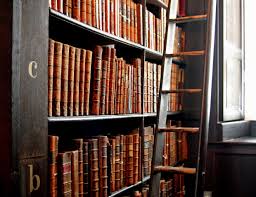
LeatherBooksWant to read something for Banned Books Week but just don’t have the time? You’re in luck! Below, you’ll find ten of the most challenged books in the United States condensed (by me) into one sentence.

Irony isn’t lost on me; it wasn’t too long ago in writing about Fahrenheit 451 that I included the line:

Classics cut to fit fifteen-minute radio shows, then cut again to fill a two-minute book column, winding up at last as a ten- or twelve-line dictionary resume.

However, my goal is not to tell the story; rather, to whet your appetite for more.

Enjoy, fearless reader!

Ulysses (James Joyce; “explicit nature” and “promoting lust”): As an omniscient observer, spend 16 June 1904 with Leopold Bloom in Dublin.

To Kill a Mockingbird (Harper Lee; “racial slurs, profanity, and blunt dialogue about rape”): Scout, a young girl in Maycomb, Alamaba, learns from her father why racism is wrong.

The Sun Also Rises (Ernest Hemingway; profanity and sex): A group of young people attempt to forget the horrors of WWI with sex, parties, and alcohol.

Slaughterhouse-Five (Kurt Vonnegut; “depraved, immoral, psychotic, vulgar, and anti-Christian”): A soldier in WWII, Billy Pilgrim suffers from shell-shock.

1984 (George Orwell; sexual content and violence): A totalitarian government breaks Winston Smith.

The Jungle (Upton Sinclair; socialist philosophies): Discover the horror of meatpacking in the early 1900s (and socialism, too).

James and the Giant Peach (Roald Dahl; “inappropriate language, encourages disobedience to parents, references to drugs and alcohol, and ‘magical elements’): A young boy flees his abusive aunts in a magical fruit with talking insects.

The Great Gatsby (F. Scott Fitzgerald; “language and sexual references”): Jay Gatsby throws extravagant parties in an attempt to win the love of Daisy Buchanan.

Catch-22 (Joseph Heller; “offensive language”): John Yossarian deals imaginatively with Air Force bureaucracy in WWII.

The Adventures of Huckleberry Finn (Mark Twain; race and social issues): Huck Finn runs away from home and rafts down the Mississippi River with escaped slave Jim.

A Word to the Unwise

At this place, on May 10, 1933 Nazi, students burned the books of writers, scholars, journalists, and philosophers.
At this place, on May 10, 1933, Nazi students burned the books of writers, scholars, journalists, and philosophers.

A word to the unwise.
Torch every book.
Char every page.
Burn every word to ash.
Ideas are incombustible.
And therein lies your real fear.

– Ellen Hopkins

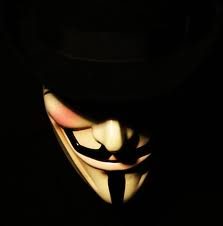
guyfawkesmaskRemember, remember
The fifth of November
The gunpowder treason and plot.
I know of no reason
Why the gunpowder treason
Should ever be forgot.

gunpowderbarrelsBut what of the man? I know his name was Guy Fawkes, and I know that, in 1605, he attempted to blow up the houses of Parliament. But who was he really? What was he like? We are told to remember the idea, not the man, because a man can fail. He can be caught. He can be killed and forgotten. But four hundred years later an idea can still change the world. I’ve witnessed firsthand the power of ideas. I’ve seen people kill in the name of them; and die defending them. But you cannot kiss an idea, cannot touch it or hold it. Ideas do not bleed. They do not feel pain. They do not love.*

Ideas are Bulletproof


*From V for Vendetta

Child of Fear – Father of Ignorance

Censorship is the child of fear and the father of ignorance.

– Laurie Halse Anderson

LeatherBooksFor years I’ve told my students, “If you don’t like to read, it’s only because you haven’t found something you like to read.” No one really hates reading; they hate being told what to read and when to read it. Then, because this mandate usually comes from a “mean teacher,” they project that hatred onto the act itself. I recall one student who – on the first day of school – declared she hated reading and would rather solve long division (she hated math, too) than read a single page of another book. By the end of the year she loved reading; all it took was a little coaching to find what she actually wanted to read.

BBWPoster2013But what happens when a book you want to read has been censored or banned? I remember looking through my school’s library in Middle School and finding all the “bad words” marked out in black sharpie (which then bled through onto the next page, effectively ruining three pages of text). What good does that do? Did they really think we couldn’t figure out what was being said? If anything, it encouraged us to find non-vandalized copies and figure out what they were hiding from us.

Those that would censor books for religious, moral, or political reasons have entirely missed the point. Now, I agree that parents should have ultimate control over what their children read, but that’s where their power ends. No one should be able to dictate what someone else reads. Doing so kills creativity, stifles healthy debate, and creates citizens incapable of rational thought. It’s not enough to say “I don’t like it because my parents don’t;” that excuse stops working around the ninth grade.

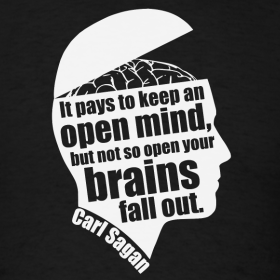
Carl Sagan Open MindI never tell my students to read with an open mind; I tell them to read with a discerning mind. An open mind blindly accepts information; a discerning mind filters information. The problem is that censors view books the way others view television: as a babysitter. Books entertain and teach, and require a guide. Just because you want to shirk that responsibility doesn’t give you the right to violate the First Amendment.

By happy coincidence, Banned Books Week coincides with my Bill of Rights section of American Government. I have no idea how my students will react – I suspect less than half of them read voluntarily. We’ll just have to see how it goes.

In Search of Lost Time

Armed with a cup of coffee and two slices of cheesecake, I tackled my blog reading list.

It’s become a Saturday ritual: read the list, explore the Freshly Pressed pages, become inspired for future blog posts. But something was different – there were a lot of posts! Most of the blogs I follow might post one or two times a week, but I kept scrolling and commenting, scrolling and liking, scrolling and scrolling and scrolling.

How could so much be written in one week? Then I got to the first familiar entry a realized: I haven’t read anything in three week. Well, not exactly true. I read Cloud Atlas [my favorite recently read book] and On the Road and Lolita and Heart of Darkness.

What about those posts I’d meant to finish? There they sit, waiting to be edited. Wait a minute – Banned Books Week is next week?! Sigh.

So much to do and so little time.

Thirteen

13 signThirteen years.

It seems only yesterday I sat in the dentist office listening to the radio world changing.

It seems an eternity ago I watched the end and beginning of an era.

end and beginning

Thirteen years, and where are we?

GWBushIn high school we joked George Bush had declared war on a nation of mud huts. How naïve.

Did we learn nothing from history – from the Russians, the British, the Ottomans? The Middle East will not be tamed – go ask Crassus about Parthia.

Pyrrhus has nothing on us. We are the sinner and the saint, and whether we stay or leave the cauldron of conflict continues to boil.

keep-calm-and-blame-someone-else-1Blame whomever you want: Obama, G. W. Bush, Cheney, Clinton, G. Bush, Reagan, Carter, Ford, Nixon.

None of them started it.

None of them finished it – or could even if they tried.


Instead of blame, we must ask the question:

Thirteen years from now, where will we be?

Take Your Supplements

Clio Muse

Today was a good day – one of the times I really felt I was making some headway with my classes.

50 mL water
Weapon of Math Instruction

It began with the first physics lab of the year – determining the density of a brass cylinder using linear measurement and water displacement methods. Good old Archimedes! Everything went extremely well with two groups completing the lab and all the supplemental material withing the class period. They even came to within .5 percent error on their math tables! Now, some students did get carried away the water-filled graduated cylinders, and one learned an early lesson on weak vacuum seals and centrifugal force. Good thing 50 mL of water is easy to clean, right?


Khufu. Khafre. Menkaure.

It continued in my World History section, where we were completing our section on Egypt. I wanted to jump up and down when students asked questions like

You mean Egypt was attacked by Assyria and Persia? You mean like Sennacherib and Cyrus and Xerxes? I remember those guys!

You said that Hatshepsut’s successor tried to remove her from living memory. Was that because he wanted to destroy her in the afterlife, too?

Wait. If the Greeks conquered Egypt, and Cleopatra is decidedly non-Egyptian, does that mean Cleopatra was Greek?

This class is going to love the Egypt section of Engineering an Empire, an excellent look at ancient civilizations narrated by Peter Weller – yes, that Peter Weller – and produced by the History Channel back when the History Channel was actually about history and not, well, whatever it is now.


Sinners_in_the_Hands_of_an_Angry_God_by_Jonathan_Edwards_1741Now, two good classes is one day is rare, but three is unheard of. At least, it is in my experience. Nevertheless, it happened. I taught a double American Government section wherein we discussed the Mayflower Compact and the Great Awakening. I was beaten to the punch on one of my class discussion questions when one of my students asked “Wait a minute. If the Great Awakening had such a positive impact in America, then how did people reconcile slavery?” I kid you not, I just about fainted. This is the class that getting any class-related interaction is like convincing me that e-books are a good idea. But that question set things in motion. We were able to discuss concepts of equality and the roots of slavery. We compared the slavery of the ancient and medieval world with American slavery. We talked about how things weren’t necessarily as bad as Stowe’s Uncle Tom’s Cabin but neither were they afforded basic human dignity. I didn’t teach much of what I had planned to, but this was enrichment time!

As class was winding down, I asked them what caused the change. Turns out most of them were actually paying attention to the supplemental material I’d been providing. Some of them even read it! One of them put it this way: “I figured if you were going to take the time to find extra stuff to help us understand, I’d at least make the effort to participate.”

No lie, that’s gonna keep me going for a while, even if they don’t make it through Blackstone’s Commentaries on the Laws of England or Burke’s Reflections on the Revolution.


Website Powered by WordPress.com.

Up ↑