An Historical Dilemma

Clio Muse
Sing, O Muse . . .

Every subject has its challenges, but history may be the most challenging of all.

There’s always more history. I can think of no other subject where this is true.

High school math – at least what I’ve seen of it – hasn’t changed much since I learned it 10+ years ago. Maybe the method has changed, but the ideas haven’t.

Science has made breakthroughs, clarifications, and corrections. This means that theories and hypotheses – and therefore formulas – have changed, but science generally doesn’t ask you to learn how things were done “in the old days.” At least, it doesn’t require you to have a practical, working knowledge of the old ways. Which is a shame, because once the technological apocalypse hits there will be no-one with the knowledge to rebuild society as we know it. Who needs time travel? It’s back the the Middle Ages (or Early Renaissance)! But that’s a different topic for a different time.
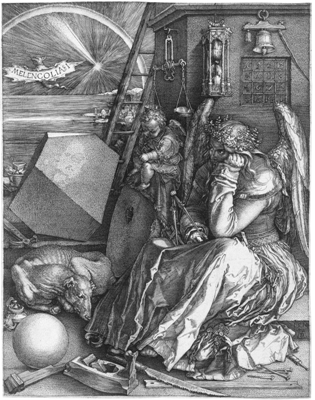
Melancholia I
And on your right, you’ll see the broken instruments of human knowledge . . . 

Melencolia I (Albrecht Dürer, 1514)

English hasn’t changed much, either. New authors may replace old ones, new words come into the vernacular and others fall out, and the way in which we communicate may vary, but English – as it is taught – remains largely unchanged from year to year.

History is not so – more is added to it every day and it all builds on what has happened before. For example, I cannot expect my students to understand the Arab-Israeli conflict without also understanding the origins of those particular people groups, the establishment of ancient Israel, the formation of Judaism and Islam, the Israeli diaspora under Roman rule, the re-creation of a modern Israeli state in 1948, and the various attempts (and failures) at co-existence since that time. How do you condense and revise to give an accurate overview without becoming swamped? Many teachers I know teach on themes or hit what they call “the highlights”. Some school districts have begun to expand the history requirements for graduation, making history a multi-year class (or multi-semester for those on block schedules). However, that doesn’t really solve that problem that . . .

And here is another point at which I disagree with the way in which you book presents . . .

Stuff You Missed in History Class
An excellent podcast for supplemental material!

Some history is going to be cut. How do we decide what to leave out? What to expand? What to assign for individual research? Granted, this may vary from state to state, from district to district, and from class to class, but Common Core (like it or not) will change that. Who’s to decide what is important and what’s not. Isn’t it all important? Once we’ve decided what to cut and what to leave in we’re left wondering . . .

How do we teach the “truth” of history? Like science, history cannot necessarily deal with “truth” (for a given value of “truth”). We can use primary sources and make assumptions, but even if we were to possess a time machine with which to view history our perceptions would be colored by our cultural prejudices and biases. Textbooks often present information in such a way to make it appear that history had to happen a certain way, that there is a linear cause-and-effect of events, and that there is a clear black and white morality of people and events. Seldom is that the case. Many times I end up providing my students with supplemental materials – primary sources when possible – so they can compare the claims of their book with other viewpoints and learn to base an opinion on logical application of all available facts. At least, that’s my goal. Success depends on the student. As the old saying goes, you only get out of an education what you are willing to put into it.

Revisionist History 1

Don’t get me wrong. I hope you haven’t thought I’ve been complaining all this time. I’m merely pointing out what history teachers go through all the time. We watch the news and read magazines because what happens today can quite literally change what we teach tomorrow. And you know what?

I LOVE IT

[a special shout-out to Phil, Philosopher Mouse of the Hedge for inspiring this post]

[SPOILER ALERT]*

bookstack1

Tracking my TBR on Goodreads presents me with a dilemma: the book review.

It has nothing to do with spoilers; frankly, I love knowing the ending in advance. I always read the last few pages just to see how things turn out. Doctor Who airs in Britain before it airs in the United States, and I’m the guy looking up Wikipedia articles or fan pages to find out what happened. I want to know how things happen even on shows I don’t watch. For example, my wife enjoys Pretty Little Liars, and she wasn’t able to watch the season finale until after it had aired. I looked up fan reactions to find out who died. I still don’t know what her reaction was since I fell asleep.

For the record, science backs me up: people usually enjoy a spoiled book or show rather than an unspoiled one.

Although I don’t mind knowing what happens, I worry about being influenced by others’ perspectives. For example, I recently finished The Kite Runner and found it lacking. However, I had also read several reviews that were rather critical of the novel. Although my criticisms were not the same, I wonder if I began reading with an eye to find fault. I’d like to think I keep an open mind; for every book I agree with someone about there are others with which we disagree.

Furthermore, I hesitate to write my own reviews. I’ll give it a star rating based on my opinion, but that’s just it: it’s my opinion. Why should my opinion color someone’s experience?

Perhaps I’ll start doing things differently. I think I’ll read the book first and then read the reviews to see if others felt the same way. Not for validation or vindication, but just to see how others see what I see.

After all, if a book doesn’t cause discussion, is it worth reading in the first place?


It All Went Down

Several things happened this week:

School began in earnest.

Lightning hit my modem my in-laws’ modem.

My phone plan data almost maxed out.

What does this mean for you?

I’m adjusting to a new schedule and figuring out a good time to write since “whenever I feel like it” will no longer work.

I couldn’t get online to read all of the wonderful stuff you’ve posted on your blogs.

I couldn’t post anything new (even if I’d written anything, which I haven’t. Until now.)

But now, things are back to normal. That is, for a given definition of “normal.”

My data plan reset: I now have 10 gigs for the next 4 weeks.

My in-laws are working on fixing the modem.

I’ve set aside time both to read your blogs and write articles for my own. Hopefully, I’ll be back on the four-or-five-day schedule soon. It depends on my caffeine levels.

And now, have a random picture:

viral tent doorApparently, this is the most viral image in imgur.com

[Saturday, August 23at 8:34 PM EST]

Historical Puns (vol. 1)


Prepping my new Western Civ lectures.

I can’t cover everything about the ancient Near East, so I guess I’ll have to Sumerize.


  • I’d Ur on the side of caution!


  • Your students might complain, “Egypt me!”


  • The next punster to make a crack like that gets a Shinar.


  • What if I just Babylon?


  • This whole thread Israel dumb.


  • Good luck in your Akkad-emic endeavor!


  • I’m sure it will be Assyria-s discussion.


  • Are you bringing sandwiches? Bring me a Hammurabi mad at you.


  • Amorite with PB&J . . .

The Time Robin Williams Read Narnia To His Daughter

I don’t reblog often; I let the “Other Reading” speak for me. But I couldn’t NOT share this.

Robert's avatar101 Books

When I heard Robin Williams died the other day, I probably responded the same way as a lot of people. Shock. Surprise. Sadness.

Hardly a day goes by anymore without catching word of some celebrity somewhere who passed away, but this one is different. It’s Robin Williams.

Who doesn’t like Robin Williams?

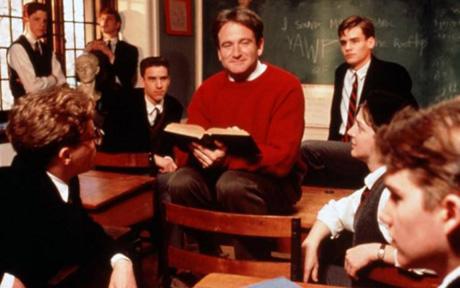
From all accounts, he was one of the most well-liked actors in Hollywood, just an all-around good guy. The characters he played in Dead Poets Society, Mrs. Doubtfire and Good Will Hunting are some of my all-time favorites.

So I was reading a little more about Williams yesterday when I came across something he said during a Reddit AMA (Ask Me Anything) last year. It’s applicable to this blog, so I thought I’d share.

View original post 464 more words

O Captain My Captain

Allow me to add to the deluge of Robin Williams tributes flooding the internet.

dps-title

On Thinking

words and ideas

??????


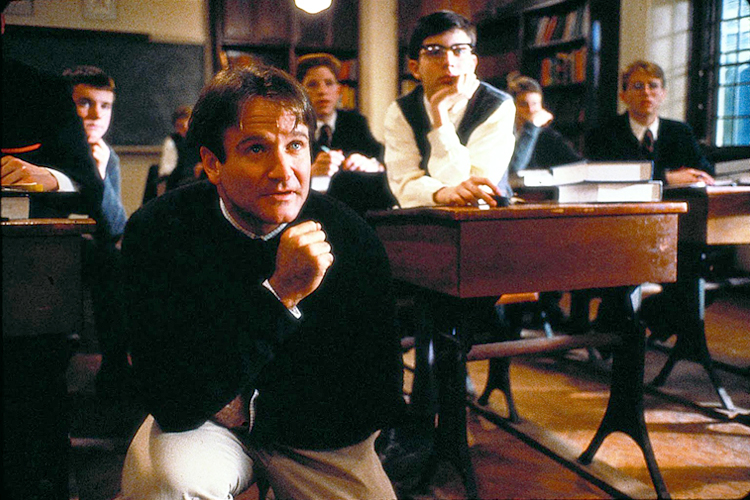
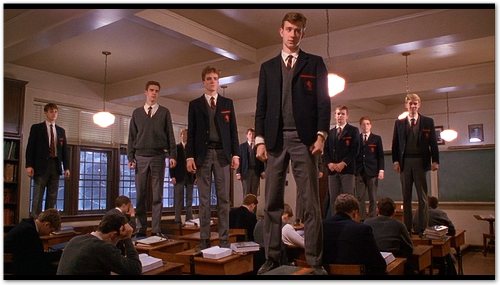
I stand upon my desk to remind myself that we must constantly look at things in a different way.


dead poets society stand desk 2


Now, don’t just walk off the edge like lemmings! Look around you!

On Living

Dead Poets Society Trophy Case

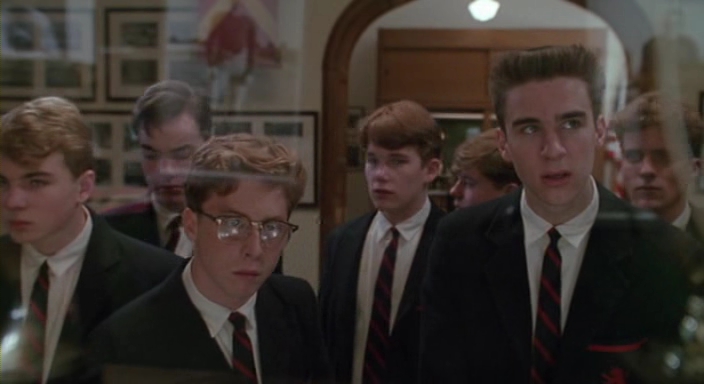
They’re not that different from you, are they? Same haircuts. Full of hormones, just like you. Invincible, just like you feel. The world is their oyster. They believe they’re destined for great things, just like many of you, their eyes are full of hope, just like you. Did they wait until it was too late to make from their lives even one iota of what they were capable? Because, you see gentlemen, these boys are now fertilizing daffodils. But if you listen real close, you can hear them whisper their legacy to you. Go on, lean in. Listen, you hear it? – – Carpe – – hear it? – – Carpe, carpe diem, seize the day boys, make your lives extraordinary.

seize the day


sucking the marrow


Sucking the marrow out of life doesn’t mean choking on the bone.


dead poets society class 2


There’s a time for daring and there’s a time for caution, and a wise man understands which is called for.

On Writing

dead poets society class

We don’t read and write poetry because it’s cute. We read and write poetry because we are members of the human race. And the human race is filled with passion. And medicine, law, business, engineering, these are noble pursuits and necessary to sustain life. But poetry, beauty, romance, love, these are what we stay alive for. To quote from Whitman, “O me! O life!… of the questions of these recurring; of the endless trains of the faithless… of cities filled with the foolish; what good amid these, O me, O life?” Answer. That you are here – that life exists, and identity; that the powerful play goes on and you may contribute a verse. That the powerful play *goes on* and you may contribute a verse. What will your verse be?

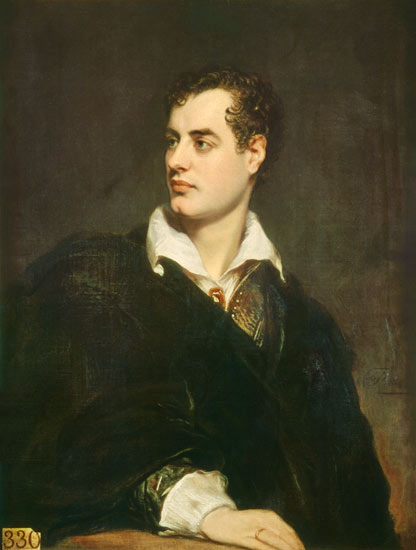
Lord Byron


How can you describe poetry like American Bandstand? “I like Byron, I give him a 42 but I can’t dance to it!”

On Dreaming

dead poets society in dreams
“Twas always thus, and always thus will be.”

On Teaching

think for yourself


I always thought the idea of education was to learn to think for yourself.


dead poets society anderson


Mr. Anderson! Don’t think that I don’t know that this assignment scares the hell out of you, you mole!


nuwandaThis is a battle, a war, and the casualties could be your hearts and souls.

On Confidence

dead poets society robin williams


I was the intellectual equivalent of a 98-pound weakling! I would go to the beach and people would kick copies of Byron in my face!


dead poets society seize the day notebook


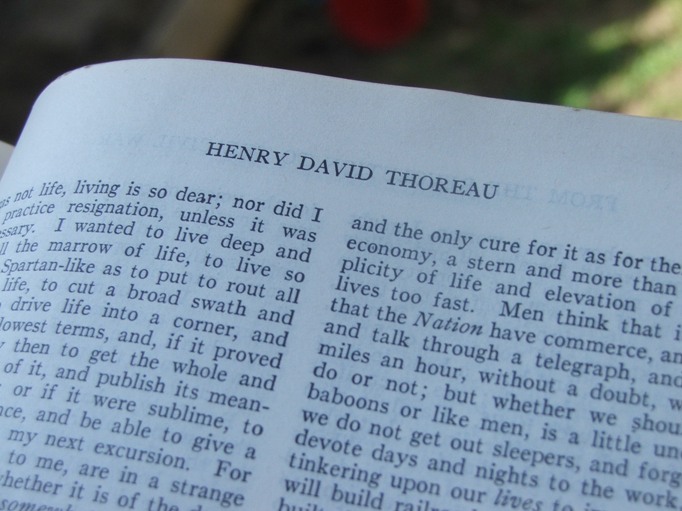
Boys, you must strive to find your own voice. Because the longer you wait to begin, the less likely you are to find it at all. Thoreau said, “Most men lead lives of quiet desperation.” Don’t be resigned to that. Break out!

0011774.JPG

Now we all have a great need for acceptance, but you must trust that your beliefs are unique, your own, even though others may think them odd or unpopular, even though the herd may go “that’s baaaaad.” Robert Frost said, “Two roads diverged in the wood and I, I took the one less traveled by, and that has made all the difference.”

barbaric yawp


I SOUND MY BARBARIC YAWP OVER THE ROOFTOPS OF THE WORLD.

On Respect

O Captain My CaptainO Captain, My Captain


try not to cry fail

Website Powered by WordPress.com.

Up ↑